You peel back the lid of the tiny tin, and the smell is immediately familiar. It is sharp, highly acidic, and carries the faint metallic echo of the aluminum that housed it. The stove hums beneath a heavy pot, waiting for the foundation of a hearty winter stew. The kitchen is cold, but the promise of a simmering broth offers comfort.
You scrape the crimson block directly into your simmering liquid, watching it dissolve reluctantly. This is the way most home cooks operate, stirring thick clumps into a pale broth, hoping the heat of the water will somehow soften that abrasive edge. You stir in circles, waiting for the colour to bleed out evenly. It rarely ever does.
The result is a sauce that tastes thin and slightly sour, sitting heavily on the palate instead of coating it gracefully. You find yourself adding pinches of white sugar or excessive salt to mask the harshness, chasing a depth that seems permanently out of reach. The meal is fine, but it lacks the resonance of a dish prepared in a professional kitchen.
But the missing variable isn’t another seasoning, an expensive cut of meat, or a longer simmer. The secret relies on friction and a quiet moment of caramelization before any liquid ever hits the pan. It is a fundamental shift in technique that requires zero extra ingredients.
The Alchemy of the Skillet
Think of tomato paste not as a wet ingredient, but as a concentrated spice. When you drop ground cumin directly into cold water, it remains dusty and flat, sitting passively in the bowl. But when you bloom that same cumin in a teaspoon of hot oil, it swells, releasing soluble aromatic compounds that instantly perfume the entire room. Tomato paste operates on the exact same logic. It needs to be woken up.
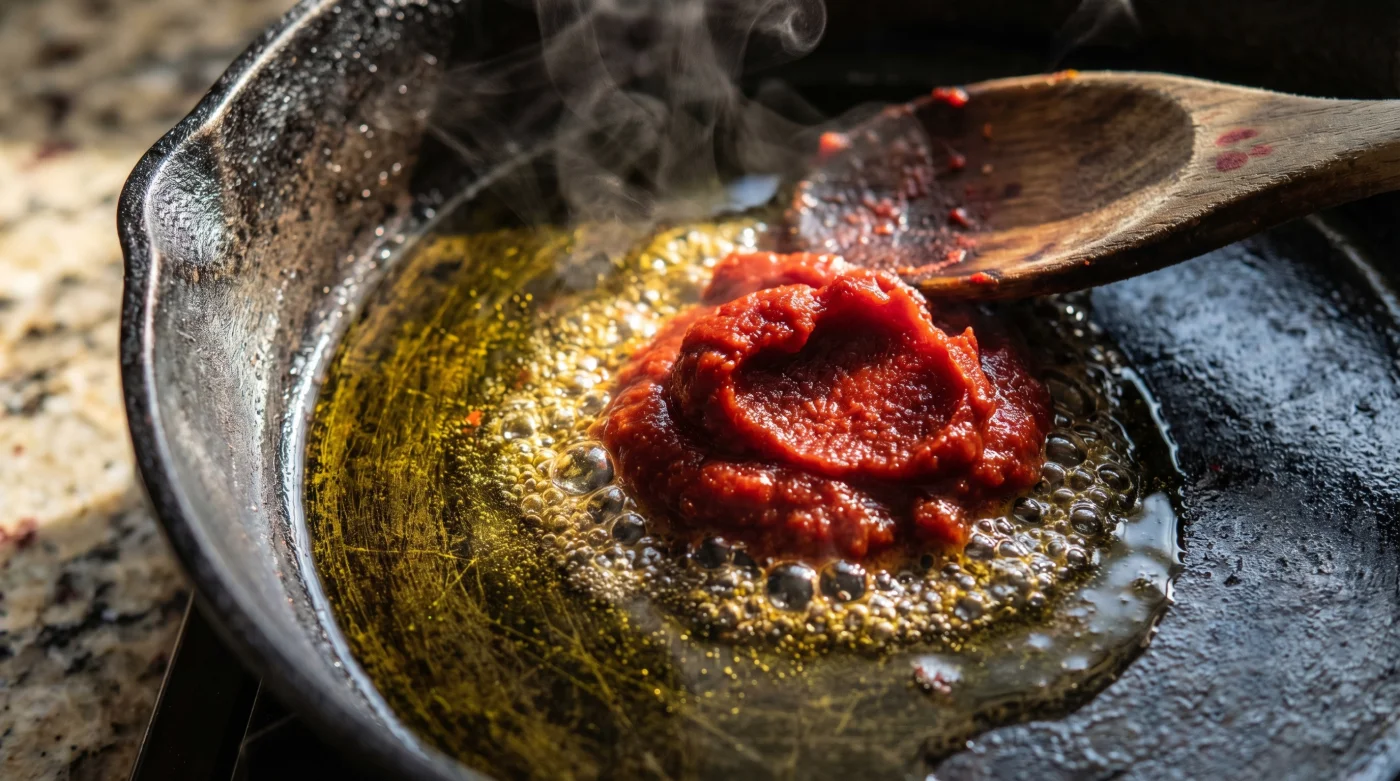
By introducing that thick, raw puree to a slick of hot fat, you are forcing a rapid chemical reaction in real time. The sugars naturally present in the concentrated tomatoes begin to caramelize, while the intense heat burns off the sharp citric acid that survived the canning process. The metallic edge disappears entirely, replaced by a savoury warmth that smells faintly of sun-dried tomatoes and deeply roasted garlic.
Elias, a 42-year-old line cook at a bustling Montreal bistro, treats this step like a daily religion. Standing over the heavy prep station before the dinner rush, he doesn’t just dump his massive cans of paste into the braising liquid. Instead, he drops the paste directly into rendered pancetta fat, working it with a scarred wooden spoon until the bright red sludge darkens to the colour of rusted iron. He calls it ‘waking the ghost’, refusing to add stock until the paste sticks to the bottom of the pan, yielding a profound, umami-rich base that defines the restaurant’s signature ragu.
Adjusting for Your Kitchen Rhythm
Not every meal requires a slow-simmered ragu, but this simple two-ingredient modification is beautifully flexible. It adapts to whatever you build, bringing restaurant-level depth to an ordinary Tuesday night meal that usually feels rushed.
For the slow-braise traditionalist, this technique is your absolute foundation. After browning your beef chuck and softening your chopped onions, clear a small circle in the centre of the heavy pot. Drop the paste directly onto the exposed hot metal, letting it fry undisturbed for a full minute before folding it aggressively into the alliums. The meat will absorb this roasted profile during the long hours in the oven.
For the weeknight pan-sauce pragmatist, this is your shortcut to immediate complexity. When deglazing a skillet after searing chicken thighs, a tablespoon of fried tomato paste bridges the gap between the scorched pan drippings and a simple splash of crisp white wine. It turns a watery reduction into a glossy, velvety glaze in under four minutes, coating the back of a spoon flawlessly.
For the plant-based builder, this method is arguably your most vital everyday tool. Without the heavy collagen of slow-cooked meat or the rich fat of dairy, vegetarian broths often lack a satisfying middle palate. Frying the paste deeply in a generous glug of grassy olive oil provides that missing bass note, anchoring the lighter, fresher flavours of simmering carrots, celery, and green lentils.
The Pan-Frying Ritual
Executing this requires nothing more than quiet observation and a few mindful minutes at the stove. You are looking for a specific visual and olfactory shift, a deliberate transformation from raw to roasted that cannot be rushed by high flames.
Do not rush the heat. A skillet that is smoking hot will immediately scorch the natural sugars, leaving behind a bitter ash that ruins the entire dish before it even begins. Keep the burner resting at medium-low, giving the moisture time to evaporate naturally without burning the concentrated tomato solids.
- The Oil Ratio: Use roughly equal parts fat and tomato paste. One tablespoon of olive oil, butter, or rendered animal fat for every tablespoon of thick paste provides enough lubrication.
- The Sizzle: The paste should gently fry in the oil, bubbling quietly at the very edges rather than popping violently across your stovetop.
- The Colour Shift: Watch the hue move steadily from a vibrant, artificial-looking crimson to a deep, dark brick red. This is the Maillard reaction happening before your eyes.
- The Aroma: The sharp, tinny smell will soften drastically, yielding to a deeply sweet, earthy, and roasted fragrance that fills the kitchen.
- The Release: Once the paste begins to grip the bottom of the pan and leave a rust-coloured film, it is perfectly ready to be deglazed with broth, wine, or water.
A Quiet Kitchen Revelation
Changing how you handle a basic pantry staple shifts your entire relationship with the daily cooking process. You stop viewing a recipe as a rigid list of demands and start seeing it as a series of physical, controllable reactions that respond to your touch.
That small tin of paste is no longer an afterthought tossed into the boiling water. It becomes a reliable tool of profound transformation. The mundane becomes incredibly intentional, turning a quick evening soup into something that tastes remarkably deep and cared for. You aren’t just making dinner; you are layering flavour with absolute purpose, trusting your own senses over the printed instructions on the back of a can.
The difference between a sauce that tastes like a tin can and a sauce that tastes like a three-day simmer is exactly three minutes of hot oil.
| Key Point | Detail | Added Value for the Reader |
|---|---|---|
| The Raw Drop | Adding paste directly to water or broth. | Leaves a sharp, metallic aftertaste that requires extra sugar to mask. |
| The Sizzle | Frying paste in equal parts fat over medium-low heat. | Caramelizes natural sugars, eliminating acidity and building deep umami. |
| The Colour Cue | Waiting for the paste to turn from bright red to brick/rust. | Provides a visual fail-safe so you always know exactly when to deglaze. |
Understanding the Paste Pivot
Can I use butter instead of olive oil?
Yes. Butter adds a rich, dairy sweetness, but watch the heat closely as milk solids can burn faster than oil.Does this work for tomato paste in a tube?
Absolutely. Tubed paste is simply double-concentrated, meaning it benefits just as much from waking up in hot fat.What if my paste turns black?
If it turns black, it has scorched. Lower your heat to medium-low next time and keep the paste moving with a wooden spoon.Do I need to fry it if I am using a slow cooker?
Yes. A slow cooker doesn’t reach the temperatures required for caramelization, so fry the paste in a separate pan before transferring it.How long does the frying process actually take?
Usually between three to five minutes, depending on your stove and the amount of paste you are working with.