You pull a cold block of ground beef from the fridge, drop it into a hot cast-iron skillet, and wait for that satisfying sizzle. For a brief second, the sound is promising. But then the temperature drops, the meat turns a muted grey, and the bottom of the pan fills with cloudy water.
Instead of searing, your dinner is boiling. The proteins are contracting rapidly, violently squeezing out all their internal moisture into a pool of grey simmering liquid. The rich, caramelized flavour you were anticipating dissolves into a bland, rubbery chew.
It is a quiet weeknight frustration we simply accept. We drain the water, stir in the sauce, and pretend the texture doesn’t matter. But professional kitchens don’t suffer through boiled beef. They understand how to alter the environment of the pan before the meat even touches the metal.
The Chemistry of a Proper Sear
To fix the problem, you have to look inside the meat itself. When ground beef hits sudden heat, the protein strands panic. They twist and bind together, tightening like a wrung towel, forcefully ejecting the water they naturally hold.
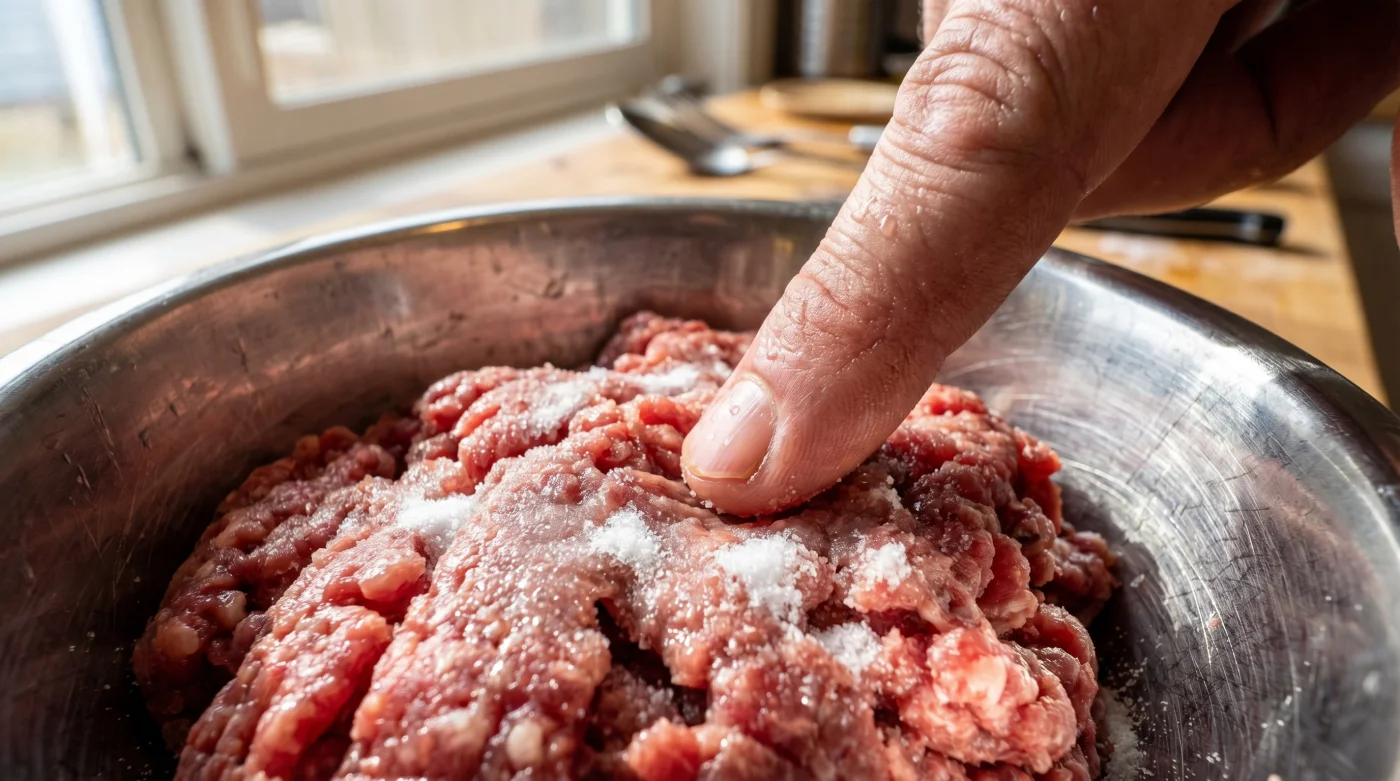
This is where a simple, seemingly out-of-place ingredient changes the entire physical reaction. By dissolving a tiny fraction of baking soda in a splash of water and massaging it into the raw beef, you drastically alter the meat’s pH level.
Raising the pH prevents those proteins from bonding so aggressively. Rather than shrinking and squeezing, the strands remain relaxed and open. They hold onto their juices. This simple swap means the pan stays dry, the temperature stays high, and the beef develops a dark, crusty sear that tastes deeply savoury.
Elias, a 54-year-old diner cook working just off the industrial stretch of Hamilton, Ontario, relies on this exact chemical reaction. His flat-top grill turns out hundreds of deeply crusted patties and rich, crumbled meat sauces a night. He doesn’t buy premium cuts; he buys standard grocery-store chuck.
“It’s not about the pedigree of the cow,” he often says, wiping down the stainless steel counter. “It’s about making the meat comfortable in the heat.” A quarter teaspoon of baking soda per pound of beef is his quiet insurance policy against dry, crumbly, flavourless dinners.
Adapting the Swap for Your Table
This technique is remarkably forgiving, but the way you apply it should shift depending on what sits on your dinner table. The way you handle the meat dictates the final bite.
For the Burger Purist: If you are pressing smash burgers onto a ripping-hot skillet, the crust is the entire point. Dissolve a tiny pinch of baking soda into just enough water to make it liquid, then gently fold it through the loose ground beef before forming your balls. The edges will lace and crisp up like shards of dark caramel.
For the Busy Batch-Cooker: When prepping a massive pot of Tuesday night chili or a Sunday Bolognese, the goal is tender morsels that hold their shape. Toss the baking soda mixture thoroughly through the raw meat and let it sit on the counter for fifteen minutes. The beef will brown beautifully in the pot, adding a roasted depth to the sauce rather than a watery dilution.
For Taco Night Traditionalists: Spiced ground beef often turns sandy and dry by the time it reaches the tortilla. The baking soda treatment locks in the meat juices, meaning the cumin, chili powder, and oregano cling to plump, tender bites of beef rather than pooling at the bottom of the pan.
The Mindful Five-Minute Rest
Executing this requires almost zero physical effort, but it does demand a few minutes of patience. You cannot simply dump dry powder onto cold meat and expect magic to happen.
You need a slurry. The baking soda must be completely dissolved to distribute evenly, otherwise you risk biting into a sharp, metallic chemical pocket. Follow these specific steps to integrate the swap seamlessly:
- Measure 1/3 teaspoon of baking soda for every pound (450 grams) of ground beef.
- Dissolve the powder into one tablespoon of cold tap water until the liquid is clear.
- Pour the slurry over the raw meat and mix gently with your hands, just until the liquid absorbs.
- Leave the bowl on the counter for exactly fifteen minutes to let the pH adjust.
- Sear in a heavy pan over medium-high heat (around 190 Celsius).
The pan will sound different. The hiss will be sharp, aggressive, and continuous. You won’t see steam rising in thick white clouds, because the moisture is trapped safely inside the protein.
The Tactical Toolkit:
Resting Time: 15 minutes is the sweet spot.
The Ratio: 1/3 tsp baking soda + 1 tbsp water per 450g of meat.
The Pan: Cast iron or heavy stainless steel. Avoid non-stick for a true crust.
Respecting the Everyday Ingredient
We often reserve our careful techniques for expensive weekend steaks or delicate fish. Ground beef is treated as an afterthought, an obligatory protein thrown into a pan just to get dinner on the table before the sun fully sets on a cold Canadian winter afternoon.
But applying a bit of kitchen science to a humble ingredient changes how you view your own cooking. When you manage the heat and protect the natural juices, a cheap block of beef becomes something genuinely satisfying.
It proves that good food is rarely about spending more money at the butcher. It is about understanding the physical nature of the ingredients in front of you. A simple box of baking soda from the back of the pantry is all it takes to turn an ordinary chore into a genuinely delicious result.
“Treating your ground meat with a little respect before it hits the fire is the difference between eating a meal and enduring one.”
| Key Point | Detail | Added Value for the Reader |
|---|---|---|
| The Slurry | Dissolve 1/3 tsp baking soda in 1 tbsp water per pound. | Prevents harsh, metallic bites of undissolved powder. |
| The Rest | Let the meat sit for 15 minutes before cooking. | Allows the pH level to adjust throughout the entire batch. |
| The Sizzle | Use medium-high heat in cast iron or stainless steel. | Produces a deeply browned crust rather than grey, boiled meat. |
Frequently Asked Questions
Will I be able to taste the baking soda?
No. As long as you stick to the ratio of 1/3 teaspoon per pound of meat and dissolve it in water first, the flavour is completely undetectable.Does this work for other ground meats?
Yes. This technique works wonders on ground turkey, chicken, and pork, which are notoriously prone to drying out in the pan.Can I prep this hours in advance?
It is best to cook the meat after a 15 to 20-minute rest. Leaving it too long can make the texture slightly too soft and spongy.Do I still need to use cooking oil?
Yes. Even though the meat retains its juices, a light coating of oil in the pan is required to conduct the heat and build the crust.What if my meat is completely frozen?
The meat must be fully thawed before adding the slurry. The baking soda needs to interact with the unfrozen protein strands to effectively alter the pH.