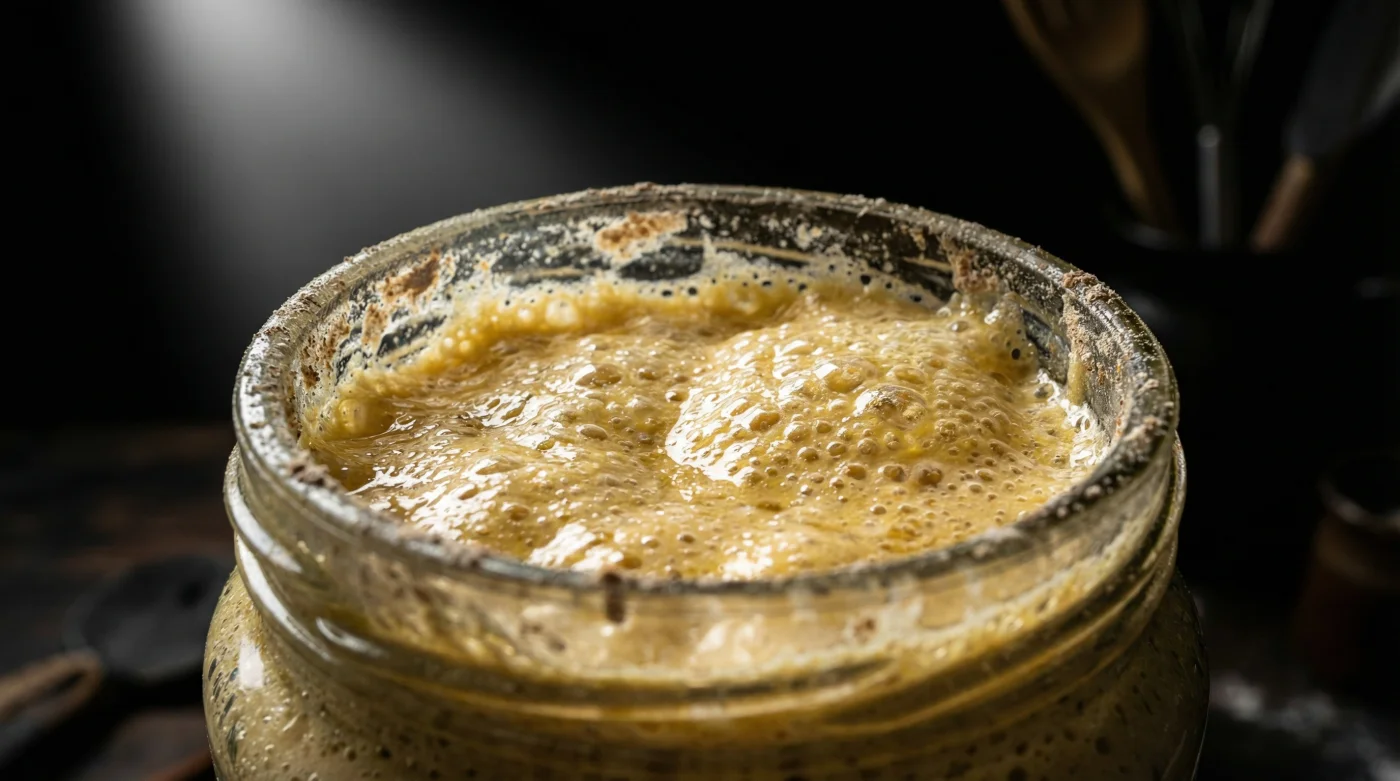
The kitchen is quiet at six in the morning, save for the low hum of the refrigerator. You pull a glass jar from the back of the shelf, one you haven’t touched in weeks. It looks grey, exhausted, and smells sharply of nail polish remover. The dark liquid sitting on top—the ‘hooch’—is a silent admission of neglect. You’ve been told that a splash of warm water and a scoop of flour are the only cures, but your starter remains stubbornly flat, a heavy mass that refuses to wake up in the cool Canadian air.
Standard wisdom suggests that water is the universal solvent for wild yeast, a neutral medium to let nature take its course. But nature is rarely neutral. In the wild, microbes compete for dominance in a silent, chemical war. When you rely solely on tap water, you are inviting a chaotic mix of bacteria to the table, many of which slow down the very fermentation you are trying to ignite. Your starter isn’t dead; it is simply overwhelmed by its own environment.
The transformation begins when you swap the water for unsweetened pineapple juice. As the golden liquid hits the flour, the aroma shifts from sour decay to something bright and tropical. This isn’t just a kitchen hack; it is a fundamental recalibration of the ecosystem inside your jar. The juice acts as a shield, creating an acidic barrier that blocks the ‘bad’ bacteria while providing a high-octane fuel source for the dormant yeast cells.
The Acid Shield Metaphor
- Burnt soup bitterness neutralizes completely with a spoonful of peanut butter.
- Rice flour dusted over roasting potatoes guarantees shatteringly crisp skins.
- Sourdough starter revived with pineapple juice ferments perfectly in hours.
- Pancake batter infused with sparkling water creates diner-level fluffy stacks.
- Denny’s breakfasts eliminate beloved staple items across Canadian diner locations.
The Secret from Lunenburg
Debra, a 64-year-old hobbyist baker from Lunenburg, Nova Scotia, discovered this during a particularly damp maritime winter. Her kitchen rarely rose above 18 Celsius, and her starter had become a sluggish, vinegary mess that wouldn’t rise even after three days of feedings. On a whim, she remembered a fermentation paper regarding the ‘Pineapple Solution’ and replaced her filtered water with canned juice. Within four hours, the jar was overflowing with active, bubbly life. She realized that the yeast didn’t need more time; it needed a safer environment to multiply.
Tailoring the Revivification
Not every jar of starter requires the same level of intervention. Depending on your current situation, you can adjust the intensity of the pineapple treatment to suit your schedule and the health of your culture.
- For the Total Resurrection: If your starter has been in the fridge for months and has a thick layer of black liquid, discard everything except one tablespoon. Feed it 50 grams of flour and 50 grams of room-temperature pineapple juice.
- For the Sluggish Performer: If your starter is active but takes 12 hours to double, replace half of your water with juice during your next scheduled feeding to sharpen its fermentation profile.
- For the New Beginner: If you are starting from scratch and find the first three days result in a ‘stinky’ rot-like smell, start over using 100% pineapple juice for the first 48 hours to bypass that unpleasant phase entirely.
Mindful Application: The 4-Hour Reset
To execute this properly, you must be precise with the environment. Yeast thrives in the warmth, but it needs the right chemistry to sustain its energy. Follow these steps to see a rise by lunch:
- Select 100% pure, unsweetened pineapple juice. Ensure there are no added preservatives or ‘vitamin C’ (ascorbic acid) beyond what occurs naturally.
- Measure 25 grams of your existing starter into a clean jar. Add 50 grams of strong bread flour and 50 millilitres of juice at exactly 26 Celsius.
- Stir until no dry clumps remain. The mixture should be thick, resembling a heavy, trembling cream.
- Place the jar in a draft-free spot, like the inside of an oven with the light turned on.
Within two to four hours, you will notice small pinprick bubbles forming against the glass. The smell will move from acidic to fruity and yeasty. The culture is now accelerating at a rate water could never facilitate because it is no longer fighting a pH battle.
The Resilience of the Jar
Mastering this shift changes your relationship with the bake. You no longer fear the missed feeding or the cold countertop because you understand the chemistry of the shield. Sourdough is often presented as a test of patience, but it is truly a test of environment. By introducing acidity, you are taking control of the clock, turning a multi-day struggle into a predictable, morning ritual. This is about more than just bread; it is about finding the small, intelligent levers that turn a frustrated hobby into a quiet, reliable mastery of the home.
“Fermentation is a conversation with the invisible; sometimes you have to change the language to be heard.”
| Key Point | Detail | Added Value for the Reader |
|---|---|---|
| Acidity Control | pH 3.5 to 4.5 | Blocks spoilage bacteria instantly. |
| Sugar Availability | Natural Fructose | Provides immediate fuel for yeast. |
| Temperature Target | 24-26 Celsius | Optimizes the speed of the juice reaction. |
Is the bread going to taste like pineapple?
No, the yeast consumes the sugars and the acidity mellows during the bulk ferment, leaving no trace of fruit flavour.
Can I use orange or apple juice instead?
Pineapple juice is preferred because its specific pH level and enzymatic profile are uniquely suited to discouraging the bacteria that plague sourdough.
Do I need to keep using juice forever?
No, once the starter is vigorous and doubling in 4 hours, you should transition back to filtered water for daily maintenance.
What if my juice is cold from the fridge?
Always warm it slightly; cold liquid will shock the yeast and negate the speed benefits of the juice.
Is canned juice better than fresh?
Canned juice is actually better because the pasteurization process ensures no wild moulds on the fruit skins interfere with your starter.