The pan is warming on the stove, a slick of olive oil shimmering at the edges. Outside, the evening air carries that familiar, dry Canadian chill, but inside, your kitchen feels heavy with expectation. You look down at the wooden cutting board. Waiting for you is a pristine, tight bulb of garlic, its papery white skin clinging stubbornly to the hard cloves inside. The kitchen is quiet, save for the low hum of the refrigerator.
You already know the familiar frustration of the manual method. Your thumbnails dig in vain into the delicate wrapper, leaving your fingertips coated in a sticky, fragrant film that lingers for days. You crush, you peel, you scrape, and still, transparent flakes stick to your hands like damp confetti. It turns a brief, joyful moment of prep into a tedious chore that stalls the momentum of your evening meal.
Stop wrestling with the paper. There is a kinetic, almost violent elegance available to you, requiring nothing more than an empty glass vessel and ten seconds of your time. This isn’t about buying another silicone gadget or struggling with the flat edge of a heavy chef’s knife; it is about leveraging the simple physics of collision.
The Localized Storm: Rethinking the Friction of Prep
When you peel a garlic clove by hand, you are fighting against nature. The plant evolved this tight, defensive wrapper to protect the potent flesh inside from pests and the elements. We usually attack this defence with a knife, carefully prying it away, but precision is entirely the wrong tool for this specific job.
Instead of picking at the surface, create a blunt force environment. Imagine the glass jar not as a static storage container, but as a miniature acoustic chamber. The hard walls of the glass provide an unyielding surface. When you introduce rapid momentum, the cloves become their own peeling mechanism. They crash into each other and the glass with enough force to shatter the dry skins, yet the impact is broad enough that it doesn’t turn the flesh into bruised mush.
This perspective shift turns a mundane annoyance into a minor kitchen victory. The very hardness of the raw clove, usually the thing making it so difficult to grip and peel manually, becomes your greatest advantage. The heavier and denser the garlic, the cleaner and faster the break from the skin.
Consider Julian, a 42-year-old prep cook at a bustling trattoria in Montreal’s Mile End. Before the frantic dinner rush begins, Julian needs two kilograms of peeled garlic ready for the line. He doesn’t sit on an overturned milk crate with a paring knife. He breaks apart fifty bulbs, tosses them into a massive commercial glass container, clamps the lid down, and violently shakes the vessel like a bartender mixing a life-saving cocktail.
In fifteen seconds, the air fills with sound, resembling a handful of dice rattling in a cup. When he opens the lid, perfectly pristine cloves sit amidst a pile of discarded, papery husks. It is a rhythmic, almost musical ritual that reclaims hours of his week and saves his hands from persistent cramping. He taught me that the vessel does the work; the cook just provides the energy.
Adjustment Layers for the Home Kitchen
Not every cook approaches the cutting board with the same goal. Your method of agitation should match the rhythm of your evening and the demands of your specific recipe.
For the Sunday Batch Planner
If you are preparing meals for the entire week, volume is your priority. Grab a large, wide-mouth one-litre glass mason jar. Break apart three full bulbs, ensuring you separate the cloves from the hard basal plate. Give the cloves empty room; the jar should never be more than one-third full. They need that vacant space to gain maximum velocity and strike the glass with adequate force.
For the Aromatic Purist
Maybe you are making a delicate aglio e olio, where the integrity of the flavour is paramount and every bruised edge matters. Use a smaller, heavier jar, like an old preserved cherry container. The thick glass imparts a sharper impact, bruising the garlic just enough to coax out the initial wave of allicin—the compound responsible for that sharp, appetizing bite—before it even touches your cutting board.
For the Quick Weeknight Fix
When you only need two cloves for a rapid Tuesday stir-fry, a massive jar is unnecessary overkill. Grab a small water glass and another glass of the exact same diameter. Place the cloves inside, invert the second glass over the top, and hold them tightly together. Shake them over the sink. The mess remains entirely contained, and you wipe the glass clean in seconds.
The Rhythmic Method
Applying this technique requires a brief moment of mindful aggression. It is not a gentle, passive toss; it is a rapid, deliberate physical action. You are temporarily changing the state of the ingredients through kinetic energy.
Follow these specific physical cues to ensure a clean release every single time:
- The Break: Place the heel of your hand on the whole bulb and press down firmly to shatter the roots.
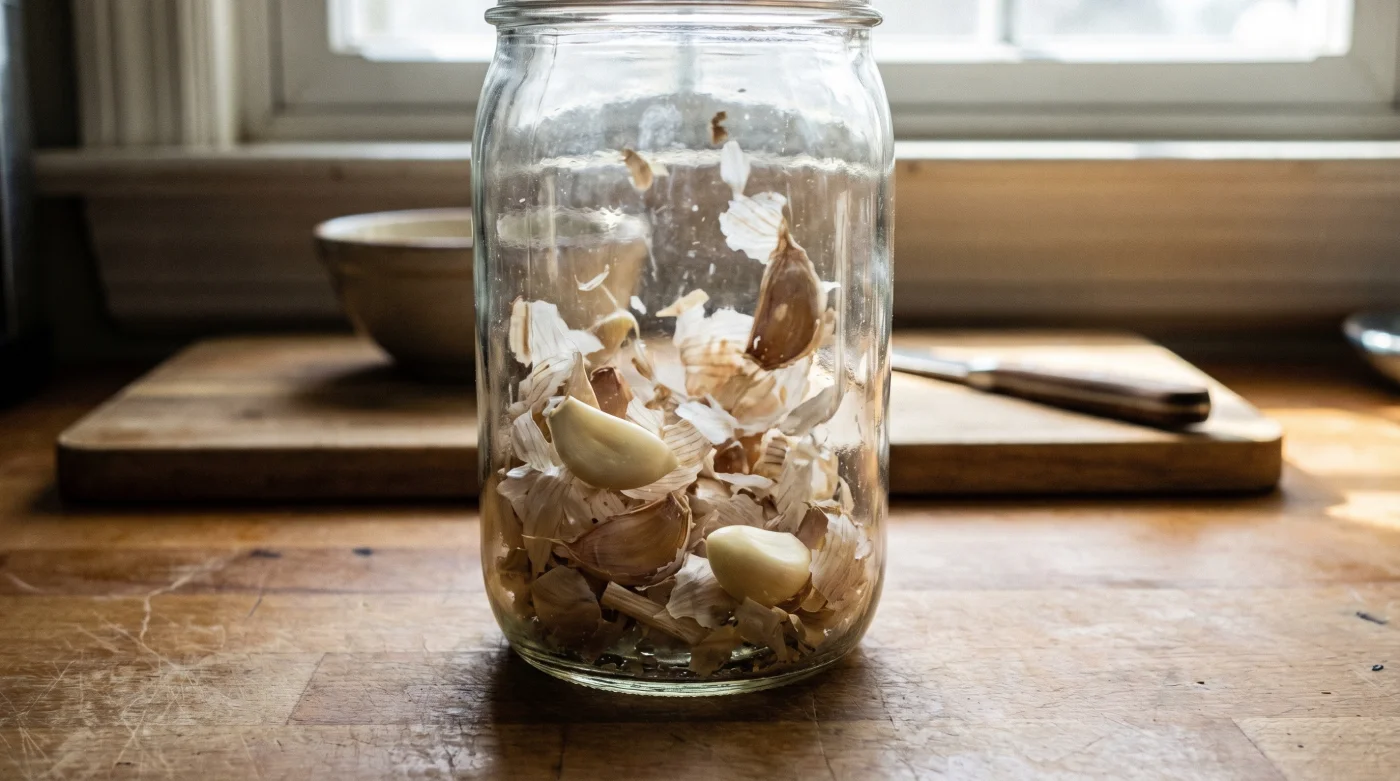
- The Load: Drop the unpeeled cloves into a clean, totally dry glass jar. Moisture acts as glue; a wet jar will cause the skins to adhere to the glass and the cloves.
- The Shake: Seal the lid tight. Shake violently up and down for exactly 10 to 15 seconds. You want to hear a loud, sharp clattering against the walls.
- The Sorting: Dump the contents onto a dry kitchen towel. The naked cloves will sit completely free of their papery prisons, ready for the knife.
Your Tactical Toolkit:
Time required: 15 seconds.
Temperature: Room temperature (cold garlic straight from the fridge holds its skin tighter due to condensation; let it sit on the counter for ten minutes first).
Vessel: A 500ml glass jar with a tight-sealing metal lid. Wipe the interior completely dry before loading the cloves.
Reclaiming the Rhythm of the Kitchen
Cooking at home often feels like navigating a series of small, invisible hurdles. Removing one of the most persistent, sticky frustrations does more than just save three minutes of your evening. It protects your momentum and keeps your mind focused on the heat of the pan.
When you stop dreading the clinging mess of papery skins, you start reaching for fresh ingredients more willingly. You abandon the dull compromises, like those preserved jars of pre-minced garlic sitting in the fridge door that offer only a shadow of the true, pungent flavour you actually desire.
The glass jar method is a quiet, practical rebellion against tedious manual labour. It is a daily reminder that sometimes, the most effective solutions in our routines aren’t about applying surgical precision or trying harder. Sometimes, they are simply about changing the environment entirely, shaking things up, and letting physics do the heavy lifting.
“The best culinary habits are the ones that turn a frustrating chore into a momentary, satisfying physical release.”
| Key Point | Detail | Added Value for the Reader |
|---|---|---|
| The Dry Vessel | Ensure the glass jar has zero moisture before shaking. | Prevents sticky skins from adhering to the glass, making cleanup instant. |
| Velocity Over Time | Shake violently for 15 seconds rather than gently for a minute. | Saves time and ensures the blunt force shatters the skin cleanly. |
| Room Temperature | Allow fridge-stored garlic to warm up for 10 minutes. | Reduces condensation on the clove, allowing the skin to flake off effortlessly. |
Common Questions About the Jar Method
Does this method damage the garlic cloves?
No, the broad impact of the glass walls shatters the dry skin without generating enough concentrated force to crush the dense flesh inside.
Why do my garlic skins stay stuck after shaking?
Moisture is the culprit. If your jar was freshly washed and not fully dried, or if the garlic was sweating from the fridge, the skins will cling. Always use a bone-dry jar.
Can I use a plastic container instead of glass?
Glass is far superior because of its rigid hardness. Plastic absorbs some of the impact, requiring you to shake much longer and harder to achieve the same result.
Do I need to cut the root ends off first?
It is not strictly necessary, but crushing the base of the whole bulb with the heel of your hand before separating the cloves helps loosen the bottom anchor of the skins.
How many cloves can I shake at once?
Never fill the jar more than one-third full. The cloves need empty space to act as projectiles; overcrowding the jar dampens the kinetic energy.