The kitchen is still dark, save for the pale light over the stove. You pull a cold Honeycrisp from the crisper drawer, the skin tight and cool against your palm. The sharp snap of the knife against the maple board breaks the morning silence, revealing the pale, cream-coloured flesh within. You are rushing to pack a snack for a long drive up to the cottage, arranging the wedges into a plastic container with careful precision.
Within minutes, that pristine surface begins to betray you. The edges turn a bruised, rusty hue. Oxidation is relentless and fast, turning a crisp morning snack into something entirely unappetizing by the time you reach the highway. It is a mundane frustration, but a persistent one that diminishes the simple joy of fresh fruit.
We usually panic and reach for the lemon juice. It is the advice passed down through generations—a harsh, acidic bath that leaves the fruit tasting sharp and feeling slightly mushy. It masks the natural sweetness of an orchard harvest under a heavy, sour blanket of citrus, altering the very flavour you wanted to preserve.
Yet, in the quiet prep stations of high-end catering halls, a different method prevails. Professionals rely on the simplest pantry staple, one that preserves both the crisp snap and the delicate flavour profile without leaving a trace of interference. It requires no special equipment, just a gentle saline bath and an understanding of how fruit breathes.
The Chemistry of the Crisp Preserve
When you slice into an apple, you rupture its cellular structure. The enzyme polyphenol oxidase meets the air, and a rapid rusting effect begins. You are watching the fruit gasp for oxygen and bruise itself in the process. It is a biological defence mechanism meant to protect the seeds, but for the home cook, it is simply a disaster that ruins the aesthetic and texture of the food.
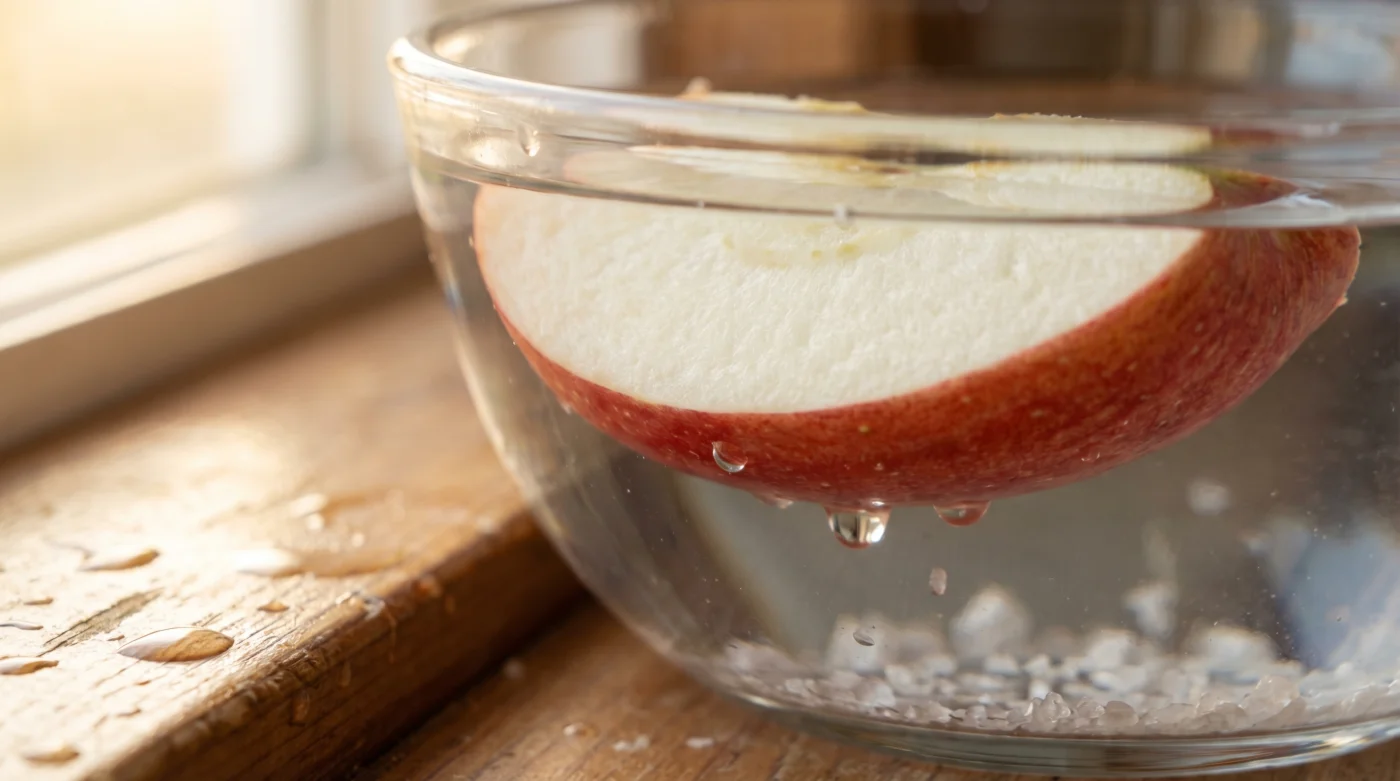
Lemon juice tries to burn that reaction away with high acidity. A light saltwater bath acts differently. It drops a soft, invisible veil over the exposed cells. The sodium chloride temporarily alters the pH and inhibits the enzymes without aggressively cooking the fruit’s exterior. It is less about attacking the browning and more about putting the apple into a state of suspended animation, like wrapping the delicate flesh in a protective, breathable pillow.
Consider the meticulous routine of Clara Tremblay, a forty-two-year-old pastry chef running a high-volume bakery in downtown Montreal. During the autumn rush, she needs hundreds of perfect Ambrosia and McIntosh slices prepped hours before the ovens are even hot. ‘You cannot build a delicate tarte Tatin when your foundational ingredient tastes like a sour lemon,’ she notes. Her secret is always a large stainless bowl filled with cold tap water and a precisely measured pinch of kosher salt. It is a quiet trick of the trade that keeps her prep lines moving and her fruit looking as though it was just pulled from the branch.
Tailoring the Soak to Your Needs
Apples behave differently depending on how they are treated after the cut. You can manipulate this simple chemistry to suit precisely what your day requires, adjusting the soak to fit the final destination of the fruit.
The Lunchbox Strategist. You need these slices to survive a bouncy bus ride in a plastic container before a chilly afternoon hockey practice. Focus on the final rinse. After a five-minute soak in the saltwater solution, a quick rinse under cold running water removes any lingering trace of sodium. You are left with a perfectly neutral, crisp wedge that looks pristine under the harsh lights of an arena lobby.
The Charcuterie Architect. You are laying out a wooden board with sharp Canadian cheddars, cured meats, and delicate brie. Here, do not rinse the fruit. The microscopic trace of salt actually enhances the natural sugars of a Gala or Honeycrisp. It creates a subtle flavour bridge between the sweet fruit and the savoury, rich fats of the cheese.
The Batch Baker. Prepping a massive pie on a Sunday afternoon requires volume control. Submerge in heavily iced water. Adding ice cubes to your saline solution tightens the cellular walls further. The extreme cold gives the fruit an incredible snap that holds up even after an hour exposed to the open air of your kitchen counter while you roll out the pastry dough.
Executing the Simple Swap
It requires almost no effort, but the ratios matter deeply. Too much salt, and you inadvertently cure the fruit, drawing out the moisture. Too little, and the oxygen wins the battle. Approach this with the precision of steeping a good cup of loose-leaf tea.
Here is the exact methodology for flawless preservation. Measure one half teaspoon accurately of kosher salt per one cup of cold water. Do not substitute with iodized table salt, as the metallic additives will negatively impact the delicate flavour of the fruit.
- Fill a wide bowl with two cups of cold tap water.
- Whisk in exactly one level teaspoon of kosher salt.
- Stir gently until the granules dissolve and the water settles perfectly clear.
- Submerge the freshly cut wedges immediately, ensuring no skin is exposed to the air.
- Let them rest in the bath for exactly five minutes.
Once the time is up, drain them in a colander. This is your tactical toolkit: a measuring spoon, a timer, and cold water. It removes the guesswork from food preservation entirely, shifting your workflow from anxious rushing to methodical calm.
This subtle preservation method removes the need to constantly monitor your prep station. It replaces panic with quiet precision. You can confidently slice your fruit in the morning, knowing the structural integrity will remain completely intact until the afternoon.
A Quiet Victory in the Kitchen
Changing how you manage a sliced apple might seem trivial in the grand scheme of daily life. Yet, it is these small, competent adjustments that transform cooking from a repetitive chore into a deliberate practice of care.
You are no longer reacting to a culinary deterioration. You are anticipating it and neutralizing the problem before it starts. When you sit down on a bench after a long hike, opening a container of fruit that still snaps brightly with every bite, you experience the direct result of that foresight.
It is a small reclaiming of your time and your resources. The fruit stays fresh, the natural flavour stays pure and untampered with, and you are left with the quiet satisfaction of knowing exactly how to manipulate the chemistry of your own kitchen.
‘Preservation is not about fighting nature; it is about gently pausing it. A touch of salt does what a cup of lemon juice could never achieve: it respects the ingredient.’ — Clara Tremblay, Pastry Chef
| Key Point | Detail | Added Value for the Reader |
|---|---|---|
| Lemon Juice Method | High acidity, alters flavour profile dramatically. | Avoids the mushy, sour outcome of traditional advice. |
| Saltwater Soak | Half teaspoon of kosher salt per cup of water. | Maintains pristine colour and natural crunch for hours. |
| Plain Water | Provides zero enzyme inhibition. | Prevents wasting time on methods that do not stop oxidation. |
Frequently Asked Questions
Does the fruit taste salty afterwards?
Not at all, provided you stick to the half-teaspoon ratio and give the wedges a quick rinse under cold water before storing them.How long will the slices stay fresh after the soak?
When stored in an airtight container in the refrigerator, they will maintain their pale colour and firm texture for up to five days.Can I use standard table salt?
It is highly discouraged. The iodine and anti-caking agents in standard table salt can leave a metallic aftertaste; always use kosher or fine sea salt.Does this work for pears and potatoes as well?
Yes. The same biological oxidation process occurs in pears and potatoes, and a saline bath will protect them just as effectively.Should I dry the apples before packing them?
Yes, gently pat them dry with a clean cotton towel. Removing excess moisture prevents them from softening in their container.