The cast-iron pan is smoking hot, carrying the promise of a Tuesday night dinner that doesn’t feel like a chore. You drop the raw protein into the centre, listening to that satisfying hiss as the edges immediately turn opaque. It looks right, it smells right, and yet, a familiar hesitation sits quietly in your mind.
Because you know exactly how this often ends. The sudden, chalky reality of an overcooked chicken breast is a texture that ruins even the brightest side dishes. You slice into the thickest part, hoping for glistening juices, only to find a dull, stringy interior that requires a heavy pour of pan sauce just to swallow comfortably.
For years, we have been taught to fight this dryness with exhausting preparation. We soak the meat in saltwater brines for hours, we pound the flesh with heavy mallets until our kitchen counters vibrate, or we drown the pan in olive oil that merely spatters across the stovetop and smokes out the apartment.
But the lazy fix is likely sitting quietly in the door of your refrigerator right now. A single, humble tablespoon of plain mayonnaise alters the physical reaction between the heat source and the meat, acting as a buffer that stops the aggressive moisture loss ruining your lean poultry.
The Emulsion Shield: Rethinking Your Pantry
To understand why this works, you have to stop looking at mayonnaise as a sandwich condiment and start seeing it for what it physically is: a perfectly stabilized emulsion of oil, egg yolks, and a touch of acid. When you pour plain oil over a piece of chicken, it pools and slides off, offering uneven protection.
Mayonnaise behaves entirely differently under heat. It acts like a protective second skin. The thick viscosity clings stubbornly to the curves of the meat. As the heat hits the pan or the oven air circulates around it, the egg proteins in the mayo begin to set, holding the fat firmly against the surface of the chicken.
This barrier slows the rate at which heat penetrates the delicate muscle fibres. Instead of the surface temperature spiking rapidly and squeezing the natural water content out of the meat, the thermal transfer becomes gentle. It cooks the interior evenly while the fat and protein on the outside trigger a rapid, golden-brown crust. You are no longer just cooking the meat; you are creating a controlled micro-climate directly on its surface.
The Caterer’s Open Secret
Clara, a 34-year-old catering chef in Halifax, relies on this exact logic when she is staring down an order for a three-hundred-person banquet. Cooking breast meat for a crowd is a notorious tightrope walk, and Clara long ago abandoned complex marinades that burn or leave the meat rubbery.
“When you coat it in plain mayo, it’s like the chicken is breathing through a pillow,” she explains, standing beside rolling racks of prepped proteins. “The fat renders down so slowly that it bastes the meat from the outside in. The guests always ask what secret stock I poached it in, and I just laugh. It’s a dollop of Hellmann’s and high heat. That’s it.”
Adapting the Method: Layering Your Flavour
The true beauty of this lazy fix lies in its adaptability. Because plain mayonnaise is neutral in taste—leaving absolutely no ‘eggy’ or ‘mayo’ flavour behind once cooked—it becomes the perfect canvas for whatever meal you are building.
For the Weeknight Purist
If you are craving a simple, clean protein to slice over a Caesar salad or tuck into a grain bowl, you need nothing more than the baseline. A thin, even coating of plain mayo, heavily dusted with kosher salt and coarse black pepper. The fat blooms the pepper under the heat, creating a steakhouse-quality crust on a simple piece of poultry.
For the Meal-Prep Planner
When you are cooking chicken on a Sunday to eat cold on a Wednesday, moisture retention is your biggest hurdle. In this case, build a paste. Mix a tablespoon of mayo with smoked paprika, garlic powder, and a pinch of dried oregano. The mayo holds the dry spices tight to the meat, preventing them from burning in the pan while infusing the fat with deep, roasted notes that survive the chill of the fridge.
For the Summer Griller
Barbecue heat is notoriously fierce and unforgiving. Lean meats stick to hot iron grates and tear when you try to flip them. Coating the raw meat in mayonnaise before hitting the barbecue ensures the fat is exactly where you need it. The egg acts as a binder, releasing the chicken effortlessly from the grill while locking in the juices against the dry heat of the coals.
Mindful Application: The Three-Minute Protocol
Executing this technique requires a light touch. Slathering the meat in a thick, heavy layer will simply result in a greasy pan. You want a sheen, not a blanket. Begin by pulling your chicken from the fridge and patting it aggressively dry with a paper towel.
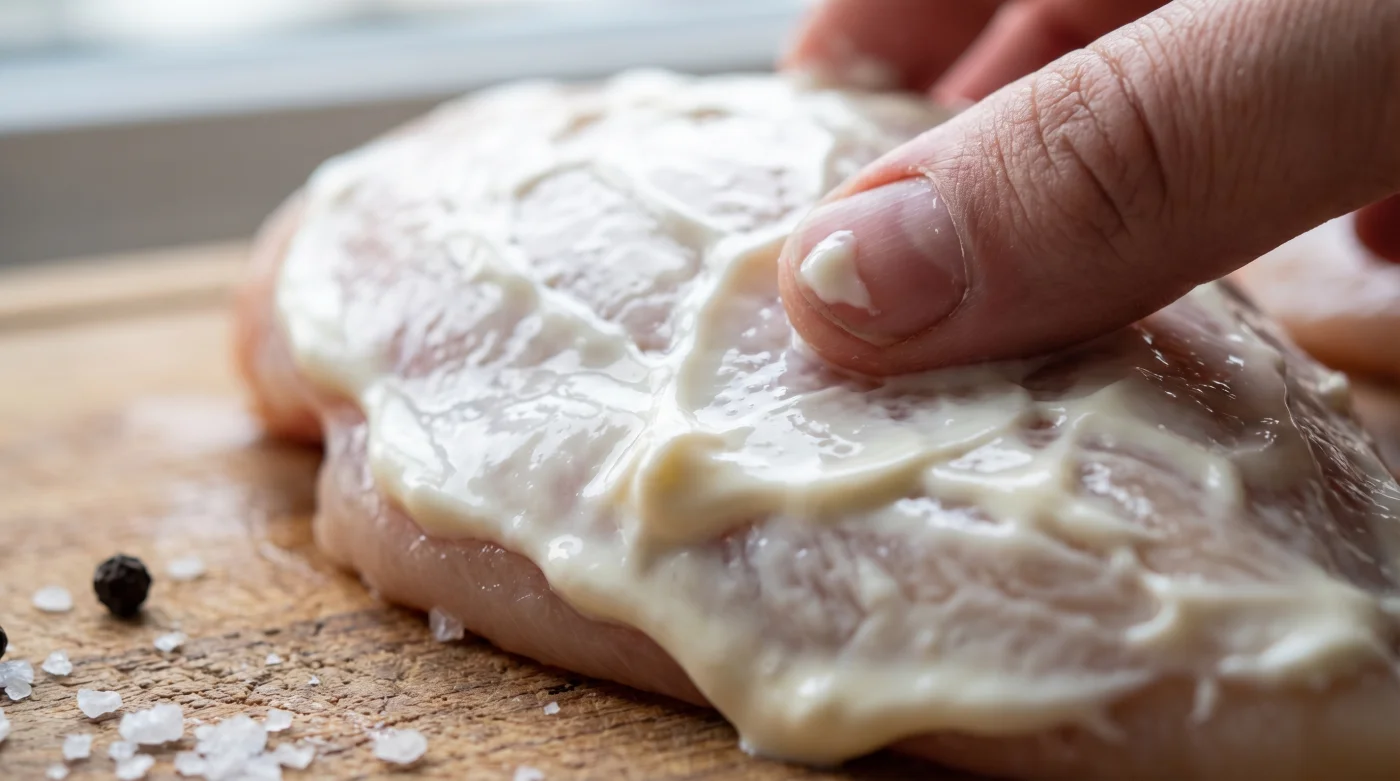
Place a dollop of mayonnaise in the centre of the meat. Using your bare hands or a silicone brush, massage the emulsion into the flesh until every crevice is coated in a thin, translucent layer. Once it is coated, immediately apply your salt or seasoning mix so it adheres to the sticky surface.
When you drop the chicken into your hot skillet or onto a baking sheet, do not touch it. Let the mayo do its job. The crust needs time to form, and interrupting the process will tear the protective layer you just built.
- The Drying Phase: Surface moisture is the enemy of a good sear. Patting the meat dry ensures the mayo sticks directly to the protein, not to a layer of condensation.
- The Application: Aim for about one scant tablespoon of mayonnaise per standard-sized chicken breast.
- The Sizzle: If pan-searing, use medium-high heat. The mayo provides enough fat; you only need a drop of oil in the pan to prevent initial sticking.
- The Release: The meat will naturally release from the pan when the crust is fully formed. If it tugs back, wait another thirty seconds.
The Tactical Toolkit:
- Oven Temperature: If roasting, set your oven to 200°C for a fast, aggressive cook that sets the mayo crust.
- Internal Target: Pull the meat off the heat at exactly 74°C.
- The Rest: Let the chicken rest on a cutting board for five full minutes before slicing, allowing the trapped juices to redistribute.
The Peace of Mind on the Plate
Changing how you approach a basic ingredient shifts the entire rhythm of your evening. Cooking should not be a battle against drying out your dinner. When you trust the emulsion to do the heavy lifting, you stop hovering anxiously over the stove, prodding the meat with a spatula.
Instead, you gain the freedom to turn your back. You can set the table, toss a salad, or simply pour a drink, knowing the science of the fat and protein is quietly protecting your meal.
The lazy fix isn’t about cutting corners; it’s about cooking smarter. By leaning on the invisible mechanics of a humble pantry staple, you guarantee a juicy, deeply satisfying result every single time you turn on the burner.
“The best kitchen tricks don’t require expensive gadgets; they require you to look at the ingredients you already own and ask what else their chemistry can do for you.”
| Key Point | Detail | Added Value for the Reader |
|---|---|---|
| The Protective Emulsion | Mayonnaise combines fat and egg protein, which clings to meat unlike plain oil. | Eliminates the risk of dry, stringy chicken with zero extra prep time. |
| Spice Binding | The thick texture acts as a glue for dry rubs and herbs. | Prevents spices from burning in the pan and ensures intense, even flavour. |
| Temperature Control | The mayo layer slows thermal transfer, cooking the inside gently while searing the outside. | Removes the anxiety of undercooking the centre or burning the exterior. |
Frequently Asked Questions
Will my chicken taste like mayonnaise?
Absolutely not. The heat cooks off the sharp, tangy flavour of the mayo entirely, leaving behind only the rich texture of the rendered fat and whatever seasonings you applied on top.Can I use light or low-fat mayonnaise for this trick?
It is highly recommended to use full-fat mayonnaise. Low-fat versions contain higher amounts of water and stabilizers that can steam the chicken rather than searing it, preventing a good crust.Does this method work for baking as well as pan-searing?
Yes. Coating the chicken in mayo before roasting at 200°C creates a beautifully browned exterior. The fat continuously bastes the meat as it sits in the hot, dry air of the oven.Do I need to add oil to the pan if the chicken is coated in mayo?
If you are using a well-seasoned cast-iron or non-stick skillet, the mayo provides enough fat. If using stainless steel, a tiny drop of high-heat oil helps prevent the initial stick before the mayo begins to render.Can I prepare the chicken with mayo in advance?
Yes, you can coat the chicken and leave it in the fridge for a few hours before cooking. It acts as a mild marinade, tenderizing the surface slightly before it hits the heat.