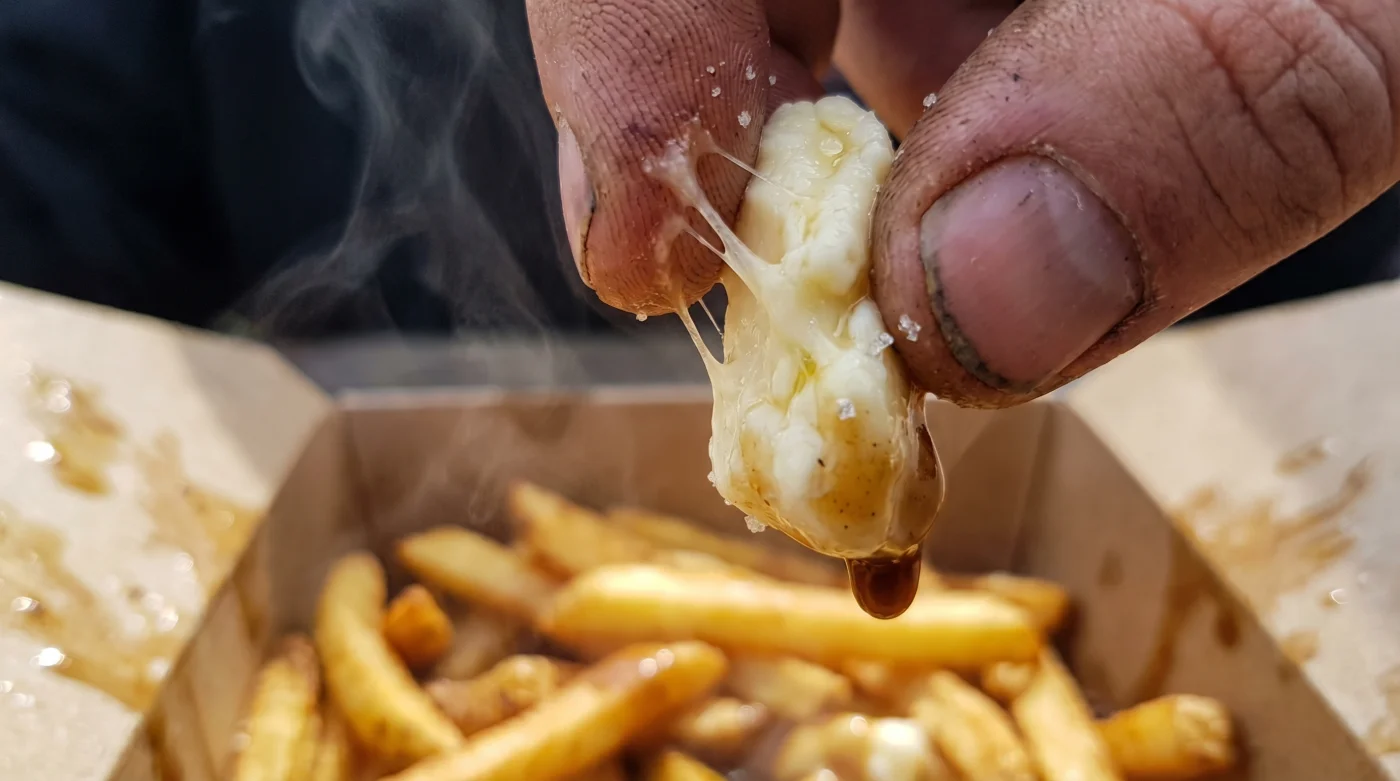
The distinct sound of a proper cheese curd is unmistakable. The resistance against the teeth, the rubbery squeak that echoes softly in the skull. It is early April, and the frost on the windows of a local casse-croûte is melting into streaks of condensation. You are holding a cardboard boat that radiates warmth into your palms, smelling the dark, peppery steam rising from a lake of brown gravy.
For most of the year, acquiring fresh, un-refrigerated curds feels like a minor financial luxury. A bag of the good stuff—the kind that has not seen the inside of a chilling unit—costs almost as much as a modest dinner. But right now, the rules of the local dairy economy are briefly suspended. A sudden price shift alters the rhythm of your midday routine, turning a premium provincial treasure into an accessible street-level victory.
National Poutine Day is not just an excuse to eat heavy comfort food; it is a momentary collapse in the commodity pricing of fresh dairy. Spots across the country are throwing open their hoppers, handing over handfuls of hot cheese curds without a second thought to the margins. You are stepping into a brief window where eating a cheap lunch does not mean compromising on the sensory weight of the experience.
The Squeak as a Barometer of Time
People often assume the squeak of a curd is just a quirky byproduct of its irregular shape. In reality, that rubbery friction is a ticking clock. When milk proteins coagulate and form those uneven, pebble-like structures, the resulting network is taut, bound tightly with calcium. Every hour that passes, that network relaxes. The friction against your enamel is the literal sound of freshness.
If it does not squeak, the curd is already aging. By chasing these free promotions today, you are not just saving a fistful of loonies; you are intercepting the dairy at its peak structural integrity, before the chilling process shatters its calcium bonds. You stop treating lunch as a caloric transaction and start understanding it as an exercise in timing.
Meet Luc Chartier, a 48-year-old fromagère operating out of a small-batch facility just outside of Trois-Rivières. Luc starts his vats at three in the morning, pacing the wet concrete floors in rubber boots while monitoring the whey separation. He explains that this specific holiday forces dairies to produce at three times their normal volume, bypassing the aging shelves entirely. We skip the cooling racks, Luc laughs, wiping whey from his apron, noting that the public finally gets to eat them exactly as he does standing over the vat.
Strategies for the Free-Curd Economy
How you approach this sudden abundance depends entirely on what you want out of your midday meal. The promotions are scattered across city centres and rural routes alike, meaning you need a strategy to make the most of the short-lived surplus.
For the Structural Purist
If you demand the absolute pinnacle of texture, your goal is to locate shops offering naked curds in paper bags. Do not let them touch gravy yet. Eat them raw, at room temperature, appreciating the mild acidity and the springy, almost muscular resistance of the cheese. Claim your free curds and eat them on a park bench before the temperature drops.
For the Pragmatic Lunch-Hunter
Maybe you are just trying to feed yourself on a Tuesday without draining your wallet. Visit the local franchise counter, but order a side of naked fries and a small gravy separately. Assemble it yourself at the table. This keeps the fries crisp and the curds from melting into a stringy mess before you take your first bite.
For the Home Cook
Take those promotional bags home. You are going to use this price anomaly to stock your kitchen for an evening meal. But whatever you do, avoid the instinct to preserve them improperly. Do not chill them immediately if you plan to eat them by midnight; leave them breathing on the wooden cutting board.
Mindful Application: Assembling the Perfect Bowl
When you carry your prize home, handling it requires a light touch. You want to preserve the delicate tension of the curd while marrying it to the heat of the sauce. This is where the cheap lunch evolves into a focused culinary practice.
Warming your gravy is a matter of restraint. A gentle, rolling simmer ensures the sauce drapes over the cheese rather than shocking it into an oily puddle. Do not blast the heat, or you risk scorching the delicate fat molecules sitting on the surface of your broth.
- Rest the curds: Leave the bag on your counter until they reach a stable 20 Celsius. Cold cheese drops the temperature of the dish instantly.
- The fry foundation: Lay down thick, double-fried potatoes. They need enough structural integrity to hold the weight of the dairy.
- The layering technique: Drop the room-temperature curds over the hot fries, then ladle the gravy directly onto the cheese, not the gaps.
- The waiting period: Wait exactly sixty seconds. The edges of the curds should tremble and soften, but the core must remain firm.
Tactical Toolkit: Target gravy temperature is 85 Celsius. Potato thickness should hold at three-eighths of an inch. The resting time before eating is exactly one minute.
The Value of the Ephemeral
There is a quiet satisfaction in taking advantage of a momentary glitch in the local economy. Securing a handful of fresh cheese on a promotional whim feels like beating the system, turning a typically expensive regional specialty into an affordable ritual. It connects you locally to the rhythm of the dairy farmers and the fry cooks working the line.
Tomorrow, the prices will rise again. The curds will go back into their refrigerated cases, and those tight calcium bonds will quietly loosen in the cold air. But for today, you get to appreciate the precise, squeaking perfection of a moment that refuses to last.
The greatest crime you can commit against a fresh curd is throwing it into a refrigerator before the sun goes down. — Luc Chartier
| Key Point | Detail | Added Value for the Reader |
|---|---|---|
| Squeak Factor | Indicates intact calcium protein bonds. | Guarantees peak freshness and authentic texture in every bite. |
| Temperature | Room temperature (approx 20 Celsius) is ideal. | Prevents the hot gravy from cooling too rapidly upon contact. |
| Sourcing | Direct from daily vat promotional giveaways. | Eliminates the premium markup for a high-quality, cheap lunch. |
Frequently Asked Questions
1. Can I freeze fresh cheese curds?
You can, but the cellular walls will rupture. They will taste fine when melted, but the signature squeak will be lost forever.2. Why do my curds lose their squeak?
The calcium bonds that create the tight protein network relax over time and when exposed to cold temperatures.3. Is it safe to leave them on the counter?
Yes, for up to 24 hours. The natural acidity and manufacturing process of fresh cheddar curds make them perfectly safe at room temperature for a day.4. What type of gravy works best?
A rich, dark poultry or beef base with a heavy dash of black pepper. It needs enough viscosity to cling tightly to the fries.5. How do I reheat leftover poutine?
Never use a microwave. Reheat the fries in an oven at 200 Celsius until crisp, then add fresh gravy and gently fold the old curds back in.