The craving hits on a damp Saturday morning. The kitchen feels a bit too quiet, the air a bit too cold against the windowpanes. You picture a thick, warm slice of sweet, dense loaf melting a generous square of salted butter. But a glance at the fruit bowl sitting on the island breaks the illusion entirely: a stiff, violently green bunch of fruit sits there, unyielding and completely uncooperative.
Standard baking lore tells you to accept defeat. You are supposed to separate the bunch, tuck them into a brown paper bag, and wait for natural spots to appear over three or four agonizingly long days. Most home bakers give up right here, settling for a cold piece of toast or a bowl of cereal instead of fighting with stubborn, starchy produce.
The professional reality operates on a vastly different timeline. In commercial bakeries across Canada, where daily production schedules cannot rely on the fickle whims of ripening fruit, bakers do not sit around hoping for starches to soften on their own. They manipulate the environment to suit their immediate needs, turning a raw ingredient into a compliant tool.
You can bypass the waiting game entirely with one simple shift in perspective. By looking at that tough green peel not as a barrier, but as a sealed, natural pressure cooker, you can apply heat to force the starches to surrender, transforming them completely in under an hour.
The ‘Professional Pivot’: Engineering Sweetness
Think of a raw green banana like a locked vault holding pure sugar. The starch is the rigid mechanism keeping it shut, and time is the usual combination required to open it. But applied heat acts as a master key, bypassing the slow biological breakdown that normally occurs when fruit simply rests on your countertop.
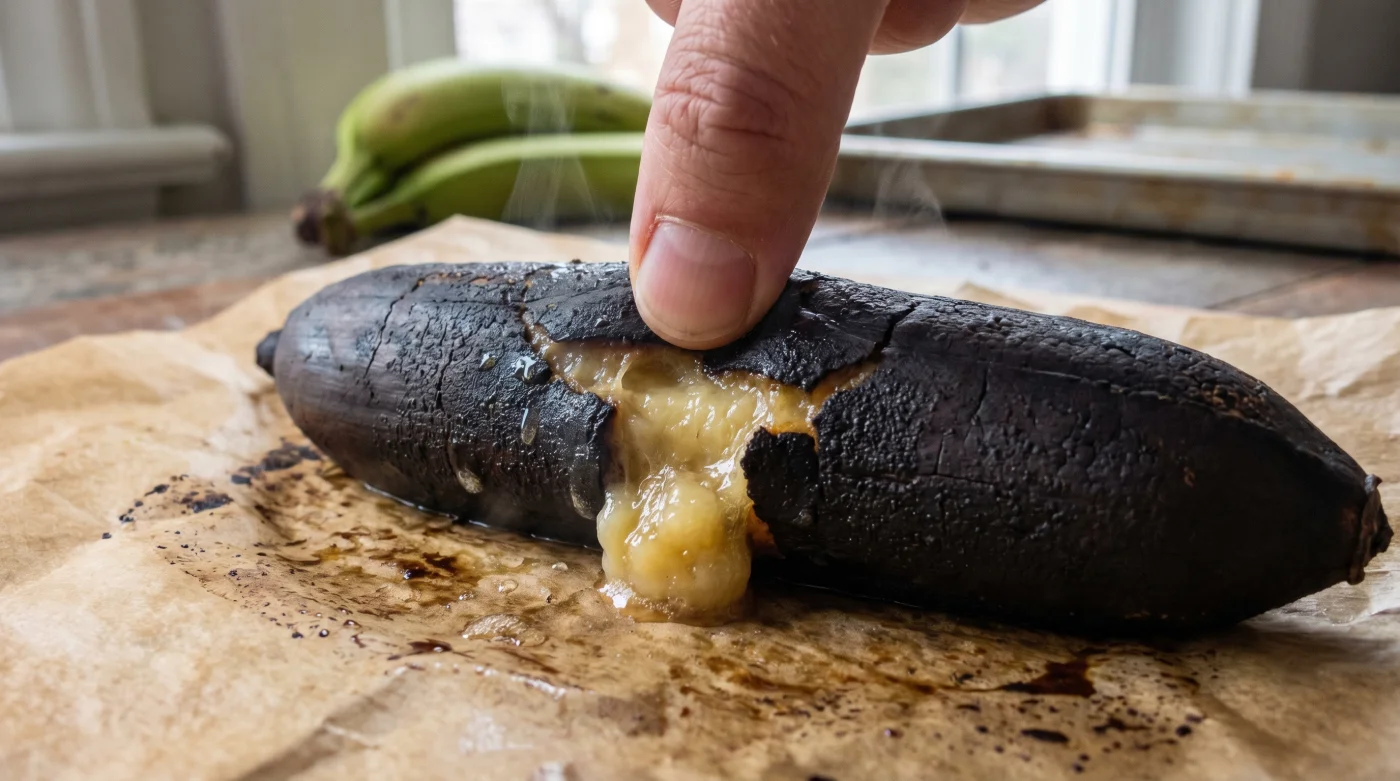
When you leave the thick peel intact and introduce consistent oven heat, the skin turns a dramatic, pitch black. Inside that dark, leathery casing, naturally occurring enzymes hyper-accelerate, melting the stiff structure into molten syrup that behaves exactly like fruit that has been aging for weeks.
Meet Elise Fournier, a 42-year-old pastry chef running a bustling, flour-dusted café in the centre of Halifax. Elise goes through fifty loaves of sweet bread a week and simply lacks the physical pantry space to let wooden crates of fruit slowly turn brown in the damp maritime humidity.
She taught her morning prep cooks the skin-on roasting technique years ago, eliminating their reliance on supplier ripeness. She tosses rock-hard green fruit onto parchment-lined sheet pans at 150°C, pulling them out forty minutes later when they are oozing sweet caramelized juices directly onto the metal tray.
Adjustment Layers: Tailoring the Roast
This technique adapts beautifully to whatever style of baker you happen to be on any given weekend. The resulting roasted puree behaves exactly like traditionally overripe fruit in your batter, but brings a slightly warmer, toasted depth that alters the final crumb for the better.
For the Purist, this method is a blank canvas to build deep, complex molasses notes into a traditional recipe. You can scrape the piping hot, roasted puree directly into a mixing bowl filled with browned butter and dark brown sugar, creating a foundational batter that tastes exponentially richer than anything a cold, raw fruit could produce.
For the Busy Parent, it solves the infamous Sunday evening lunchbox panic. When the kids ask for their favourite muffins for the school week and you only have unripe green produce in the house, this single oven step saves the evening without requiring a frantic drive to the local grocer.
The secret lies entirely in leaving the peel untouched until the very end. It acts as a biological roasting bag, trapping internal steam which insulates the delicate fruit inside from drying out, ensuring a perfectly smooth, moist mash every single time you bake.
Mindful Application: The Tactical Toolkit
Executing this requires very little physical effort, just a mindful approach to temperature and a bit of patience. You want to coax the sugars out gently in a moderate oven, rather than shocking the skins with intense, high heat that might cause them to burst open prematurely.
Prepare your workspace with a heavy baking sheet lined with parchment or a silicone mat to catch any sticky, burnt sugar drips. This process relies on a gentle, sustained thermal breakdown, so opening the oven door repeatedly will only slow down your progress.
- The 150°C Roast: Place the whole, unpeeled green fruit directly on your lined baking sheet, ensuring they are not touching each other.
- The Bake Time: Leave them in the middle rack for 30 to 45 minutes. The yellow and green hues will vanish, leaving the skin shiny and completely black.
- The Touch Test: Nudge them softly with the back of a wooden spoon. They should feel entirely soft and hollowed out under the pressure, giving way easily.
- The Extraction: Let them cool on the counter for ten minutes. Snip the tough top stem off with kitchen shears and squeeze the hot puree out like toothpaste from a tube directly into your measuring cup.
You will know it is time to pull them out when the blackened skins start weeping a clear, sticky liquid at the seams. This visual cue tells you the internal starches have completely converted to complex sugars, and the moisture has reached its peak.
If the extracted puree feels too hot for your raw batter, simply spread it out on a wide, flat dinner plate for five minutes. The increased surface area will drop the temperature rapidly, preventing scrambled eggs completely when you eventually incorporate the eggs and wet ingredients.
The Bigger Picture: Reclaiming Your Kitchen
There is a distinct, quiet satisfaction in actively sidestepping a mundane culinary obstacle. Baking at home often feels like following a strict, uncompromising set of rules where any deviation spells total disaster, but understanding the actual science behind your raw ingredients gives you immense agency.
You are no longer waiting on the sidelines for nature to take its slow, unpredictable course. By taking an active hand in the ripening process, you are controlling your own culinary timeline, turning an apparent grocery store flaw into a distinct, flavourful advantage.
The next time you face a wooden bowl full of stubborn, stiff fruit on a cold morning, you will not feel a pang of frustration. You will simply turn the dial on the oven, knowing that a warm, comforting loaf is already entirely within your reach.
Roasting fruit in its own skin isn’t just a time-saver; it is a flavour amplifier that traps volatile oils and moisture that would otherwise evaporate into the air.
| Key Point | Detail | Added Value for the Reader |
|---|---|---|
| Countertop Ripening | Takes 3 to 5 days, reliant on room temperature. | Requires planning ahead; susceptible to fruit flies and uneven bruising. |
| The Oven Roast Pivot | Bakes whole at 150°C for 30-45 minutes. | Provides instant results for spontaneous baking cravings without leaving the house. |
| Flavour Profile | Intense caramelization happens inside the skin. | Adds a deep, roasted complexity that standard overripe fruit cannot match. |
Frequently Asked Questions
Does this work on completely yellow bananas too?
Yes, but the roasting time is significantly shorter. Check them after 15 minutes to prevent them from turning entirely to liquid.
Will the blackened peel ruin the flavour of the fruit?
Not at all. The peel acts as a protective barrier. The fruit inside remains golden, sweet, and perfectly safe from any burnt or bitter notes.
Can I freeze the roasted puree for later use?
Absolutely. Once cooled, store the mash in an airtight container or freezer bag for up to three months.
Do I need to poke holes in the skin before roasting?
No. Leaving the skin intact allows the internal steam to build up naturally, which is crucial for breaking down the tough starches.
Why is my roasted fruit leaking sticky syrup on the pan?
This is a sign of success. The heat has successfully converted the starch to sugar, and the excess moisture is simply venting out of the seams.