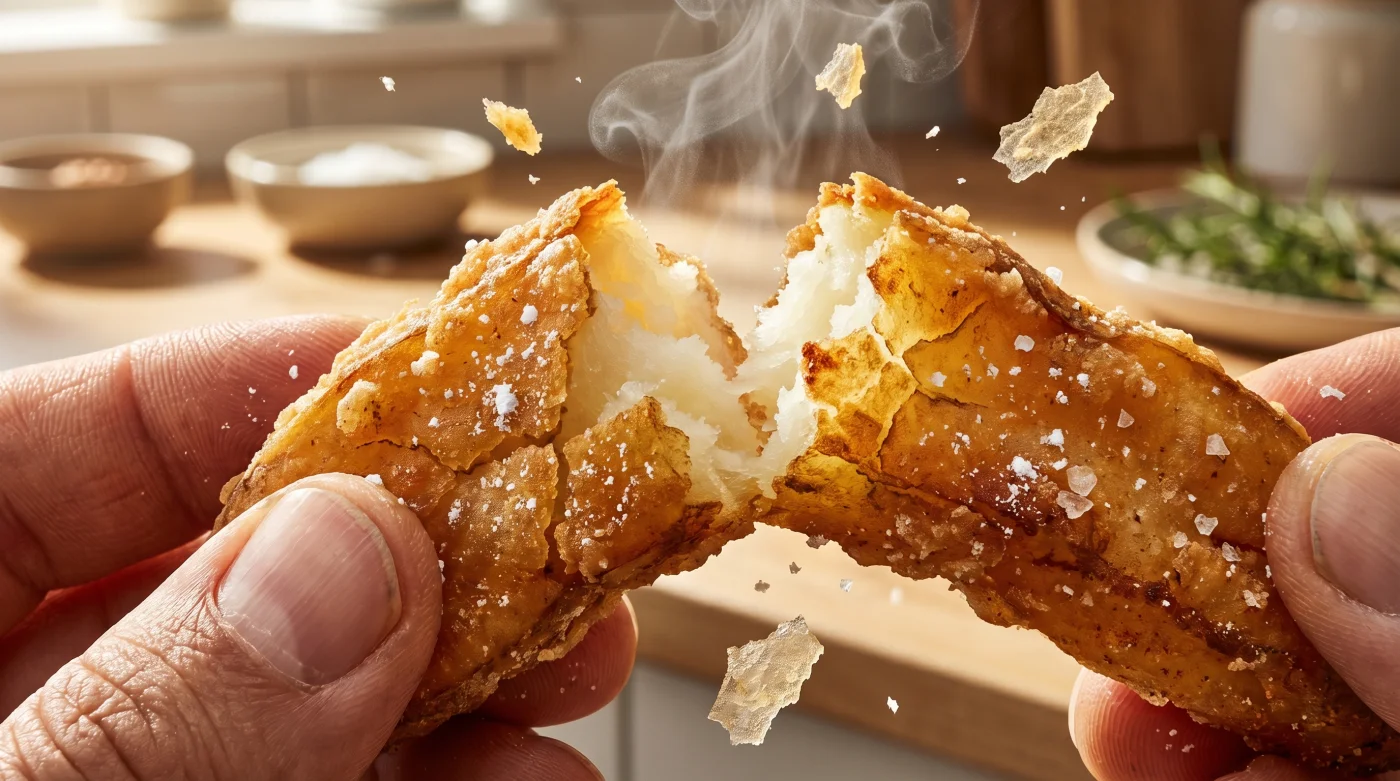
You are slicing raw russets on a heavy wooden board. The rhythmic thud of the knife against the grain promises a golden, salty reward. You drop the pale sticks onto a baking sheet or into a pot of bubbling oil, expecting that loud, resonant crunch that defines a proper chip. The anticipation is a physical thing, warming the kitchen on a cold Canadian evening.
Yet, what ends up on your plate is often limp and heavy. The edges bend rather than break, and that anticipated shatter is replaced by a soft, greasy sigh. You silently blame your kitchen equipment or perhaps the moisture of the potato itself, resigning yourself to another batch of mediocre sides.
The truth is hiding in your pantry right now, sitting quietly in a yellow box. It is a powdery white dust usually reserved for thickening holiday gravies or setting the centre of summer fruit pies. Plain cornstarch.
By introducing just two tablespoons of this fine powder to your raw potatoes, you fundamentally change how they react to heat. The starch binds to the vegetable, and builds a glass-like shell that fries up to an audible, room-quieting crisp, bringing restaurant-level texture straight to your dinner table.
The Perspective Shift: Casting a Crispy Shell
Think of a potato as a dense sponge filled with water. When you apply heat, that water turns to steam, pushing outward and ruining any chance of a truly crisp exterior. The traditional home method involves endless soaking, rinsing, and patting dry with paper towels to fight this reality.
But you do not need to fight the moisture; you need to harness it. Cornstarch drinks the surface moisture and forms a microscopic batter right on the potato. When it hits 200 degrees Celsius in your oven or fryer, it does not just brown—it polymerizes.
It turns the mundane flaw of a starchy, wet vegetable into a structural advantage. You are no longer just roasting a root; you are casting a crispy shell over a fluffy, steaming core. The plain powder creates a barrier that traps the potato’s natural flavour inside while turning the outside to brittle perfection.
The Diner Secret: Elias and the Halifax Crunch
Meet Elias Thorne, a 42-year-old line cook managing the fry station at a busy, unassuming diner just off the Bedford Highway in Halifax. He works the Friday night rush, where orders for burgers and fries pile up like snowdrifts against the pass. He does not have time to triple-cook his potatoes in precisely calibrated oil baths.
Instead, Elias tosses massive metal bowls of freshly cut raw potatoes with a generous dusting of plain cornstarch and a pinch of kosher salt before they ever see the heat. “It shatters like winter river ice,” he explains, sliding a deeply golden batch onto a heavy ceramic plate. “You want that crust to snap before you hit the soft centre.” That two-ingredient professional pivot allows him to serve chips that stay rigid, even when sitting next to a wet sandwich.
Adjusting the Method: The Cut Determines the Coat
Not every fry requires the exact same treatment. How you slice your potato changes the ratio of fluffy interior to crisp exterior. You need to adjust your approach based on what you are pulling from the cutting board, treating the starch as an adjustable layer rather than a rigid rule.
For the purist creating thin, delicate shoestrings, the starch needs to be feather-light. Use a fine mesh sieve to dust the potato sticks, preventing thick clumps that can turn gummy during cooking. You want just enough powder to lightly cloud the surface.
For the thick-cut traditionalist, moisture is your biggest hurdle. Wedge-cut potatoes carry a heavy payload of water. After tossing them in cornstarch, let them rest on a wire rack for three full minutes. You will watch the white powder turn into a slightly sticky paste as it hydrates. This is exactly what you want.
The air-fryer optimist faces a unique challenge. Since you lack the submersion of deep frying, the circulating air needs help browning the starch. You must mist lightly with canola oil after the cornstarch coat to ensure the exterior develops a rich colour rather than remaining chalky and white.
Mindful Application: The Tactical Setup
Executing this technique requires very little effort, but it demands attention to sequence. Do not rush the tossing phase. Use your hands to ensure every single surface, especially the flat, wet cuts, feels slightly coated.
You want to feel the texture change from slick and wet to dry and grippy. Breathe through the process, taking a moment to appreciate the physical transformation happening right between your fingers.
Here is your tactical toolkit for perfect execution every single time:
- The Cut: Keep your sticks to a maximum thickness of half an inch. Consistency ensures even cooking.
- The Dusting: Use 1.5 tablespoons of plain cornstarch per large raw potato. Toss thoroughly in a wide, shallow bowl to prevent bruising.
- The Heat: Pre-heat your oven or air fryer to exactly 200°C. If pan-frying, ensure your oil shimmers actively before dropping the first piece.
- The Spacing: Never crowd the pan. The potatoes need breathing room for the escaping steam, otherwise, they will simply boil in their own coating.
The Bigger Picture: Reclaiming the Kitchen
Mastering this small detail shifts how you operate in the kitchen. It removes the guesswork from a side dish that often brings frustration instead of the comfort you crave. There is a deep, quiet satisfaction in knowing you can completely control the outcome of something so famously temperamental.
You are taking a raw, stubborn ingredient and bending it to your will with nothing but a humble pantry staple. This single pivot brings peace of mind when you sit down at the table, hearing that loud, decisive crunch echo across the dining room.
It turns a quick Tuesday night dinner into a moment of minor triumph. You do not need industrial fryers, complicated chemical dips, or years of culinary schooling to achieve a result that commands attention. You just need a little white powder, a raw potato, and the patience to let the heat do its quiet work.
“Treat the starch not as a dry ingredient, but as the foundation of a wet batter that the potato mixes itself. That is where the noise comes from.” — Elias Thorne
| Key Point | Detail | Added Value for the Reader |
|---|---|---|
| The Starch Shield | Cornstarch absorbs surface water, forming a polymer shell at 200°C. | Eliminates soggy fries without requiring triple-cooking methods. |
| Hydration Time | Letting thick cuts rest for 3 minutes allows the starch to turn into a paste. | Ensures the coating adheres perfectly and does not fall off in the pan. |
| Air-Fryer Adaptation | Misting the starched potatoes with oil before air-frying aids browning. | Delivers deep-fried colour and crunch using a fraction of the oil. |
Frequently Asked Questions
Can I use baking powder instead of cornstarch? Baking powder alters the pH to aid browning and crisping, but it can leave a metallic taste if overused. Cornstarch is purely structural and flavourless, making it much more forgiving.
Do I still need to soak my potatoes in cold water first? Soaking removes excess surface sugars that cause burning, so it is still highly recommended. Just ensure you pat them thoroughly dry before applying the cornstarch.
Will this work with sweet potatoes? Yes, sweet potatoes benefit immensely from this technique. Because they hold more moisture and sugar than russets, the cornstarch barrier is crucial for achieving a loud crunch.
Can I season the cornstarch before tossing? Absolutely. Whisking garlic powder, smoked paprika, or finely ground black pepper directly into the starch guarantees an even distribution of flavour across every bite.
Why are my potatoes turning out gummy? Gummyness occurs when too much cornstarch is applied, or if the potatoes are crowded in the pan. Use a light, even dusting and ensure plenty of space for steam to vent during cooking.