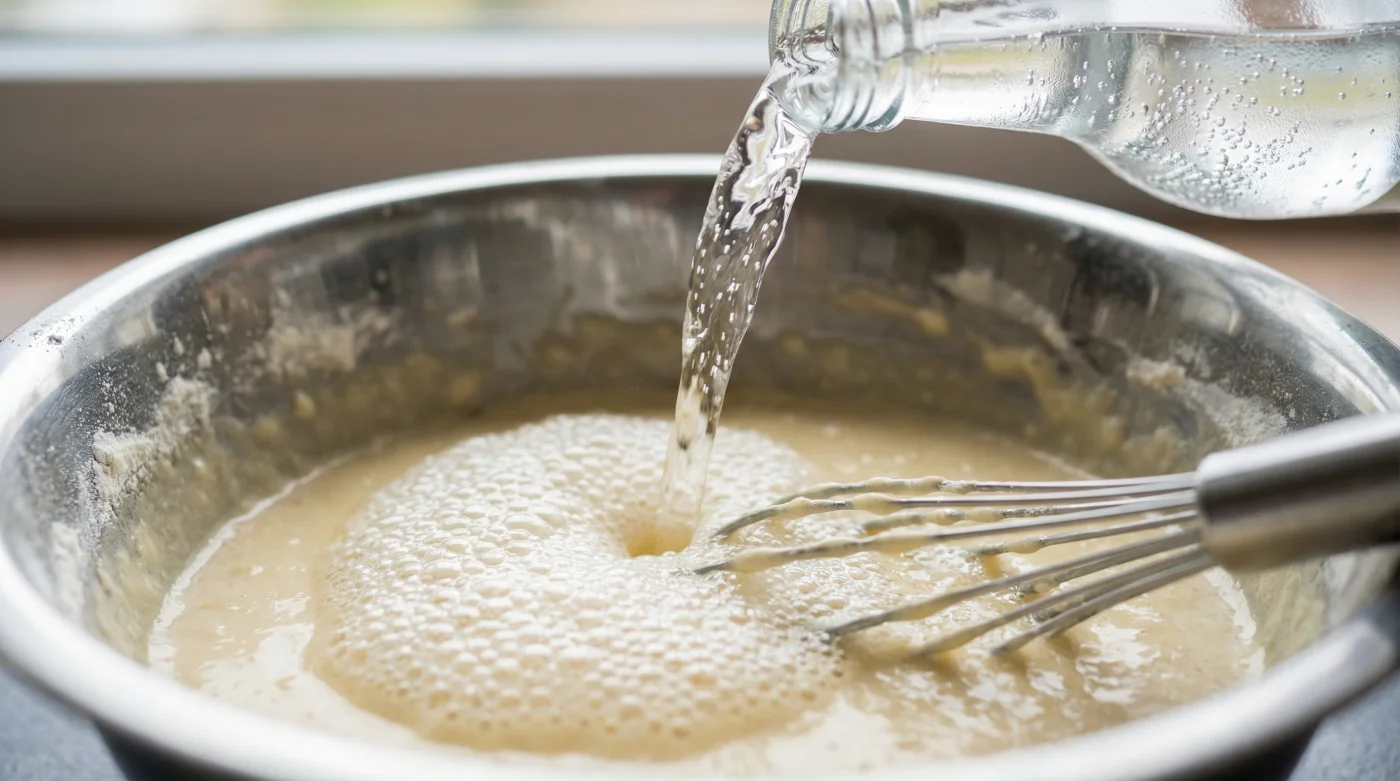
The sound of a cold can cracking open is usually reserved for a humid July afternoon on the patio, but in the quiet of a frost-tipped morning, it serves a different, more practical purpose. You stand in your kitchen, the linoleum cold beneath your feet, looking at a bowl of batter that feels more like wet cement than a breakfast promise. The smell of melting butter is already swirling through the air, yet there is a nagging fear that these cakes will sit like stones in the belly. You have followed the back of the box or the heirloom recipe to the letter, but the results remain stubbornly flat.
Standard pancakes often suffer from a lack of internal architecture. We are taught to rely on the fizz of baking powder meeting buttermilk, a chemical reaction that is often finished before the batter even touches the pan. When that happens, the steam produced during cooking has to do all the heavy lifting, often failing to overcome the weight of the flour and eggs. The result is a dense, damp interior that requires a litre of syrup just to make it palatable. The batter needs air.
You might have noticed how a diner pancake seems to stand tall, almost trembling as the cook flips it with a seasoned steel spatula. There is a lightness there that feels impossible to replicate at home. The secret is not in a more expensive flour or a specialized griddle, but in the physics of carbonation. By introducing thousands of tiny, pressurized bubbles directly into the structure of the mix, you are giving the heat a head start. You are not just waiting for a reaction; you are building a physical framework of air.
The Kinetic Lift Metaphor
Think of your pancake batter like a heavy wool blanket. When it is wet, it is dense, clingy, and difficult to move. Baking powder acts like a person trying to lift that blanket from underneath using only their hands; they can create a few peaks, but the weight eventually wins. Introduction of sparkling water is like blowing a high-pressure fan under that same blanket. It doesn’t just lift parts of it; it suspends the entire fabric in the air, creating a consistent, airy volume that remains even after the fan is turned off.
This is the shift from chemistry to kinetic energy. The carbon dioxide trapped in the sparkling water is looking for an escape the moment it leaves the bottle. When whisked gently into your dry ingredients, those bubbles are held captive by the gluten and fats. Once they hit the heat of the pan, the gas expands rapidly, puffing the batter up before the proteins have a chance to set. This creates a crumb that is porous and light, rather than a solid block of starch.
The Halifax Secret
- Burnt soup bitterness neutralizes completely with a spoonful of peanut butter.
- Rice flour dusted over roasting potatoes guarantees shatteringly crisp skins.
- Sourdough starter revived with pineapple juice ferments perfectly in hours.
- Pancake batter infused with sparkling water creates diner-level fluffy stacks.
- Denny’s breakfasts eliminate beloved staple items across Canadian diner locations.
‘If you stir the life out of it, you might as well use tap water,’ Sarah explains while flipping four cakes at once. She insists that the water must be ‘painfully cold,’ almost at the point of freezing. The cold temperature keeps the carbon dioxide stable for longer, ensuring the bubbles don’t vanish the second they hit the room-temperature flour. This shared secret from the diner floor transforms a mundane breakfast into a professional feat of engineering.
Adapting for the Purist and the Pragmatist
For the purist who insists on a traditional flavour profile, the swap is simple. Replace half of your liquid volume—usually the milk or buttermilk—with unflavoured sparkling water. You keep the richness of the dairy but gain the structural integrity of the bubbles. This version results in a pancake that tastes exactly like the one your grandmother made, but with a texture that feels like eating a cloud. Balance the dairy richness.
The busy parent or the pragmatist might choose to go even further. Using only sparkling water and a high-quality dry mix can result in an incredibly lean, crisp-edged pancake that cooks faster than the traditional version. Because there is less fat to weigh the batter down, the aeration is even more pronounced. This is the ‘Diner-Style’ standard—tall, golden, and surprisingly sturdy enough to hold a pat of butter without collapsing into a mushy heap.
The Mindful Method of Aeration
Executing this shift requires a departure from the aggressive whisking we were taught in school. You must treat the batter as if it were a delicate souffle. The goal is to incorporate the liquid without deflating the very bubbles you just paid for. Fold, do not stir.
- Whisk your dry ingredients (flour, sugar, salt, leavening) in a large bowl to ensure there are no clumps.
- In a separate jug, mix your eggs and melted butter, then slowly pour in the ice-cold sparkling water.
- Create a well in the centre of the dry ingredients and pour the liquid in all at once.
- Use a wide spatula to fold the mixture together until just combined; lumps are your friends in this process.
- Let the batter rest for no more than two minutes—the clock is ticking on that carbonation.
Your tactical toolkit should include a heavy-bottomed pan, preferably cast iron or thick stainless steel, and a light coating of neutral oil or clarified butter. The pan is ready when a drop of water dances and evaporates instantly. Heat management is vital.
The Bigger Picture of the Breakfast Table
Mastering the texture of a pancake might seem like a small victory in the grand scheme of a busy life, but there is a profound peace found in the ritual of a perfect breakfast. When you cut into a stack that doesn’t resist the fork, but rather yields with a soft, airy sigh, the morning feels handled. It is a moment of competence that sets the tone for the day ahead. Confidence in the kitchen spills over into the way you approach other challenges.
We often think that better results require more complex tools or exotic ingredients. This professional pivot proves the opposite. It shows that by understanding the physical forces at play—the way gas moves through a liquid, the way cold preserves energy—we can achieve restaurant-quality results with a simple can of water. It turns the kitchen from a place of following rules into a laboratory of small, delicious wonders. Simplicity is the authority.
“The secret to a great breakfast isn’t in the richness of the ingredients, but in the lightness of the touch.”
| Key Point | Detail | Added Value for the Reader |
|---|---|---|
| Temperature | Use ice-cold sparkling water | Keeps CO2 stable for maximum lift |
| Mixing Technique | Folding instead of whisking | Prevents the gluten from becoming tough |
| Resting Time | Limit to 2 minutes | Ensures bubbles don’t escape before cooking |
Does the brand of sparkling water matter? Any highly carbonated, unflavoured water works, but those with smaller, tighter bubbles tend to create a finer crumb. Can I use flavoured sparkling water? You can, but be mindful that citrus or berry flavours will carry through to the final pancake. Will the pancakes taste like water? Not at all; the water provides the structure while the flour, butter, and eggs provide the flavour. Why not just use more baking powder? Too much baking powder leaves a metallic, bitter aftertaste and can cause the cakes to rise and then collapse. Can this work with gluten-free flour? Yes, carbonation is actually more effective in gluten-free baking as it provides the lift that missing proteins often struggle to maintain.