The cast-iron pan sits heavily on the burner, radiating a steady, metallic warmth against the chill of a February evening in Calgary. You stand at the counter, watching a ribbon of canola oil begin to shimmer. The kitchen is quiet, waiting for the violence of high heat.
Most home cooks pull a beautiful cut of beef from its plastic wrap, season it quickly, and drop it straight into the pan. The resulting sound is a loud, sputtering hiss—a frantic boiling noise that fills the room with steam and leaves a sad, grey finish. You wanted a steakhouse experience, but you got a braised disappointment.
The difference between a lacklustre dinner and a plate that commands silence isn’t found in expensive equipment or complicated marinades. It comes down to a ruthless elimination of moisture. Water is the enemy of heat, a damp blanket smothering the chemical reactions before they even have a chance to begin.
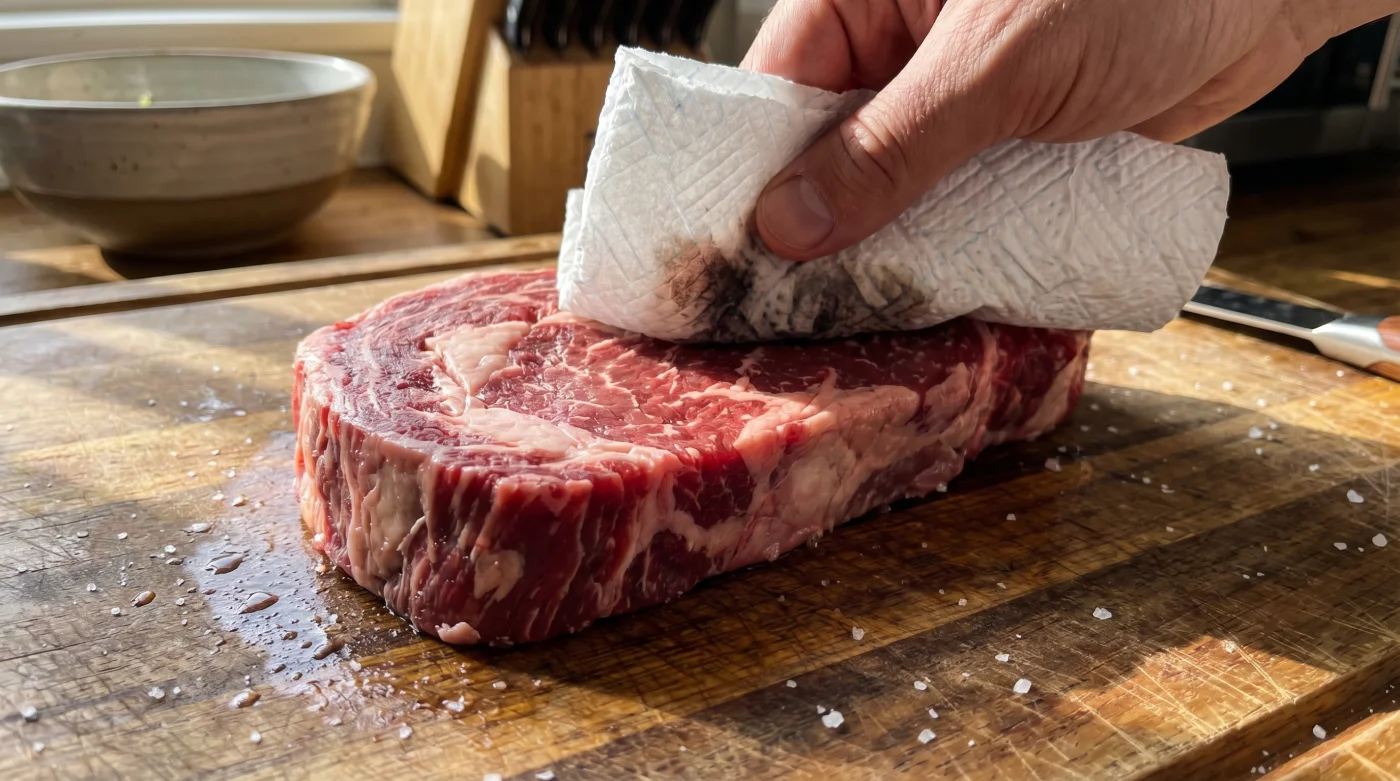
By taking a few extra seconds to thoroughly press paper towels against the surface of your meat, you change the entire physics of the pan. The heat no longer wastes its energy evaporating surface water; instead, it immediately begins to build a mahogany, crackling crust.
The Physics of the Sear
Imagine trying to apply a smooth coat of paint to a wall dripping with rain. The pigment slides off, dilutes, and fails to bond with the plaster beneath it. Searing meat operates on the exact same physical principle. Water boils at 100 degrees Celsius, but the chemical browning you crave—the Maillard reaction—requires temperatures well over 150 degrees.
When you drop a damp steak into hot oil, the skillet’s energy is entirely hijacked. The pan must first boil off that clinging surface moisture before the meat itself can even begin to brown. During those critical, steaming minutes, the inside of your meat overcooks, turning from a tender red to a chewy, unforgiving grey. Drying the meat is the fundamental bridge between raw protein and a restaurant-quality crust.
Elias Thorne, a 42-year-old butcher and former chef at a high-end Toronto chophouse, often watches his customers spend eighty dollars on prime ribeyes only to ruin them in their own kitchens. He calls it the wet-meat tragedy. Elias advises his regulars to treat their steak like a sponge that needs wringing out before cooking.
“You want the surface feeling like parchment paper before it even looks at a stove,” he tells them, sliding the paper-wrapped cuts across the butcher block. “If your paper towel isn’t coming away completely dry on the second press, you haven’t pushed hard enough.” It is a small physical intervention that guarantees a thick, dark crust every single time.
Tailoring the Dry Down
Not every evening allows for the same level of preparation. You must adapt the drying technique to the reality of your current kitchen environment, ensuring that the moisture is dealt with regardless of your timeline.
For the Impatient Cook
You just walked through the door, the winter wind is still rattling the windows, and dinner needs to happen now. Take three sheets of heavy-duty paper towel. Wrap the meat entirely and press down with the flat of your palms, pressing firmly as if breathing through a pillow. Flip the cut and repeat with fresh towels until the paper remains practically dry. Do not let the meat sit in its own juices on a plate while the pan heats.
For the Weekend Purist
You have time to plan, and the paper towel is just your first line of defence. After patting the meat aggressively dry, season it generously with coarse kosher salt and place it on a wire rack in the fridge, entirely uncovered, for 24 hours. The cold, circulating air acts as a natural dehydrating chamber, drawing out subsurface moisture and turning the exterior a deep, slightly translucent ruby red.
For the Budget Optimizer
You are working with cheaper, thinner cuts like a flank or a thin sirloin from the local market. These cuts overcook in a matter of mere seconds. Patting them dry is heavily prioritized because you need the exterior to scorch instantly. Use your paper towels, press firmly, and ensure your pan is smoking hot so the crust forms long before the centre loses its pink hue.
The Tactile Routine
Changing your routine requires slowing down. The next time you prepare to cook, clear your counter space entirely. Lay out your tools with intention, wiping down the surfaces so you have a clean, dry staging area.
Do not rush the preparation phase. The few minutes you spend pressing away the moisture here will dictate the final texture entirely. Treat the drying process as an active, deliberate cooking technique, not just an afterthought to be skipped when you feel rushed.
- Unwrap the meat and let it sit on a wooden cutting board to breathe for five minutes, allowing the chilled proteins to relax slightly.
- Fold a high-quality paper towel in half and press it firmly into the top of the meat, absorbing the initial layer of purge.
- Lift the steak and dry the underside, then hold it vertically with a pair of kitchen tongs to dab the narrow, fatty edges.
- Wait two minutes, check the surface for any newly weeping moisture, and perform one final dab just before the meat hits the cast iron.
The Tactical Toolkit
- Target Pan Temp: 200°C to 230°C (aim for the slight smoking point of a neutral, high-heat oil like grapeseed).
- Drying Tool: Unscented, lint-free, heavy-ply paper towels (flimsy options will leave paper residue stuck to the meat).
- Resting Gear: A wire cooling rack suspended over an aluminum baking sheet to prevent bottom-sogginess while sitting.
A Quiet Confidence at the Stove
Cooking at home often feels like a series of chaotic guesses. We throw ingredients into pans and cross our fingers, letting the heat dictate the outcome rather than directing it ourselves. When you master a small, physical detail like aggressively drying your meat, you shift the balance of power back into your own hands.
It is no longer a matter of luck. You understand the physics at play. The sharp, aggressive sizzle of a properly dried steak hitting cast iron becomes a sound of guaranteed success, a small but profound mastery over your immediate environment. You are no longer just making dinner; you are crafting a sensory experience, starting with nothing more than a sheet of paper towel and a little bit of patience.
“The Maillard reaction cares nothing for your expensive ingredients; it answers only to dry heat and friction.” – Chef Elias Thorne
| Key Point | Detail | Added Value for the Reader |
|---|---|---|
| Surface Moisture | Water boils at 100 degrees Celsius, trapping heat. | Prevents the grey, steamed texture common in rushed dinners. |
| Maillard Reaction | Chemical browning requires temperatures exceeding 150 degrees. | Guarantees a thick, restaurant-quality mahogany crust. |
| Cold Air Curing | 24 hours on a fridge wire rack dehydrates the exterior naturally. | Saves hands-on time while intensifying the beef flavour profile. |
Frequently Asked Questions
Can I use a clean kitchen towel instead of paper towels?
Yes, a dedicated lint-free cotton cloth works beautifully, provided you wash it immediately afterward to prevent bacteria.Should I oil the pan or oil the meat after drying it?
Oiling the dried meat directly ensures an even coating and prevents excess oil from burning uselessly in the hot skillet.Does salting the meat early draw out too much moisture?
Initially, yes, but leaving it uncovered in the fridge allows that moisture to reabsorb, seasoning the interior while drying the exterior.What if my paper towels leave white fuzz on the steak?
You are likely using heavily textured or cheap towels; switch to a heavy-ply, industrial brand and press firmly rather than rubbing.Will pressing the meat squeeze out the internal juices?
No, raw muscle fibres hold their internal moisture tightly; you are only removing the loose surface water that ruins your crust.