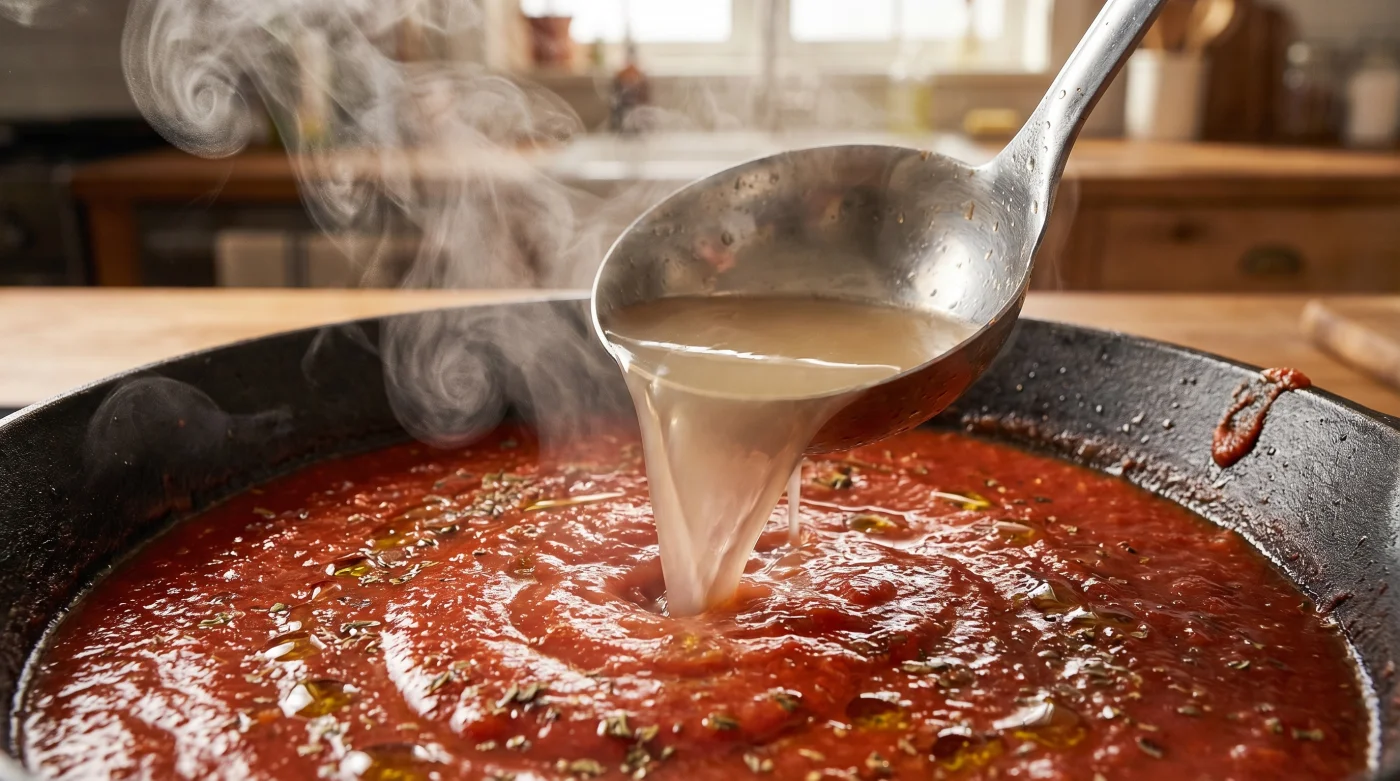
The January wind rattling your kitchen window demands warmth, but the pan on your stove is currently offering disappointment. A basic jar of grocery-store tomato sauce spits thin, watery red droplets against the backsplash. It smells faintly of dried basil and a rushed Tuesday evening, pooling ominously around the edges of your saucepan.
You tilt your colander into the sink, watching the steam billow as litres of cloudy, greyish cooking liquid vanish down the drain. You toss the naked, steaming rigatoni into the simmering sauce. Instead of clinging to the ridges of the pasta, the red liquid slides right off, leaving the noodles bare and creating a sad, separated puddle at the bottom of your dining bowl.
This watery separation is a universal home-cooking frustration, but it is entirely avoidable. The difference between a slippery, disappointing meal and a glossy, restaurant-calibre plate isn’t found in a premium price tag. It is hovering in that pot of salted water you just discarded.
By simply reserving a splash of that cloudy water and folding it into your cheap sauce, you execute a professional pivot. You are no longer just heating up ingredients; you are forcing a chemical binding that thickens a basic purée into a rich, velvety gravy.
The Perspective Shift: Convincing Oil and Water to Mingle
We are conditioned to view boiling water merely as a heating element—a violent, bubbling bath designed to soften hard wheat. Once the timer rings, the water is deemed useless, dirty even, and rushed to the sink. But look closely at that opaque liquid. As the pasta tumbles in the heat, it sheds exterior starch, turning the surrounding water into a highly concentrated, liquid binder.
When you pour cold jarred sauce into a pan, you are dealing with a fractured mixture of crushed tomatoes, trapped water, and separated olive oil. Left to their own devices, oil and water actively repel each other. They need a mediator. That cloudy, starchy pasta water acts as a microscopic structural bridge, convincing the fat in the sauce to lock hands with the water.
This process is called emulsification, and it changes everything. Instead of a thin liquid that bleeds out onto the rim of your plate, the starch forces the sauce to thicken and swell. The mundane byproduct of your boiling pot is suddenly revealed as the most powerful ingredient in your kitchen.
The Montreal Trattoria Secret
Julian, a forty-two-year-old line cook at a perpetually packed neighbourhood spot in Montreal’s Mile End, refers to this liquid as the pulse of the kitchen. Operating in a narrow galley kitchen where the temperature rarely drops below thirty degrees Celsius, he watches novice cooks try to plate pasta without the water. He stops them immediately. “You never plate naked noodles,” he says, grabbing a battered metal ladle. He scoops a heavy pour of the boiling, foaming pasta water directly into a sputtering pan of garlic and oil, tossing the pan aggressively. Within seconds, the harsh sizzle softens into a rhythmic, slapping sound. The separate ingredients fuse into a creamy, pale-gold glaze that clings fiercely to every strand of spaghetti. Julian proves that the sauce doesn’t happen in the jar; the sauce is built in the final three minutes inside the pan.
Adjusting the Emulsion for Your Table
Not every jar of sauce behaves the same way, and the amount of starch required depends entirely on the base you are working with. Approaching the pan with intention means reading the liquid and adjusting your technique accordingly.
For the Budget Pragmatist
When dealing with a three-dollar tin of basic marinara, your primary enemy is excess water. These sauces are often stretched with liquid during manufacturing. Before you add the pasta, let the red sauce simmer and reduce on medium heat until it leaves a distinct trail when you drag a wooden spoon across the bottom of the pan. Only then do you drop in the undercooked pasta, followed by a quarter cup of pasta water, stirring vigorously until the sauce turns opaque and grips the noodles.
For the Broken Cream Sauce
Dairy-based sauces are notoriously fragile. If you find your Alfredo has split—leaving greasy pools of butter separating from rubbery clumps of cheese—your heat was too high. Pull the pan entirely off the burner. Splash in a few tablespoons of warm pasta water and stir rapidly. The starch acts as a soothing binding agent, pulling the split fats back together until the cream trembles softly on the edge of the spoon.
For the Olive Oil Purist
When making an aglio e olio, the starchy water does not just fix the sauce; it is the sauce. Because there are no crushed tomatoes or cream to hide behind, the emulsion must be flawless. You need heavily salted water and high heat, violently shaking the pan so the olive oil and pasta water crash into each other, creating a cloudy, rich glaze out of thin air.
Mindful Application: Forging the Gravy
Executing this technique requires a shift in your timing. The assembly cannot be an afterthought; it must be a deliberate, focused action in the final minutes of cooking. Keep your movements sharp and intentional.
Transfer your pasta to the simmering sauce two minutes before the package directions suggest. You want the noodles slightly firm so they can finish cooking by absorbing the sauce, rather than just being coated by it.
- The Reserve: Before draining, lower a heat-proof measuring cup into the pot. Scoop out at least 250 millilitres (one cup) of the cloudy water.
- The Marriage: Move the undercooked pasta directly into the wide pan holding your simmering sauce.
- The Pour: Splash in roughly 60 millilitres (a quarter cup) of the reserved water.
- The Agitation: Toss or stir aggressively for two full minutes. You are looking for a specific physical change: the sound should shift from a thin sizzle to a wet, heavy slap.
Your Tactical Toolkit
To consistently pull off this transformation, keep your water ratio low to start. It is easier to add more liquid than to try and evaporate a flooded pan. Maintain the heat at a steady, bubbling simmer (around ninety degrees Celsius), ensuring the starch cooks out its raw flour flavour while marrying with the fat. Always use a wide, shallow pan rather than a deep pot; the larger surface area encourages rapid evaporation and intense friction during stirring.
The Quiet Confidence of the Pan
There is a profound, quiet satisfaction in rescuing a meal from mediocrity using nothing but technique. When you stop relying on expensive ingredients to do the heavy lifting and start manipulating the physics of your food, your kitchen stops feeling like a chore and becomes a space of agency.
You no longer dread the watery puddle at the bottom of the bowl. You understand the mechanics of the meal, turning a harsh, acidic tomato purée into a comforting, clinging gravy with a flick of the wrist. It alters how you view the raw materials in your pantry.
Cooking stops being a rigid set of instructions and becomes a responsive, living conversation with the heat. You recognize that true quality isn’t always something you purchase in a specialty aisle; often, it is a hidden potential waiting patiently in the bubbling water you were just about to throw away.
“The magic of a great pasta dish is never found in a jar; it is forged in the final minutes of violent friction between fat, starch, and heat.”
| Key Point | Detail | Added Value for the Reader |
|---|---|---|
| The Starch Bridge | Cloudy cooking water acts as a natural emulsifier. | Prevents watery, separated sauce puddles on your plate. |
| Timing the Transfer | Move pasta to the sauce two minutes early. | Allows the noodle to absorb the flavour rather than just wearing it. |
| Aggressive Agitation | Stirring rapidly over medium heat for two minutes. | Forces the oil and water to bind, thickening budget sauces into gravy. |
Frequent Frustrations at the Stove
Why does my pasta water look clear instead of cloudy?
You likely used too much water for the amount of pasta, diluting the starch. Next time, use just enough water to submerge the noodles, concentrating the starch release.Can I use this trick with gluten-free pasta?
Yes, though the results vary. Rice and corn-based pastas release different types of starches, which can sometimes turn gummy. Use half the amount of water you normally would and stir gently.What if I forgot to save the water before draining?
If you dumped the pot, you can simulate the effect by whisking a tiny pinch of cornstarch into a quarter cup of warm tap water, though it lacks the natural flavour of the pasta.Does this work for jarred pesto?
Absolutely. Pesto is notoriously oily. Adding a splash of starchy water off the heat helps the basil and olive oil cling evenly to the noodles without breaking into a greasy mess.Will adding salted pasta water make my cheap sauce too salty?
It can, especially since budget sauces are highly processed. Taste your jarred sauce first; if it is heavily seasoned, salt your boiling water slightly less than usual to maintain balance.