The heavy cast-iron pot rumbles on the back burner. A rolling boil thumps against the heavy lid, sending thick ribbons of steam up toward the exhaust fan. You stand at the sink, a plastic colander waiting empty in the metal basin, ready to catch the impending cascade of boiling water and rigid noodles.
You grip the hot handles through a folded tea towel, tilt the heavy vessel forward, and watch a cloudy, pale liquid swirl down the drain. You rinse the residue away, shaking the strainer before tossing stark, slippery noodles into a dry serving bowl.
In a professional kitchen, that cloudy water is treated like liquid gold. The very substance you have been conditioned to discard is the fundamental building block of every glossy, clinging sauce that separates a frantic Tuesday night dinner from a sixty-dollar plate in downtown Toronto. When you watch a professional chef work the line, they never separate the noodles from their cooking liquid until the very last second. The water is an active ingredient, as vital to the final dish as the flour and eggs used to craft the pasta itself.
It is time to stop treating that murky residue as waste. By pausing the instinct to dump, you begin capturing a starchy catalyst capable of emulsifying butter, cheese, and oil into a luxurious glaze that binds inextricably to your food. This is the kitchen secret that changes how you cook from this day forward.
Emulsion and the Liquid Starch Battery
Think of that murky cooking water as a battery holding potential kinetic energy. As dry pasta tumbles in boiling water, it sheds microscopic layers of flour into the pot. Over ten to twelve minutes, the water thickens, transforming from clear liquid into a suspension of raw, binding power. The water takes on a silken texture, slightly opaque and slightly viscous. It is a biological glue waiting to be activated.
When you attempt to mix olive oil and water, they violently repel one another. Without a bridge, your garlic, olive oil, and rendered pancetta fat will simply sit in a greasy puddle underneath naked spaghetti, forcing opposing elements together only when mechanical force is applied, and separating the moment you stop stirring.
The starch granules released from the pasta act as that necessary bridge. It is a brilliant two-ingredient modification: hot fat meets starchy liquid. When you pour into the pan, introducing this starchy water to hot oil, the granules swell and burst. They create a seamless emulsion, a temporary truce between oil and water, resulting in a thick, rich pan sauce that coats rather than pools. This is the professional pivot that eliminates the need for heavy cream or a flour roux. The sauce becomes deeply flavourful, carrying the essence of the pasta itself, while maintaining a lightness that never feels heavy on the palate.
Consider Julian, a 34-year-old line cook at a bustling, tight-quartered trattoria in Montreal. Julian does not rely on extra dairy to thicken his sauces. He keeps a battered, heat-scarred aluminum ladle perched permanently on the edge of his pasta boiler, executing a rhythmic flick of the wrist that transforms sharp garlic and hot oil into a velvet coat. For him, a dish is never finished until a splash of that rolling water hits the sauté pan, hissing and spitting before mellowing into sticky noodle glazes.
Tailoring the Glaze: Variational Adjustments
Not all pasta water behaves identically. The shape, brand, and composition of your noodle dictate the thickness of your liquid battery, requiring slight adjustments to your technique based on what is boiling in the pot.
For the long-strand purist cooking spaghetti, linguine, or bucatini, you are working with noodles meant to tangle. Because they pack tightly together in the pot, they release a moderate amount of starch. You want to maintain a looser glaze here, adding just enough liquid to create a slick surface, coating every single strand without turning the dish into a dense block of dough.
For the short-tube pragmatist relying on penne, rigatoni, or macaroni, the goal is different. These shapes are designed to capture and hold thick sauces inside their hollow centres. These shapes typically require a tighter bind. You can afford to reduce the pasta water more aggressively in the pan, allowing it to bubble down until it forms a deeply concentrated syrup. The starch works double time here, forcing the sauce to cling to the ridged exteriors of the pasta while simultaneously flooding the interior hollows. When you bite into a properly glazed rigatoni, the sauce should burst from the centre, delivering a concentrated hit of garlic, oil, and seasoned starch.
For the gluten-free adapter using pastas made from corn, rice, or chickpeas, expect the starches to shed rapidly and aggressively. The water left behind is often incredibly cloudy, but the starch structure is slightly more fragile. You must use this water immediately, moving with deliberate speed before the starches cool and separate, turning gummy instead of glossy.
The Ritual of the Pan: Mindful Application
Mastering this technique requires abandoning the colander entirely. Instead of carrying the heavy pot to the sink, you bring the noodles directly to the sauce. This simple pivot is the defining mark of a professional approach. You eliminate the frantic dash across the kitchen floor, dripping hot water onto the tiles. Instead, you create a calm, centralized workstation where the heat remains consistent and the ingredients are intimately connected throughout the entire cooking process.
This mindful shift in logistics ensures your pasta remains hot, your water remains accessible, and your timing remains entirely within your control. You dictate the pace of the meal, building the final texture through observation rather than rigid timing.
Follow this tactical toolkit for the perfect emulsion. Keep your actions minimal, focused, and deliberate as you merge the elements together.
- The Transfer: Use a pair of silicone-tipped tongs or a spider skimmer to lift the noodles directly from the boiling water into a wide, shallow 12-inch skillet containing your base fats.
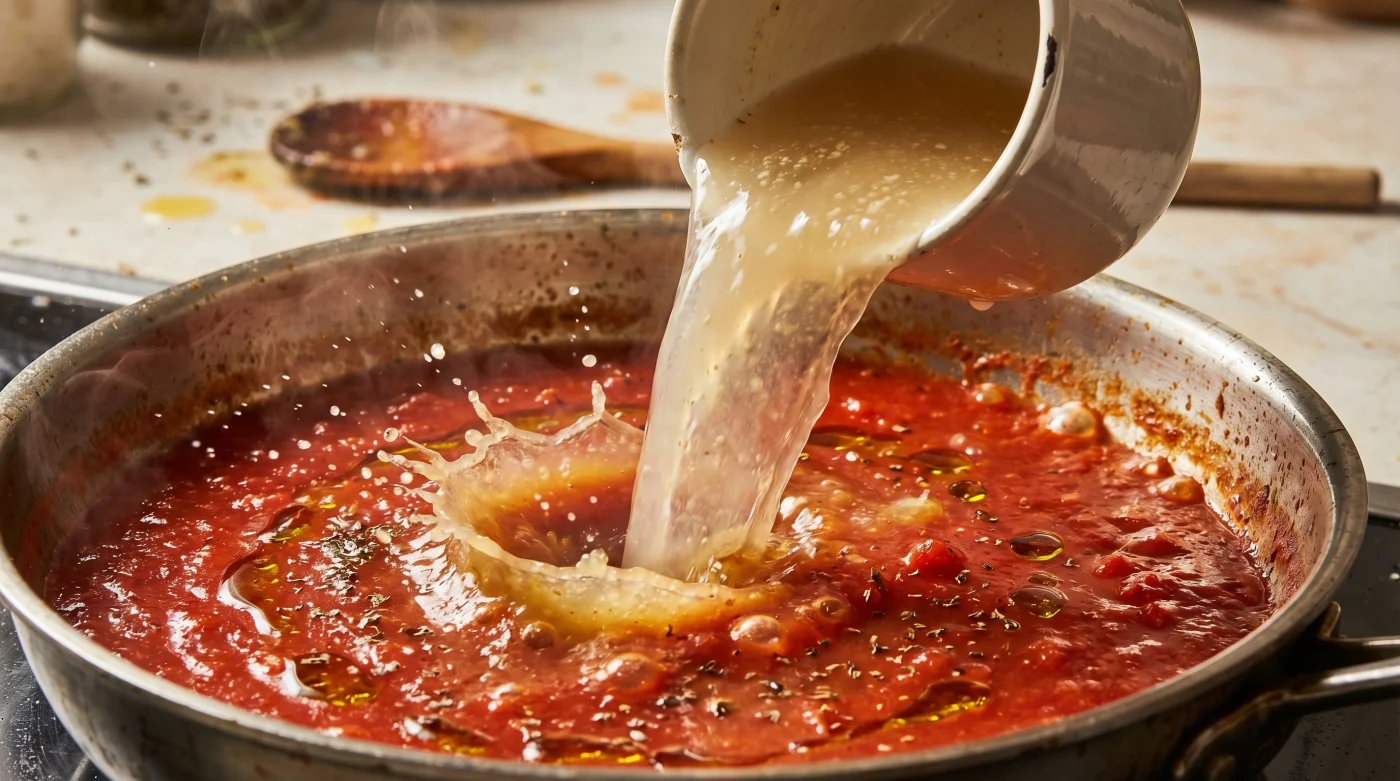
- The Splash: Using a small ladle, scoop roughly 125 millilitres of the dirty pasta water and pour into the pan directly over the hot noodles.
- The Agitation: Keep the heat at medium-high. Toss the noodles vigorously with your tongs for 60 to 90 seconds to create the friction necessary for emulsion.
- The Finish: Remove the pan from the heat entirely before adding grated cheese to prevent the dairy proteins from breaking and turning stringy.
A Quieter Kitchen Confidence
Embracing this simple pivot changes the entire atmosphere of your cooking space. The anxiety of timing the perfect drain, the fear of dry, lifeless dinners, and the frustration of greasy plates all vanish into the steam of a single pan. You realize the secret was resting right in front of you the entire time.
You are no longer rushing to meet a recipe’s demands; you are engaging directly with the chemistry of your food. By observing how liquid and fat merge under heat, you develop a deep intuition for moisture and texture that translates to everything from pan-searing meats to building robust gravies. You begin to understand that cooking is not about strict measurements; it is about feeling the moisture levels in the pan and knowing exactly when to pull back.
It is a quiet, profound realization. The very thing you were taught to discard holds the power to completely transform your evening meal, proving that sometimes, the most luxurious results require nothing more than what you already have simmering on the stove.
The truest test of a cook is not what they add to a pan, but how they utilize the invisible elements already bubbling away in the background.
| Key Point | Detail | Added Value for the Reader |
|---|---|---|
| The 2-Ingredient Emulsion | Combining hot cooking fat with starchy pasta water under high heat. | Creates a naturally thick pan sauce without relying on heavy cream or extra flour. |
| Direct Transfer Method | Moving noodles straight from the boiling pot to the skillet using tongs. | Eliminates the need for a colander and keeps the vital starch water readily accessible. |
| Off-Heat Dairy Addition | Removing the pan from the burner before folding in grated cheese. | Prevents proteins from seizing, ensuring a smooth, velvet texture instead of stringy clumps. |
Frequently Asked Questions
Does the water need to be heavily salted? Yes, the water should taste distinctly of the sea. This not only seasons the pasta from within but also provides the foundational seasoning for your final pan sauce.
What if my sauce is still too watery? Keep the heat on medium-high and continue tossing vigorously. The mechanical action of stirring helps the starches bind with the fat as the excess water evaporates.
Can I save pasta water for later? While fresh is always best, you can freeze leftover starchy water in ice cube trays to drop into future soups or pan sauces that need a quick thickening boost.
Why did my cheese turn into a hard clump? Adding cheese while the pan is over direct, active heat causes the dairy proteins to separate from their fats. Always pull the pan off the burner first.
Does this work with vegetable noodles? No, zucchini noodles and squash do not contain the necessary starches. This technique relies entirely on the flour naturally shedding from traditional or gluten-free grain pastas.