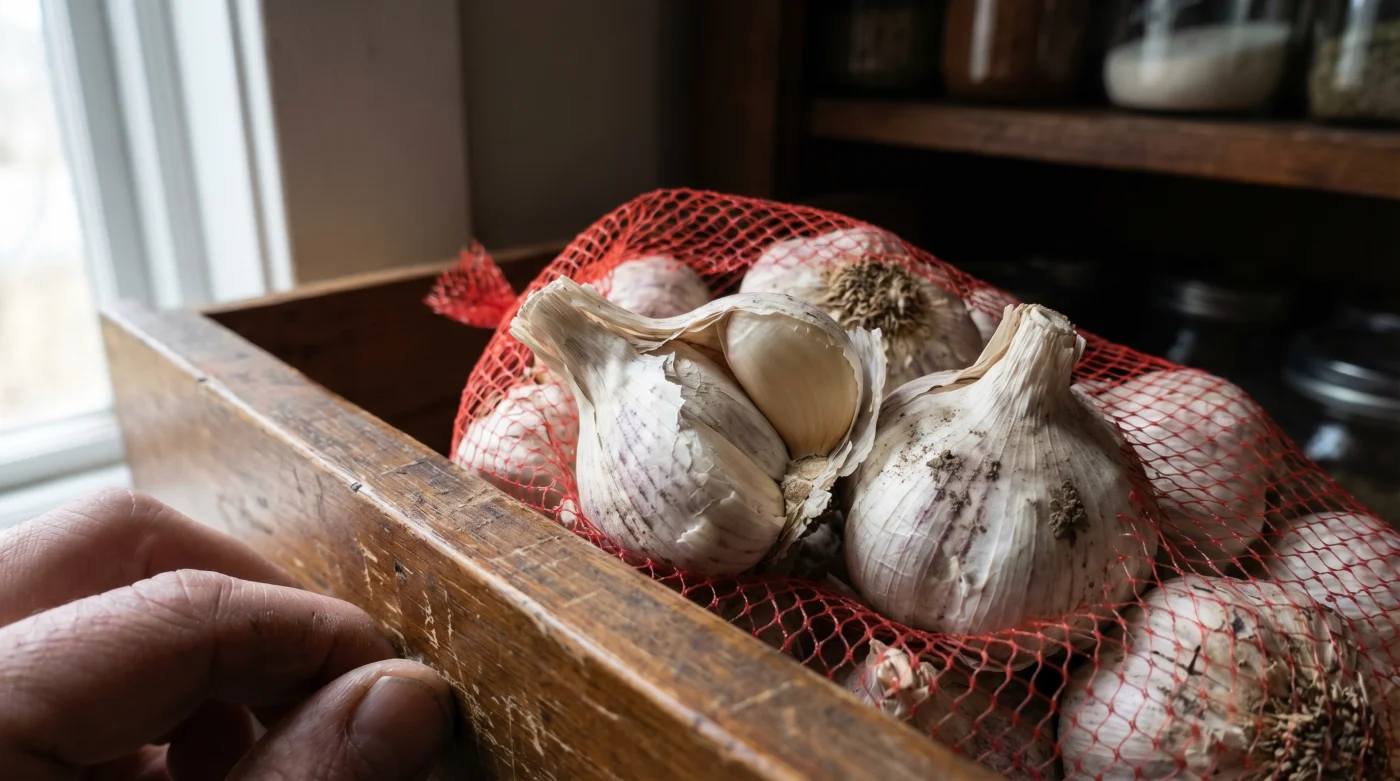
You drop a tight, heavy bulb of fresh garlic onto the counter, its papery skin shedding like thin snow onto the wood. There is an undeniable comfort in that sharp, earthy aroma, hinting at roasting pans and slow-simmered sauces. You toss it into a wire basket near the window, assuming it will wait patiently for your weekend prep.
Three days later, you peel a clove and notice a firm green shoot driving straight through the core. The flavour turns aggressively bitter, overpowering the delicate balance of your vinaigrette and leaving a harsh aftertaste. You assume you simply picked a bad batch at the market, resigning yourself to cutting out the green centres forever.
In reality, the garlic was simply doing what nature programmed it to do. You treated a living botanical structure like a static pantry item, expecting it to remain frozen in time. Garlic bulbs are dormant seeds, highly sensitive to environmental cues and ready to grow the moment conditions change.
When sunlight hits that delicate skin, it acts as a literal wake-up call. Light triggers early spring, signaling the bulb to consume its own internal sugars to fuel rapid new growth. To keep cloves fresh longer, you need to rethink your kitchen geography entirely.
The Dormancy Principle
Think of a garlic bulb as a hibernating organism resting quietly beneath the frost. As long as it remains cool, dry, and entirely in the dark, it stays completely asleep. The simple swap of moving your supply away from ambient light halts this biological clock, preserving the crisp texture and sharp bite of the clove.
You do not need expensive terracotta keepers or specialized imported gadgetry to achieve this. You need a dark spot, somewhere the temperature holds steady and the air moves freely across the skins. Trapping it in a sealed plastic container is like forcing it to breathe through a pillow; it will sweat, rot, and turn to mush within days.
Clara Vance, a 54-year-old organic market gardener working a few miles outside of Stratford, Ontario, treats her harvest with ruthless simplicity. Her garlic braids hang in a dark, drafty cellar until late April, entirely untouched by sprouting. She often tells her farm-gate customers that a bulb resting on a sunny, modern kitchen island is a bulb actively dying, burning through its own reserved energy to throw out a desperate green shoot.
Her philosophy shifts the responsibility from the grocer directly to the cook. You control the aging process the moment that bulb crosses your threshold, dictating its lifespan through placement alone.
Adapting to Your Specific Layout
Not every home has the luxury of a dedicated root cellar or a walk-in larder. The goal is to mimic the conditions of the soil: absolute darkness, low humidity, and a moderate chill. How you achieve this depends entirely on the layout of your home and the climate just outside your door.
If you cook in a small urban apartment, Heat is your primary enemy. Find a low drawer far away from the ambient heat of the oven, the dishwasher, or the refrigerator motor. Dedicate a small, open cardboard box inside that drawer exclusively for your alliums, allowing the cardboard to absorb any stray humidity.
For those buying in bulk during the late summer harvest, the strategy requires a bit more volume management. You want to keep the bulbs suspended or spread out in a single layer to ensure proper airflow between the individual heads. Leaving them in a tightly packed pile creates a micro-climate of trapped moisture that invites mold.
If you live near the damp coasts of British Columbia, humidity management becomes critical. Move the mesh bag today into a low cabinet where no direct light reaches, ensuring they hang freely from a hook rather than resting on a flat, solid surface that collects moisture.
The Anatomy of Longevity
Executing this storage method requires only a few deliberate choices and a shift in habit. It is a matter of setting up a passive system that works in the background without your constant supervision. Once the environment is right, the garlic takes care of itself.
The ideal storage environment hovers right around 15 Celsius, well above the chill of your appliances. Strictly avoid the refrigerator, as the cold, humid environment tricks the garlic into thinking it has been planted in damp autumn soil, accelerating the very sprouting you are trying to prevent.
To properly execute this simple swap, keep a dedicated tactical toolkit mindset for your pantry storage:
- Remove the bulbs from any plastic produce bags the very moment you get home from the grocer.
- Keep the intact bulbs in a loose mesh bag or a well-ventilated wire basket lined with an opaque paper towel.
- Place the container in a low, dark cabinet that is opened infrequently, away from heat vents.
- Keep garlic strictly separated from potatoes; potatoes emit moisture and ethylene gas that will cause the garlic to spoil rapidly.
Beyond the Papery Husk
When you stop fighting the natural tendencies of your ingredients, kitchen prep stops feeling like a race against decay. You no longer have to perform emergency surgery on every clove, digging out the bitter green core before it ruins the delicate profile of your evening meal. The frustration simply fades away, replaced by a reliable, predictable cooking experience.
It brings a quiet satisfaction to your daily routine. Reaching into the dark and finding a perfectly firm, unblemished clove weeks after bringing the ingredient home reinforces your competence as a cook. You learn to work with the biology of your food rather than against it.
You are no longer just storing groceries; you are actively managing a living pantry. Respecting the bulb’s true nature guarantees that every slice, mince, and smash delivers the pure, sweet pungency you actually intended.
Garlic asks for nothing but to be left alone in the dark. Give it shadows, and it gives you months of flawless flavour. – Clara Vance, Market Gardener
| Storage Method | Detail | Added Value for the Reader |
|---|---|---|
| Sunny Countertop | High light, variable heat. | Causes rapid sprouting and bitter flavour. Best avoided. |
| Refrigerator Drawer | High humidity, cold temperatures. | Tricks the bulb into autumn planting mode, forcing shoots. |
| Dark Cabinet (15°C) | Zero light, moderate chill, dry air. | Maintains firmness and extends shelf life by several months. |
Pantry Troubleshooting FAQ
Is it safe to eat garlic that has sprouted a green shoot?
Yes, it is perfectly safe. However, the green shoot is highly bitter. Slice the clove in half and pluck the shoot out before cooking to save the flavour of your dish.Should I peel the whole bulb before storing it in the dark?
Absolutely not. The papery outer skin is a natural protective barrier. Only peel individual cloves exactly when you are ready to mince them.Can I freeze fresh garlic if I bought too much?
You can, but it changes the cellular structure. It will become mushy upon thawing, making it suitable only for cooked soups or stews, never for fresh vinaigrettes.Why do my cloves turn soft even in the dark?
Softness usually indicates high humidity or a lack of airflow. Ensure your mesh bag isn’t crammed against a wall or sitting on top of moisture-releasing vegetables.Does storing garlic in olive oil work better than a dark cabinet?
Storing raw garlic in oil at room temperature creates a severe risk of botulism. Always store fresh bulbs dry in the dark, and keep any garlic-infused oils strictly in the refrigerator for a few days maximum.