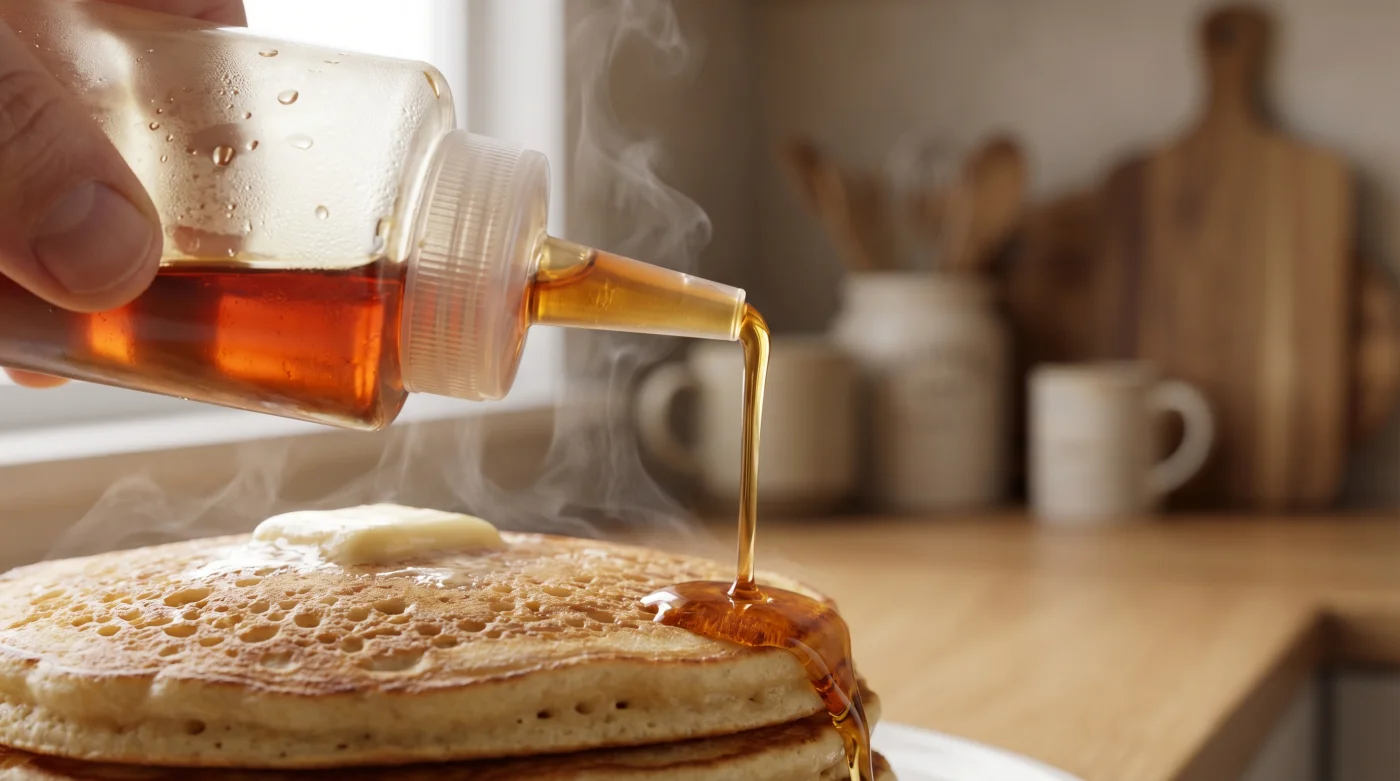
You stand at the counter on a brisk Sunday morning, the scent of browning butter and toasted flour hanging heavy in the kitchen air. The skillet pops and hisses as you flip the last batch. You slide a stack of perfectly golden pancakes onto a warm ceramic plate, watching a thick pat of salted butter begin its slow, satisfying melt across the porous surface. Then comes the final step—you reach into the dark pantry for that familiar, slightly sticky bottle of pancake syrup.
You tilt the plastic spout, and a sluggish, room-temperature ribbon cascades over your breakfast. In an instant, the butter seizes. The heat violently leaves the plate, leaving you with a lukewarm, congealed reality that feels miles away from the comforting diner breakfast you originally pictured.
The flaw is so routine that we rarely pause to question it. We spend twenty minutes perfecting the flip, carefully monitoring the stovetop heat, and ensuring the edges are crisp, only to drown our efforts in a cold, heavy liquid. It creates an immediate physical frustration at the breakfast table. But step into any bustling local diner, grab a seat at the counter, and you will notice a distinct difference in how they handle the final pour.
Professionals never shock a hot plate with a cold topping. They treat the syrup not just as a flavour profile, but as an active thermal ingredient. The true kitchen secret to those flawless, restaurant style breakfasts you crave lies in a thirty-second microwave intervention.
The Temperature Thief
Think of your freshly cooked pancake as a delicate sponge, engineered to absorb flavour while radiating warmth outward. Pouring cold or ambient syrup over it is like throwing a wet wool blanket over a crackling campfire. The temperature drops aggressively, changing the texture of the crumb from light and airy to heavy and dense. The butter halts its melting process, leaving you with cold chunks of fat rather than a savoury glaze.
We often view that crusted, sticky bottle as a minor kitchen annoyance, a mess waiting to happen in the cupboard. But a deliberate shift in temperature changes everything. When you heat the sticky bottle, you alter the viscosity of the liquid inside, allowing it to thin out, spread faster, and soak deeper into the cakes without stealing their core heat.
This is the professional pivot that separates home cooking from commercial success. By matching the temperature of your garnish to the temperature of your dish, you preserve the structural integrity of the entire meal. The butter remains a liquid gold pool, the pancake crumb stays tender, and the final bite you take is just as comforting and steaming as the very first.
Consider the daily rhythm of Elias, a forty-eight-year-old line cook running a beloved breakfast counter just a few miles outside Halifax. Every morning before the sun rises, he doesn’t just prep his dry ingredients; he sets up a dedicated steady fifty degrees Celsius bath just for the syrup dispensers.
Elias knows that his reputation relies entirely on the unseen details. “People think they come back for the secret buttermilk recipe,” he often jokes while wiping down the stainless steel counter, the comforting clinking of heavy ceramic mugs echoing behind him. “They actually come back because their food stays hot until the plate is completely empty. The syrup is supposed to be the blanket, not the ice bath.”
Tailoring the Pour
Not all liquids behave the same way under microwave radiation. How you approach the warming process depends entirely on what you pull from the pantry shelf and the specific sugars involved.
For the Traditional Purist
If you are pouring pure Canadian maple syrup, gentle care is absolutely mandatory. Real tree sap contains delicate natural sugars that can easily scorch and crystallize if pushed to a rolling boil. Pour your required portion into a small glass jug before heating, avoiding the microwave completely if you prefer Elias’s warm water bath method. Warming it gently on the counter also causes those complex, woody flavour notes to bloom beautifully in the morning air.
For the Hasty Parent
Commercial pancake syrups—the thick, corn-syrup-based blends living in the squeeze bottles—are highly resilient. These sturdy liquids trap heat beautifully and safely, meaning they can usually be warmed directly in their original plastic packaging. The goal here is speed without melting the container or creating a sticky geyser on your turntable.
For the Weekend Host
When feeding a crowd, individual glass dispensers are your greatest asset. Heating a larger batch means you need to account for a slightly longer resting period, allowing the heat to distribute evenly from the centre of the liquid out to the edges. A glass dispenser feels heavy and traditional in the hand, adding to that authentic diner aesthetic while keeping the sticky mess contained.
The Tactical Toolkit
Executing this kitchen secret requires a touch of mindfulness. Rushing the microwave process results in a ruined breakfast and scorched fingers, entirely defeating the purpose of a relaxing Sunday morning.
Follow these precise, minimalist actions to heat the sticky bottle safely:
- Vent the pressure: Always pop the cap open or loosen the lid by a half-turn. Liquid expands as it warms, and a sealed bottle will burst under pressure.
- Measure the time: Start with a strict fifteen-second burst on medium power. Never walk away from the appliance.
- Test the centre: Give the bottle a gentle shake or stir the glass jug. Microwave heat relies on friction and creates notorious hot spots.
- Assess the viscosity: The liquid should pour like warm cream, quick and seamless, not like winter molasses.
If you find the plastic feels soft or warped after the first fifteen seconds, your microwave wattage is simply too high. Instantly drop the power level down to fifty percent for the next round. Your target temperature is around forty-five to fifty degrees Celsius—warm to the wrist, just like testing a baby’s bottle.
The Dignity of a Warm Meal
We spend so much of our lives rushing through the morning routine, grabbing cold toast and lukewarm coffee before rushing out the door. Taking an extra thirty seconds to warm your pancake syrup is an act of preserving a small, quiet comfort.
It turns a mundane, rushed feeding into a deliberate, restorative restaurant style breakfast experience entirely. It tells whoever is sitting at your table—even if that person is just you—that the meal matters, and that the effort put into cooking deserves to be enjoyed properly.
The next time you smell butter browning in the skillet, don’t let a cold pour ruin the finish. Embrace the kitchen secret, heat the sticky bottle, and enjoy the lasting comfort of a plate that stays hot from the first slice to the final scrape of the fork.
“The difference between a good breakfast and a great one is entirely thermal; heat your syrup, and you respect the pancake.” — Elias, Halifax Diner Chef
| Key Point | Detail | Added Value for the Reader |
|---|---|---|
| Viscosity Shift | Warm liquid thins out and spreads faster. | Prevents soggy, dense pancakes by ensuring an even coating. |
| Thermal Preservation | Matching the syrup heat to the pancake heat. | Keeps butter melted and the entire plate hot until finished. |
| Flavour Blooming | Heat releases aromatic compounds in the sugars. | Enhances the smell and taste without adding extra ingredients. |
Frequently Asked Questions
Can I microwave the plastic syrup bottle directly?
Yes, but you must pop the cap open to vent the pressure and use short, fifteen-second intervals to prevent the plastic from warping or melting.Will heating the syrup ruin it?
Commercial blends are very resilient, but pure Canadian maple syrup can scorch. Always heat gently and avoid bringing any syrup to a rolling boil.How long does the syrup stay warm on the table?
If heated to fifty degrees Celsius, it will hold a comfortable pouring temperature for about ten to fifteen minutes, easily long enough for a breakfast service.Can I use a glass jar instead of plastic?
Transferring your liquid to a glass dispenser is actually the preferred method for weekend hosting, as glass retains heat longer and avoids plastic degradation.What if I accidentally boil the syrup?
If it boils, let it sit untouched in the microwave until it cools. Boiling sugar causes severe burns and can crystallize once it drops back to room temperature.