You stand in the kitchen as the November frost grips the windows, a half-assembled apple crisp waiting on the counter. The butter is perfectly chilled, the cinnamon jars are open, and your mixing bowl is ready for that final, crucial sweet element. The scent of toasted pecans fills the room, demanding a steady rhythm to keep the momentum of your baking intact. You anticipate the satisfying crunch of streusel, the warm aroma of baked fruit, and the quiet comfort of a winter morning spent creating something by hand.
But when you reach into the pantry, you are met with a harsh reality. The sugar is a brick. A solid, unyielding block of molasses-coated crystals that mocks your wooden spoon and threatens to derail the entire morning. It feels like a personal failure of organization, a frustrating hurdle right at the finish line that demands immediate, forceful attention.
Most of us react with immediate violence, chipping away at the hardened mass with a butter knife or tossing the entire bag into the compost in defeat. You might have tried microwaving it with a damp paper towel, only to be left with a hot, weeping puddle of syrup that ruins your recipe’s delicate moisture balance. These desperate measures only breed more frustration, turning a peaceful baking session into an unexpected chore.
The professional baker does not fight the sugar. They understand that brown sugar craves ambient humidity, and they know the fastest, most effective way to restore it requires nothing more than a cheap, forgotten staple from the bread box. They use a method so passive and effortless, it feels almost like cheating.
The Perspective Shift: From Solid Rock to Soft Sand
Brown sugar is simply white granulated sugar coated in a thin, fragile layer of molasses. When it sits in your cupboard, the dry winter air slowly pulls the moisture out of that molasses, leaving the crystals glued together in a rigid matrix. You are not dealing with a permanent chemical change; you are dealing with a severe, localized drought inside your plastic storage container.
This is where a seemingly mundane flaw becomes your greatest culinary advantage. The spongy, highly processed nature of standard white sandwich bread—often dismissed by artisan bakers as too soft or lacking structure—makes it a perfect, slow-release hydro-sponge. It holds onto water weight better than almost any other baked good, and it is eager to share that moisture with its surroundings.
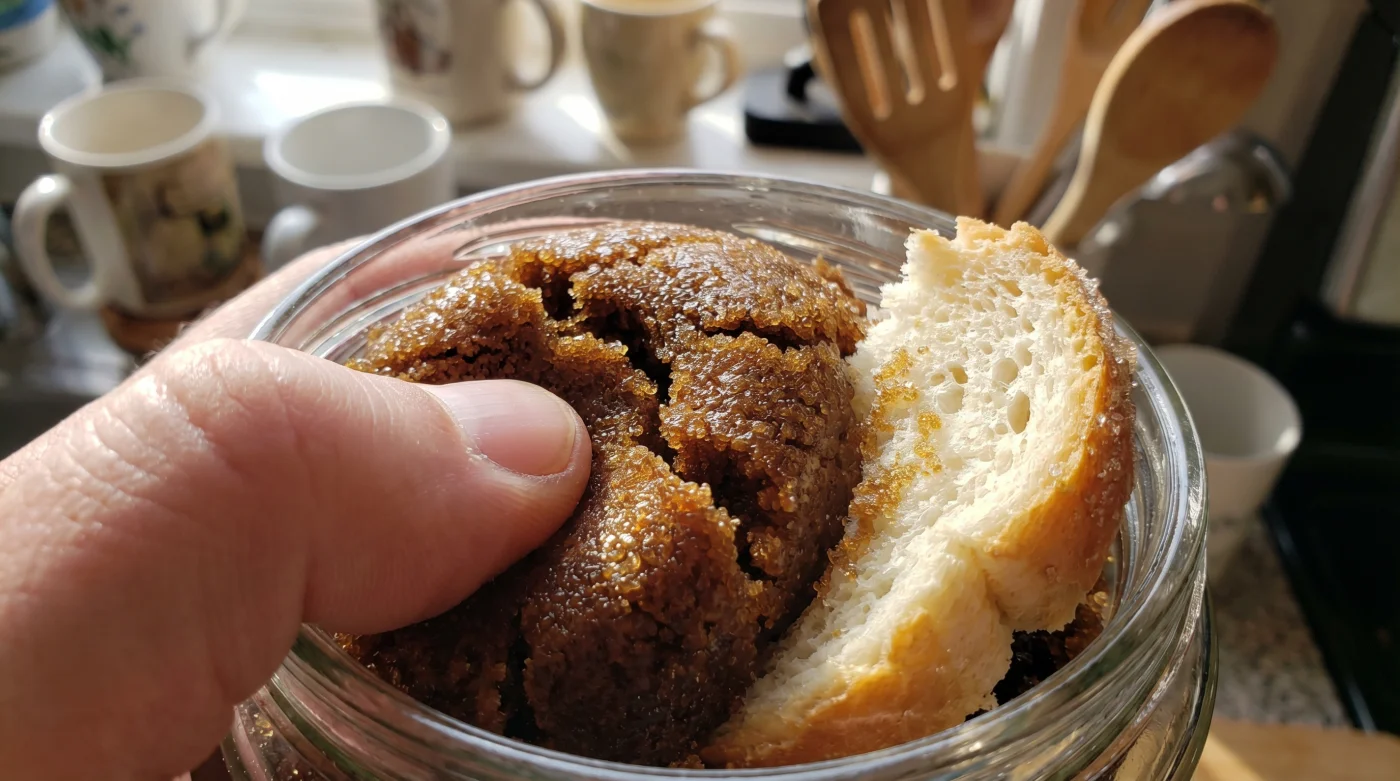
When you seal a slice of fresh bread inside an airtight container with the hardened sugar, a silent osmotic transfer begins. The dense block of sugar acts as an aggressive desiccant, pulling the moisture directly from the bread through the trapped air. Within a day, the bread turns into a stale, brittle crouton, while the sugar drinks in the humidity, returning to its original, scoopable state without a single drop of liquid ever touching the crystals.
Elias Thorne, a 62-year-old diner cook from rural Nova Scotia, taught me this trick during a frantic Thanksgiving prep. He never bought terra cotta, nor did he waste time soaking clay discs or hovering over a microwave. He simply tossed the discarded heel of a plain white loaf into the bulk sugar bin at the end of his shift, trusting the ambient moisture transfer to do the heavy lifting overnight.
Adjusting for Your Pantry Reality
Not every kitchen operates at the relentless volume of a roadside diner. Depending on how you store your baking supplies and how often you pull out the measuring cups, your approach to the bread barter system will shift slightly to match your specific habits.
For the Occasional Baker: If you only reach for brown sugar during the holiday cookie rush, you likely store it in the original thin plastic bag it came in. The bread trick still works beautifully here, but you must ensure the bag is completely sealed against drafty air. Roll the top tightly, secure it with a heavy clip or elastic band, and place the bread directly against the hardest part of the sugar block.
For the Bulk Buyer: Storing multiple kilograms of sugar in a large plastic or glass tub requires a bit more surface area to distribute the moisture evenly. One slice of bread might not carry enough water weight for a massive container. Bury two slices of fresh white bread at opposite ends of the tub, checking after a day to see if the sugar has softened enough to be gently aerated with a fork.
For the Gluten-Free Household: You might wonder if gluten-free bread works just as well for this application. It absolutely does, provided it is a moist, sandwich-style loaf. The starch content is completely irrelevant; the only thing that matters is the water weight held within the crumb. A thick slice of fresh apple also works in a pinch, though it carries a slight risk of transferring faint fruit flavours to your sugar.
The Tactical Resurrection
Fixing your pantry staples should not feel like an emergency operation. It requires a gentle, minimalist approach that respects the nature of the ingredients and eliminates the physical friction of cooking. You are setting up a small, controlled environment to let physics do the hard work for you.
Approach the hardened container with patience, knowing that force will only cause messes. Chipping at the block will only send sharp shards of sugar flying across your counters. Instead, follow these simple, deliberate steps to coax the ingredient back to life.
- Transfer the stubborn block into a hard-sided, airtight container if it is currently in a torn or flimsy bag.
- Select a single slice of the freshest, softest white bread you have available in your kitchen.
- Place the bread directly on top of the sugar block, ensuring it rests flat against the surface.
- Seal the lid tightly and wait 12 to 24 hours without opening the container, preserving the internal humidity.
- Remove and discard the stiffened bread once the sugar yields effortlessly to the pressure of a fork.
The Tactical Toolkit: Keep the container resting at normal room temperature, ideally around 20 degrees Celsius. Avoid placing it near radiators, ovens, or drafty windows, as drastic temperature shifts can cause the newly absorbed moisture to disrupt the delicate moisture transfer, creating condensation on the lid rather than integrating smoothly into the molasses.
Reclaiming Your Baking Rhythm
There is a quiet, deep satisfaction in opening your cupboard and finding your ingredients exactly as they should be. It removes a layer of mental friction, allowing you to focus on the warmth of the oven and the scent of the spices rather than battling your own provisions before the recipe even begins.
Mastering this small detail transforms a frustrating culinary disaster into a brief, satisfying pause. You stop viewing hardened sugar as a failure of storage and start seeing it as a temporary state, easily corrected by the simplest and most accessible of household staples.
You are no longer bound by the anxiety of ruined ingredients or wasted money. The kitchen becomes a space of quiet resilience, where simple logic solves complex physical problems without requiring a rushed trip to the local grocer.
Embrace the lazy fix. Keep a slice of standard white bread on standby, and watch how it transforms your baking routine into a seamless, uninterrupted rhythm that respects both your time and your ingredients.
The best kitchen solutions are always the quietest; they require no electricity, no special tools, and no panic—just a basic understanding of how ingredients speak to one another.
| Key Point | Detail | Added Value for the Reader |
|---|---|---|
| The Catalyst | Standard white sandwich bread | Saves money compared to buying specialty clay discs or gadgets. |
| The Mechanism | Osmotic moisture transfer | Requires zero physical effort, chiseling, or active monitoring. |
| The Timeline | 12 to 24 hours sealed tightly | Allows you to prep your pantry passively overnight while you sleep. |
Frequently Asked Questions
Can I use a damp paper towel instead? While a damp towel works in a microwave pinch, it often drips or creates localized puddles of syrup, permanently ruining the sugar’s granular texture.
Will the bread grow mould in the sugar? No, the sugar acts as an aggressive desiccant, pulling the moisture out of the bread so rapidly that the slice turns into a hard, stale crouton long before mould can form.
Does the type of bread I use matter? The cheaper and softer the white bread, the better. Artisan sourdoughs have tougher crusts and denser structures that significantly slow down the moisture transfer.
How long will the sugar stay soft afterwards? As long as the container remains perfectly airtight and away from heat sources, the sugar will retain its soft, scoopable texture for months after the bread is removed.
Can I just leave the bread in permanently? It is best to remove the bread once it turns rock hard, usually after 24 hours, to prevent stale crumbs from breaking off and mixing into your baking supplies.