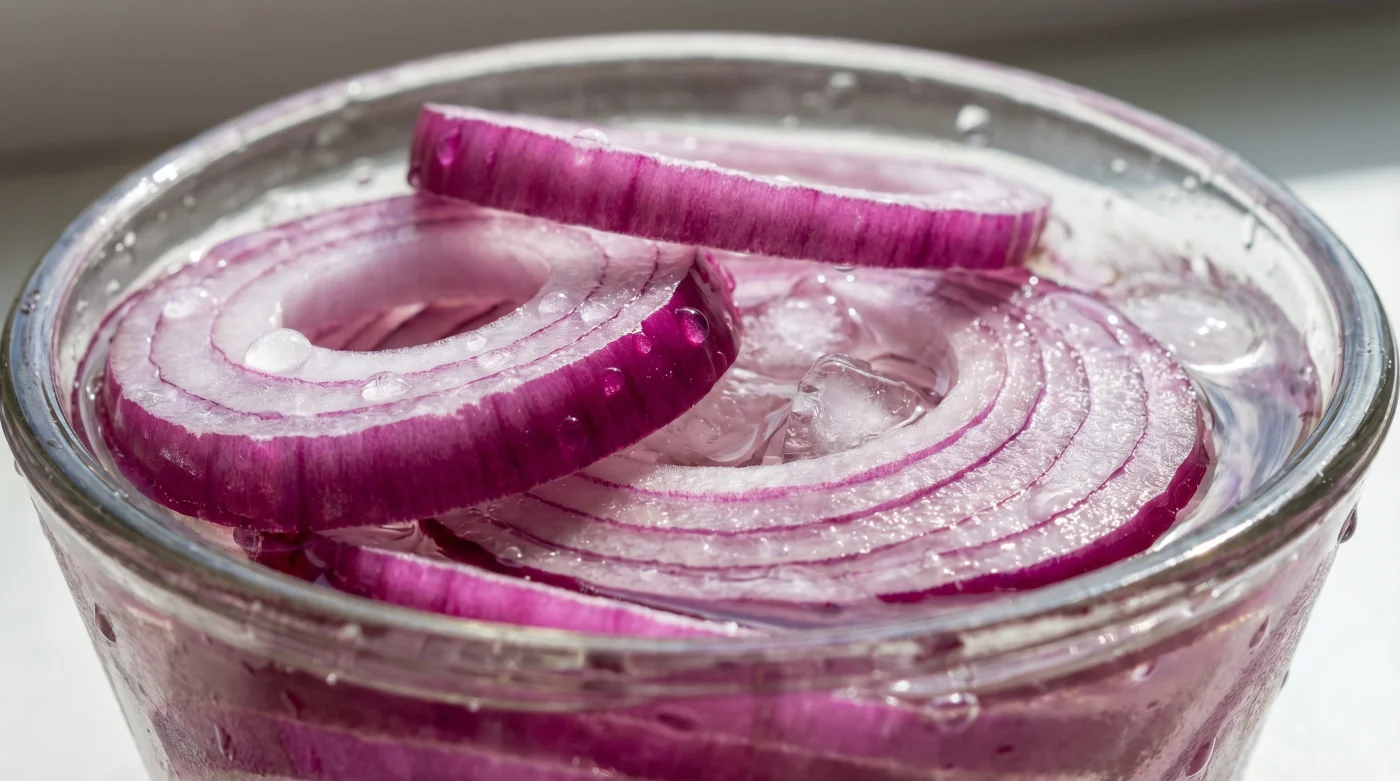
You pull the wooden cutting board toward you, the knife slicing neatly through the vibrant, magenta rings. They look stunning, falling away in perfect, translucent layers. You scatter them over a bed of delicate summer greens, the visual contrast alone feeling like a culinary triumph.
But then comes that first bite. Instead of a crisp, sweet accent, your palate is hit by an aggressive, sulfurous burn. The flavour turns hostile, masking the delicate vinaigrette and clinging to your breath for the rest of the day.
It is the tragic irony of the raw red onion. We want them for their brilliant colour and their satisfying crunch, but we usually end up enduring a harsh, stinging sensation that throws an entire dish off balance.
You might have thought this was just the price of eating raw alliums. But a restaurant-quality garnish does not rely on luck; it relies on a very brief, entirely painless intervention that strips away the aggression.
Defusing the Botanical Defense System
When you slice into an onion, you are breaking its cellular walls, causing two previously separated compounds to mix. This reaction creates an irritating gas, acting exactly like a botanical alarm system designed to punish anything trying to eat the plant.
To stop that alarm from ringing, you do not need to cook the life out of the vegetable. You simply need to wash the irritants away from the freshly cut surfaces before they have a chance to assault your tongue.
Clara, a 42-year-old prep chef at a busy bistro in downtown Montreal, spends her mornings processing pounds of produce. For years, her greek salads were met with polite silence from patrons, until a senior cook noticed her frustration and pointed toward the prep sink.
She was taught to submerge the slices immediately. By treating the vegetable to a sudden temperature drop, she was actively rinsing off the sulfur. It changed everything in her kitchen; suddenly, you taste the sweetness, not the sting.
Tailoring the Bath to Your Palate
Not every dish requires the exact same treatment. You can adjust this simple technique to suit exactly what you are building on your plate.
For the purist seeking maximum crunch for a burger or a delicate potato salad, stick to pure, freezing water. The sudden chill constricts the cellular structure, making the rings snap beautifully between your teeth while washing away the harshest compounds.
Sometimes you want the onion to soften slightly and integrate into a dressing. Adding a splash of red wine vinegar or apple cider vinegar to the cold water slightly pickles the exterior.
This acidic shift brings out a vivid pink hue and lends a bright, fruity edge to the vegetable, perfect for tossing with bitter greens or folding into a rich grain bowl.
If you are adding the onions to a heavy dish, like a slow-cooked brisket sandwich, you might want a softer texture. Tossing the sliced onions in a generous pinch of coarse salt before adding the water draws out moisture and sulfur simultaneously.
After a quick soak and rinse, the ribbons emerge pliable and deeply sweet, ready to melt into the heavier elements of your meal.
The Ten-Minute Kitchen Fix
This is not a project; it is a passive interlude. You prepare the onions first, let them rest, and assemble the rest of your meal.
You can slice your tomatoes, whisk your vinaigrette, and toast your bread while the water does the heavy lifting in the background.
Keep your movements deliberate. Use a sharp blade to slice the vegetable, as a dull edge will crush the delicate tissue.
Crushing the cells instead of slicing them ends up releasing twice the amount of irritating gas, making the soaking process much less effective.
Follow these precise steps for the perfect crisp garnish:
- Slice the onions uniformly, aiming for a thickness of about two millimetres.
- Place the rings into a spacious bowl, separating them gently with your fingers so the water can touch every surface.
- Pour in enough tap water to completely submerge the batch, then drop in three to four ice cubes to drop the temperature near 0 Celsius.
- Leave the bowl on the counter for exactly ten minutes to prevent waterlogging the tissue.
- Drain thoroughly in a mesh sieve and pat completely dry with a clean kitchen towel before adding them to your dish.
Reclaiming the Raw Accent
There is a profound satisfaction in fixing a universal annoyance with nothing more than cold tap water. By understanding the nature of the ingredient, you remove the anxiety of the aftermath.
You no longer have to push the vibrant purple ribbons to the side of your plate, fearing the lingering harsh onion breath that usually follows a hearty lunch.
It is a small, quiet victory in the kitchen. The bite is gone, but the spirit of the dish remains beautifully intact without compromise.
A raw allium should whisper its presence in a dish, never shout.
| Method | The Chemical Effect | Value for Your Plate |
|---|---|---|
| Pure Ice Water | Rinses sulfur compounds and constricts cell walls | Maximum crunch, zero sting, perfect for fresh salads. |
| Vinegar Splash | Gently lowers pH and begins a quick-pickle process | Vibrant pink colour and a tangy, bright finish. |
| Salt Massage | Osmosis draws out liquid and softens the fibrous structure | Pliable, deeply seasoned ribbons for sandwiches. |
Does warm water work better than cold?
Warm water extracts the sulfur faster, but it leaves the onions limp and sad. Cold water preserves the structural integrity.
How long is too long to soak?
After twenty minutes, the rings will begin to absorb too much moisture, losing their characteristic snap and diluting their natural sugars.
Can I save soaked onions for the next day?
Yes, but store them completely dry in an airtight container in the fridge. They will keep their mellow flavour for up to two days.
Does this work with white or yellow varieties?
Absolutely. While red is most common for raw garnishes, this method will successfully tame any harsh allium.
Do I really need to pat them dry?
Yes. Wet produce repels oil-based dressings and will make your sandwich breads unpleasantly soggy.