Picture the quiet of a Tuesday morning. The kettle hums on the stove, frost clings to the windowpane, and you reach into the pantry for a slice of bread. Your fingers expect the gentle give of a fresh loaf, but instead, they meet the rigid, unforgiving resistance of a crust that has turned to cardboard overnight. It is a quiet, domestic disappointment that sets a brittle tone for the day.
Starch molecules stubbornly crystallize, pulling moisture out of the crumb and leaving behind a crumbly, lifeless shell. We usually blame the bag, twisting the plastic tighter or adding a heavy plastic clip, hoping to trap whatever ghost of freshness remains. But the issue is not just the barrier; it is the micro-climate inside that bag.
A perfectly soft loaf relies on a delicate moisture equilibrium. When you seal a loaf of bread, you are creating an isolated environment where the bread is the only source of hydration. Eventually, the ambient air inside the plastic steals that water.
Offer a sacrificial moisture source, something willing to surrender its own hydration to protect the integrity of your loaf. This is where a remarkably simple pantry swap steps in, guaranteeing you never eat stale sandwich crusts again.
The Apple Orchard Equilibrium
Think of your bread bag as a tiny greenhouse. If the air inside becomes too dry, the plants—in this case, the delicate gluten networks—wither and harden. Most of us treat bread storage like a vault, focusing entirely on locking out the external air. But true preservation is about climate control.
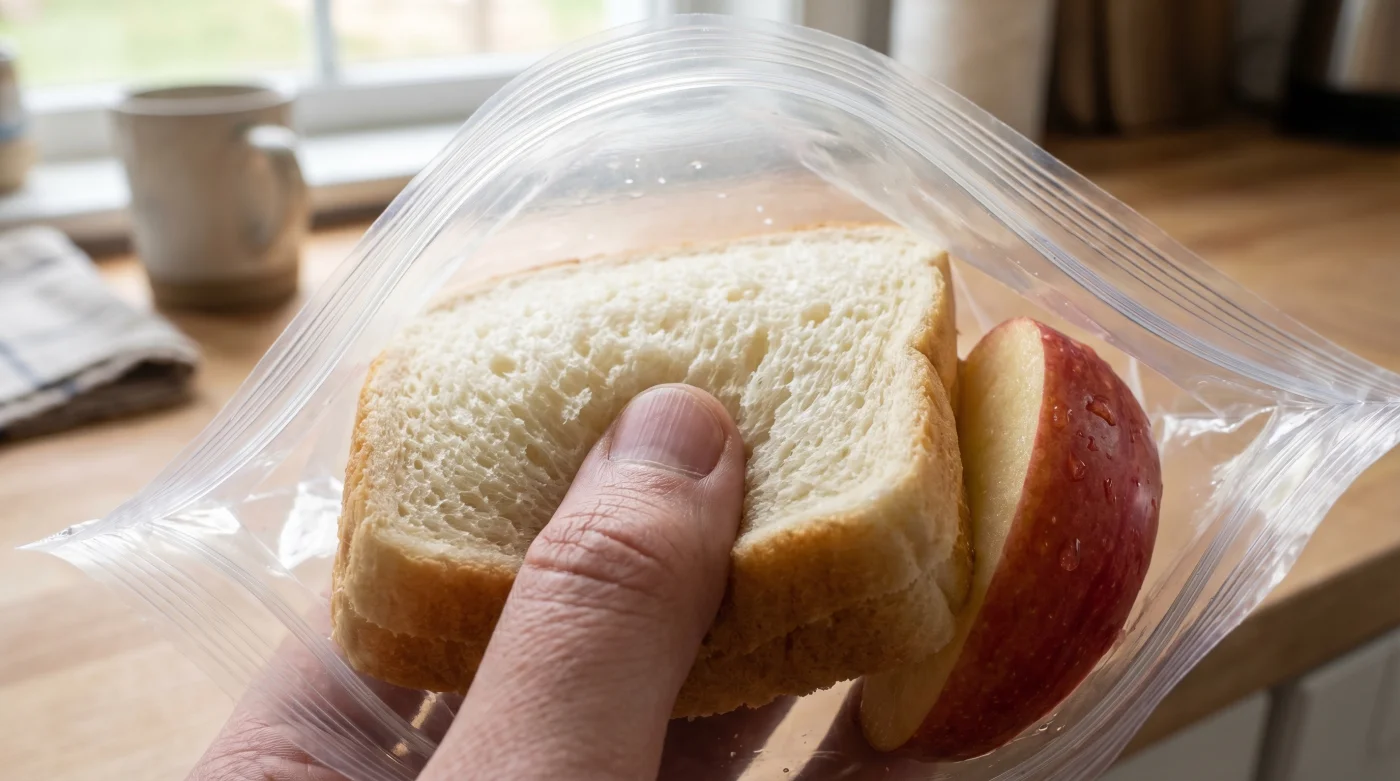
An apple breathes out moisture, slowly and steadily. When you slip a fresh apple slice into a sealed bag of bread, the starchy crumb stops losing its own water to the surrounding air. Instead, the air pulls moisture from the cut fruit, keeping the relative humidity inside the bag high enough to prevent staling, but not so high that the crust turns to mush.
It is a beautiful, biological transfer. The apple acts as a damp sponge, maintaining the perfect atmospheric balance. You are no longer just fighting off the inevitable hardening; you are actively extending the lifecycle of your morning toast.
This silent transfer of hydration is not a new trick, though it has been forgotten by many modern kitchens. Elias Thorne, a 62-year-old baker operating out of a small, flour-dusted storefront in Halifax, Nova Scotia, swears by it. For decades, Elias has watched customers walk away with his pillowy potato buns and rich milk breads, only to complain of dry sandwiches three days later. His advice has never changed: drop a wedge of Macintosh or Honeycrisp into the bag. “Bread wants to dry out,” he often says, wiping his hands on a linen apron. “You just have to give the air something else to drink.”
Tailoring the Moisture to the Loaf
Not all bread requires the same level of intervention. The amount of apple you use, and where you place it, depends entirely on the hydration level of the dough you brought home.
For the Supermarket Sandwich Loaf: These pre-sliced, square loaves already contain conditioners to stay soft, but their thin crusts make them vulnerable to rapid drying once opened. A single, thin slice of a firm apple placed at the open end of the bag is enough. It provides a gentle background humidity without turning the nearest slices soggy.
For the Artisanal Sourdough: Rustic loaves from your local bakery have a thick, chewy exterior and a high-hydration interior. When you store them in plastic, the crust loses its crunch, but the crumb can still go stiff.
Place a thicker apple wedge into the bag, making sure it sits at the bottom, away from direct contact with the cut face of the bread. This mimics the humid environment of a professional proofing box.
For the Sweet Brioche or Challah: Enriched doughs are highly sensitive to moisture changes. Because they contain butter and eggs, they spoil faster if introduced to excess water.
Use a very small slice of apple, and swap it out every two days. Keep the bag in a cool pantry, roughly around 20 degrees Celsius, to maintain softness without inviting mold.
The Five-Minute Freshness Protocol
Implementing this professional pivot requires just a few deliberate steps. It is a quiet ritual you can add to your grocery-unpacking routine, ensuring the bread remains tender and yielding until the very last crust.
Always use a firm apple, as mealy varieties break down too quickly and can leave unwanted residue. Wash the apple, dry the skin thoroughly, and cut a single wedge about half an inch thick. You do not need to peel it; the skin acts as a slow-release barrier for the moisture.
- The Slice: One wedge, roughly 2 centimetres thick at the rind.
- The Position: Place it at the far end of the bag or container, never touching the bread directly.
- The Seal: Press out all excess air from the bag before twisting it shut or sealing the zip-top.
- The Rotation: Check the apple slice every two days. When it looks completely shriveled and dry, discard it and replace it with a fresh one.
Moisture control is a delicate balance. If you notice condensation forming on the inside of the plastic, the environment is too wet.
Remove the apple immediately, leave the bag open for ten minutes to let the bread breathe, and seal it back up without the fruit until the crumb feels dry again.
A Quiet Rebellion Against Waste
There is a profound satisfaction in outsmarting the natural degradation of our food. When you rescue a loaf from an untimely end, you are doing more than just guaranteeing a soft sandwich for tomorrow lunch. You are participating in a quiet rebellion against the modern expectation of food waste.
We accept staleness as inevitable, tossing away the heels and stiff end-pieces without a second thought. But by introducing a simple, natural element like an apple slice, we reclaim control over our pantry. It transforms a mundane routine into an act of mindful stewardship.
The next time you reach for your bread, notice the gentle, forgiving texture. You will find comfort in knowing that a simple piece of fruit, working silently in the dark of the cupboard, preserved that perfect bite.
It is a small victory, but one that makes the rhythm of the kitchen feel deeply rewarding and entirely within your control.
“Bread wants to dry out; you just have to give the air something else to drink.” – Elias Thorne
| Key Point | Detail | Added Value for the Reader |
|---|---|---|
| Sacrificial Moisture | Apple slices release water into the air. | Prevents the bread from sacrificing its own hydration, keeping it soft. |
| Placement Strategy | Keep the apple away from the bread face. | Avoids soggy spots while maintaining ambient humidity. |
| Temperature Control | Store at a stable 20 degrees Celsius. | Stops mold growth while allowing the apple to regulate the bag climate. |
Frequently Asked Questions
Will the bread taste like apples?
No. A single slice of a mild, firm apple like a Granny Smith or Macintosh releases moisture without transferring its flavour to the starch.How often should I change the apple slice?
Inspect the bag every two days. Once the apple looks shriveled and feels dry to the touch, its moisture has been depleted and it should be replaced.Can I use this trick for gluten-free bread?
Yes. Gluten-free loaves are notoriously prone to rapid staling and benefit greatly from the sustained humidity the apple provides.Does this work in the refrigerator?
Refrigerating bread accelerates starch crystallization. Always keep your bread and the apple slice in a cool, dry pantry instead.What if condensation forms inside the bag?
If you see water droplets, the environment is too damp. Remove the apple, leave the bag open for ten minutes to breathe, then reseal.