You slide the dull, scratched metal pan into the oven, the harsh kitchen overheads reflecting off the glossy, mass-produced batter. It smells nostalgic, sweet, and predictably safe, filling the room with the familiar scent of childhood afternoons. But when you pull it out twenty-five minutes later, dragging a knife through the centre, the resistance is entirely wrong. The edges are dry, fracturing into brittle shards, and the middle collapses into a spongy, cake-like disappointment.
The back of the cardboard box, with its cheerful, primary-coloured instructions, sold you a lie. Water creates empty steam, rapidly expanding the crumb structure in the heat of the oven until your dessert resembles a mildly chocolate-flavoured kitchen sponge. You followed the rules precisely, standing over the sink and measuring the exact millilitres of lukewarm tap water, hoping the resulting squares would mirror the rich, impossibly dense photographs printed on the packaging.
Here is the quiet truth held by those who bake for a living: the powdered mix itself is rarely the problem. It is a highly stable, chemically balanced canvas of processed starches and cocoa. The flaw lies entirely in the liquid you use to hydrate it. When you rely on warm tap water, you are playing a game designed for mass-market convenience rather than culinary excellence.
By simply swapping that lukewarm water for cold milk, you strip away the hollow aeration. Cold milk binds the starches, introducing dairy fat and heavy proteins that physically weigh down the crumb, transforming a two-dollar pantry staple into something that trembles on the plate like an expensive truffle. It is a subtle manipulation of chemistry that yields a radically different physical result.
The Architecture of Density
Think of a boxed baking mix as a perfectly poured concrete foundation. If you build the walls with hollow cardboard—which is essentially what water does as it evaporates in a 175-degree Celsius oven—the resulting structure lacks substance. It will hold its shape, but it possesses no satisfying weight when you bite into it.
When you pour warm water into processed cocoa powder and bleached flour, it acts as a rapid solvent. Steam forces the batter upward, creating large, gaping air pockets throughout the pan. Cold milk, conversely, works like heavy timber. The natural milk fats coat the flour proteins, severely limiting the gluten development that causes cakes to spring up. This is your perspective shift: you aren’t just adding a tastier liquid; you are actively suppressing the cake-like rise to force the batter into a dense, fudgy state.
The temperature matters just as much as the fat content. Cold liquid slows the hydration of the dry starches, preventing the batter from absorbing the moisture too quickly before it hits the heat. The resulting mixture stays compact and heavy, ensuring the final product bakes into a tightly packed square that coats the back of a spoon rather than crumbling into dust.
Julianne, a 41-year-old pastry chef running a bustling harbour-front cafe in Halifax, relies on this exact pivot. During the chaotic summer tourist season, when her scratch-made reserves run dry under the crush of the afternoon rush, she keeps commercial boxed mix hidden in the back pantry. But she never uses the suggested warm water. She whisks in icy whole milk, which produces a velvet-textured density. Her brownies sell out by noon every single day, with locals and tourists completely unaware they are eating a modified grocery store staple.
Tailoring the Foundation
Not every craving requires the exact same approach. The beauty of this baseline method is that you can adjust this single variable to suit the specific texture and dietary needs of anyone sitting at your kitchen island.
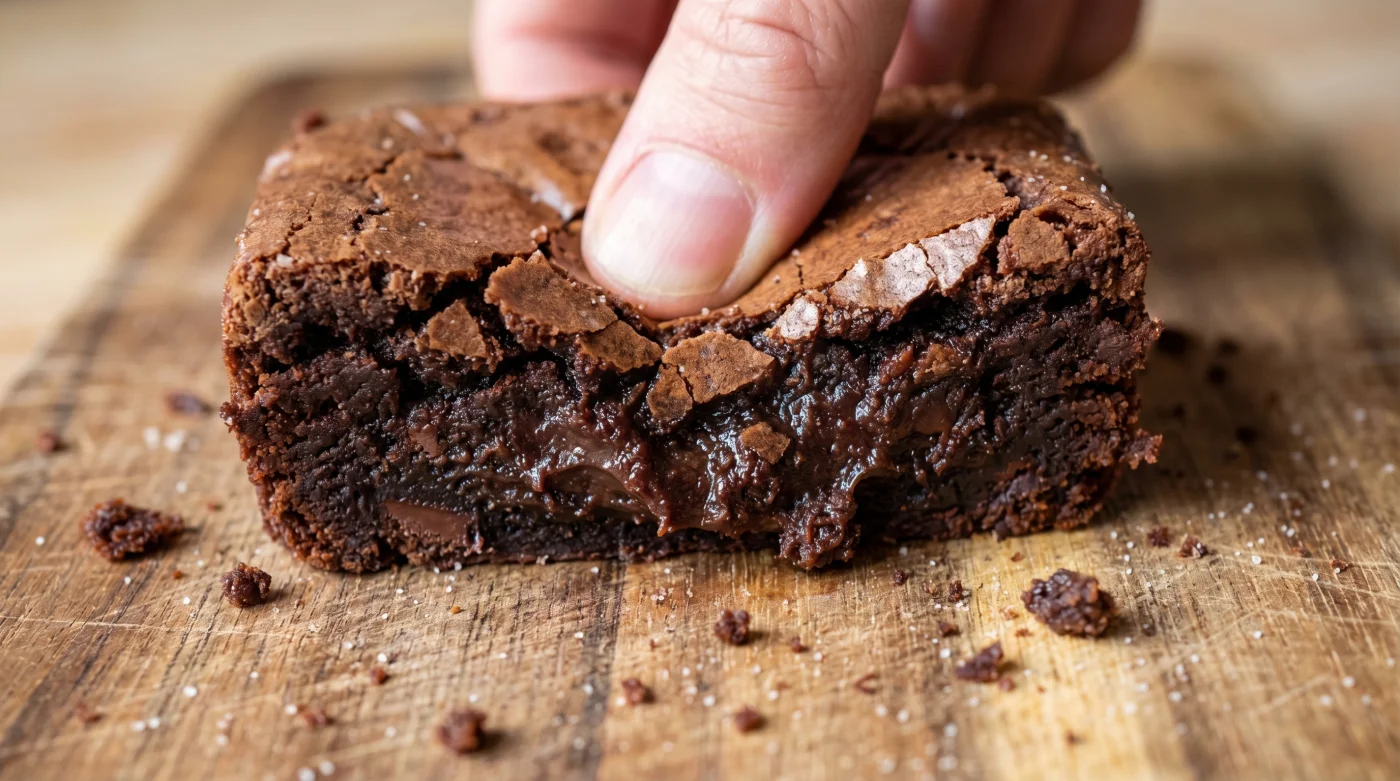
For the Fudgy Purist: Use aggressively cold, 3.25% whole milk. The high dairy fat content interacts intimately with the commercial cocoa powder, creating a dessert that borders on a set ganache. The perimeter will still crisp nicely against the metal pan, but the interior will remain strikingly heavy, requiring a tall glass of milk just to wash it down.
For the Dairy-Free Baker: Standard almond milk is far too watery to achieve the correct density. Reach for a barista-blend cold oat milk instead. It contains the necessary plant-based stabilizers and added fats to replicate the binding power of heavy dairy, lending a subtle, toasted earthiness to the chocolate base without sacrificing the dense chew.
For the Decadent Host: If you want to mimic a high-end restaurant service, replace one-quarter of your cold whole milk with intensely chilled espresso. The sharp bitterness cuts through the cloying sweetness of the commercial mix, pushing the flavour profile into a sophisticated, adult territory that pairs flawlessly with a dry red wine after dinner.
For the Texture Enthusiast: The added thickness of the cold milk batter provides an incredible suspension system. You can fold in heavy inclusions like toasted walnuts, dried cherries, or massive chunks of dark couverture chocolate, knowing they will not sink to the bottom of the pan as they would in a watery, traditional batter.
The Mechanics of the Swap
Execution requires physical restraint. When you introduce a heavier, colder liquid into a dry mix, the batter will fight you. Do not overwork the bowl, or you risk activating the dormant gluten you are so desperately trying to suppress.
Keep your movements slow and deliberate. Use a firm rubber spatula, scraping the sides and bottom gently until the dry, powdery pockets finally vanish into the dark mass. The finished batter should look exceptionally thick, almost stubbornly resistant to pouring, requiring you to physically spread it into the corners of the pan.
- Chill your milk thoroughly; leave it in the coldest part of the fridge until the exact moment you begin mixing.
- Sift the boxed mix first to remove any factory-compressed lumps of cocoa that might resist the cold liquid.
- Fold the cold milk and your chosen oil together in a separate bowl before introducing the dry ingredients to ensure a perfectly even emulsion.
- Bake on the middle rack at 160 Celsius, rather than the recommended 175 Celsius, to drastically slow the edge-crisping process and protect the gooey core.
The Tactical Toolkit: A heavy-bottomed light metal pan (glass traps too much ambient heat and burns the edges), cold whole milk straight from the carton, and a baking time reduced by exactly three minutes from the box’s written instructions to guarantee a trembling, molten centre.
A Quiet Rebellion in the Kitchen
There is a profound, quiet relief in realizing you do not need to construct everything from scratch to create something genuinely beautiful. Reclaiming your time on a busy Tuesday evening does not have to mean sacrificing the physical pleasure of serving a well-made dessert to your family.
By changing a single, seemingly mundane detail, you bypass hours of intensive labour. You skip the tedious melting of expensive chocolate over a double boiler, and you avoid the careful tempering of room-temperature eggs. You take a cheap product designed for absolute mediocrity and force it to perform at a professional, bakery-level standard.
It is a small victory, but a deeply satisfying one. You get to slide a plate of warm, impossibly dense chocolate squares across the table to someone you care about, knowing the rich texture is entirely the result of your own culinary intuition. The cardboard box provided the raw materials, but you alone provided the method.
The secret to professional baking is rarely about buying superior ingredients; it is about understanding how to manipulate hydration and fat to force a cheap ingredient to behave exactly like an expensive one.
| Key Point | Detail | Added Value for the Reader |
|---|---|---|
| Liquid Density | Replacing warm water with cold milk | Creates a denser, heavy fudge-like crumb structure instead of an airy, collapsing cake. |
| Temperature Control | Using ice-cold dairy straight from the fridge | Slows the starch hydration process, preventing the batter from rising too quickly in the oven heat. |
| Fat Content | Opting for 3.25% whole milk over skim or water | Introduces rich dairy fats that coat the flour proteins, severely limiting gluten development for a luxurious mouthfeel. |
Frequently Asked Questions
Can I use skim milk instead of whole milk for this swap? Skim milk lacks the necessary fat content to properly weigh down the crumb, though the natural proteins will still provide a marginal structural improvement over warm tap water.
Will this cold milk swap change the baking time printed on the box? Yes. Because the batter is physically colder and denser, you should lower your oven temperature slightly to 160 Celsius and check the centre with a knife three minutes before the box suggests.
Does this exact same trick work for boxed cake mix too? Using cold milk will indeed make a cake mix much denser, which is excellent if you want a heavy pound cake, but highly detrimental if you are hoping for a light, fluffy birthday sponge.
Can I melt butter instead of using the suggested vegetable oil? Melted butter adds incredible, rich flavour, but it contains hidden water that evaporates during baking. If you choose butter, ensure your milk is extra cold to compensate for that added moisture.
Why does the box explicitly recommend warm water in the first place? Manufacturers suggest warm water because it dissolves their cheap, mass-produced cocoa powder quickly, ensuring a completely smooth, foolproof mixing process for the average rushed consumer.