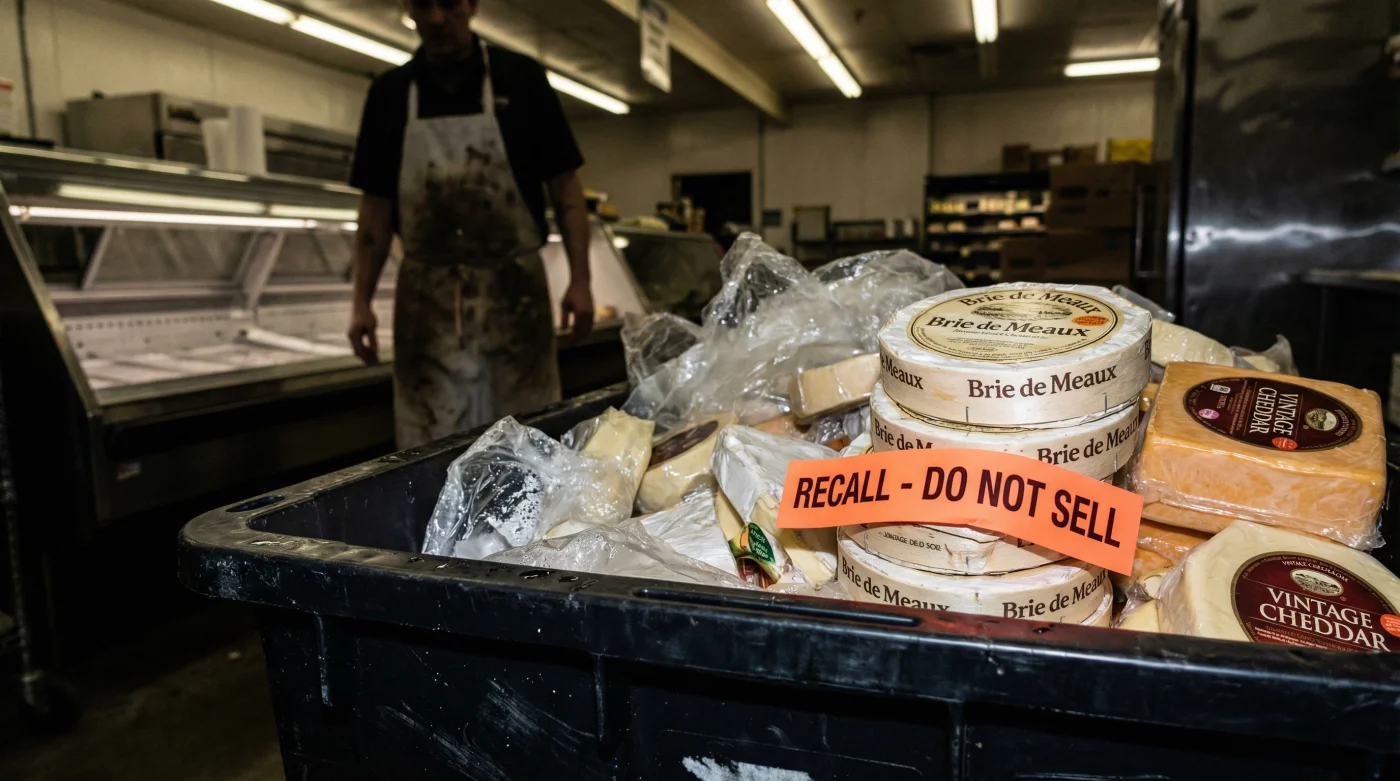
The air in a high-end creamery smells like dampened limestone and sweet clover. It is a quiet, rhythmic place where the only sound is the soft slap of a wooden paddle against curd. You likely walk into your local specialty shop in Toronto or Vancouver expecting this exact stillness—the quiet confidence that a twenty-dollar wedge of hand-crafted Brie is a safer, more ‘honest’ choice than a plastic-wrapped block from a massive factory. There is a certain romance in the bloom of a white rind, a feeling that the hands that turned this wheel cared for it like a living thing.
But the reality of artisanal production is far more fragile than the marketing suggests. Behind the rustic labels and the charming stories of grass-fed herds lies a microscopic battleground. Unlike the sterile, stainless-steel landscapes of industrial dairy, the nooks and crannies of a traditional cellar are breathing through a pillow of wild microbes. Usually, the good bacteria keep the bad ones at bay, but when that balance tips, the results are swift and devastating. You are currently witnessing a rare moment where the fortress of the premium dairy world has been breached.
Supermarket aisles from Halifax to Victoria are seeing a sudden, quiet erasure. Tubs of soft goat cheese and wheels of washed-rind delicacies are being swept into black bins, not because they look spoiled, but because they carry an invisible weight. The current nationwide recall is a jarring reminder that nature does not care about a price tag or a gold-medal sticker. The very moisture and lack of acidity that make artisan cheese feel luxurious are the same qualities that invite unwelcome guests to the party.
The Myth of the Pristine Rind
We often treat ‘artisan’ as a synonym for ‘sterile,’ but the two are actually at odds. To understand why this recall is happening, you have to look at the cheese rind as a filter, rather than a wall. Think of it like a metabolism that never sleeps. While industrial cheese is often pasteurized into a state of biological silence, artisan varieties rely on a managed ecosystem. When we assume that a high price guarantees absolute safety, we ignore the complexity of the craft.
The current Listeria warnings target the very heart of the specialty market—the soft, the unripened, and the surface-ripened. These are cheeses that haven’t had the luxury of time or salt to drive out pathogens. In a massive facility, a single unseen crack in floor or a bead of condensation on a cooling pipe can introduce a colony of bacteria that thrives in cold, damp environments. Because these specialty batches are often small and distributed to high-end boutiques, the spread is intimate and hard to track until it hits the headlines.
A Secret from the Guelph Labs
Marc, a forty-two-year-old food safety auditor based in Guelph, has spent the last decade peering into the shadows of dairy facilities. He once told me about a specific ‘ghost’ in the machine—a strain of bacteria that lived inside a hollow table leg in a boutique creamery for years, despite daily bleaching. It wasn’t until a small batch of Camembert started failing tests that they found the source. Marc’s job is to be the skeptic in the room, reminding producers that the same moisture that creates a creamy texture is a highway for contamination.
He explains that artisan producers often operate on such thin margins that a single recall can end a multi-generational business. The tragedy isn’t just the lost product; it’s the loss of trust. When Marc walks through a facility, he isn’t looking at the cheese; he’s looking at the drains and the ceilings. He knows that purity is a practice, not a permanent state. This current wave of recalls is the result of that practice failing under the pressure of increased demand or shifting seasonal temperatures.
Navigating the Fridge: For the Purist and the Parent
- Artisan cheese nationwide recalls spark urgent listeria warnings for consumers.
- Canned frosting whipped with sour cream tastes exactly like buttercream.
- Poached eggs demand a fine mesh strainer for perfect spheres.
- Stale bread transforms into premium thickeners for watery winter soups.
- Mashed potatoes piped through star tips elevate cheap dinner plates.
- For the Soft-Cheese Lover: If your favourite Brie, Camembert, or fresh goat cheese is on the list, there is no ‘cutting off the bad part.’ The moisture allows pathogens to travel deep into the centre of the wheel.
- For the Hard-Cheese Devotee: Aged Cheddars and Parmesans are less hospitable to Listeria due to their low moisture and high salt content. However, cross-contamination on the cutting board is the real enemy in kitchen during these outbreaks.
- For the Vulnerable: If you are pregnant or over sixty-five, the ‘artisan’ label should be treated with extreme caution until the specific batches are cleared. Your immune system is effectively fighting with one hand behind its back.
The Tactical Cleanup Toolkit
Dealing with a recall isn’t just about tossing the product; it’s about resetting your domestic environment. Listeria is famous for its ability to survive and even grow in the refrigerator—a place where most bacteria simply go to sleep. If a recalled item has sat in your crisper drawer, you cannot assume the surrounding food is safe. You have to treat the fridge like a crime scene that needs a thorough scrubbing.
Empty the shelves and wash them with hot, soapy water, followed by a sanitizing solution of one teaspoon of unscented bleach per litre of water. Focus on the gaskets and the shelf tracks where milk spills hide undetected. Use a fresh cloth for every surface to avoid spreading the microbes from the bottom drawer to the top shelf. Ensure your fridge temperature is consistently at 4 degrees Celsius or lower to slow any remaining microbial growth.
The Resilience of the Local Platter
It is tempting to look at these recalls and vow to only buy rubbery, processed slices forever. But that would be a mistake. The beauty of the Canadian artisan scene—from the hills of Quebec to the valleys of British Columbia—is its diversity. These recalls are a sign that the safety system is working, not that it has failed. Sensors are picking up what our eyes cannot see, and supermarkets are taking the financial hit to protect the public health.
Understanding that premium food requires more vigilance, not less, makes you a more capable consumer. By paying attention to the batch codes and being mindful of your kitchen hygiene, you preserve the relationship between the maker and the eater. The next time you pick up a wheel of local cheese, you won’t just see the rind; you’ll see the science that guards it. That awareness is the true hallmark of a sophisticated palate.
“Safety in the food chain is not a destination we reach, but a constant, vigilant conversation between the producer and the environment.”
| Key Point | Detail | Added Value for the Reader |
|---|---|---|
| Biological Volatility | Artisan cheese has a living rind. | Explains why premium items require more care. |
| Cross-Contamination | Listeria thrives in fridge temperatures. | Highlights the need to sanitize the whole fridge. |
| Risk Segmentation | Soft cheeses are higher risk than hard. | Helps you prioritize what to discard first. |
Is Listeria killed by freezing the cheese?
No, freezing usually preserves the bacteria rather than killing it; only thorough cooking to 74 Celsius is effective.Can I just cut the mouldy parts off a recalled soft cheese?
Absolutely not, as the bacteria can migrate through the high-moisture interior without being visible.How do I find the batch code on an artisan wedge?
Look for the ‘Best Before’ date or a small stamped number near the weight label on the bottom of the packaging.Does pasteurization make cheese 100% safe?
It kills initial bacteria, but post-processing contamination in the facility can still occur.Should I throw out my cutting board?
Only if it is wooden and deeply scarred; otherwise, a cycle through a high-heat dishwasher or a bleach soak is sufficient.