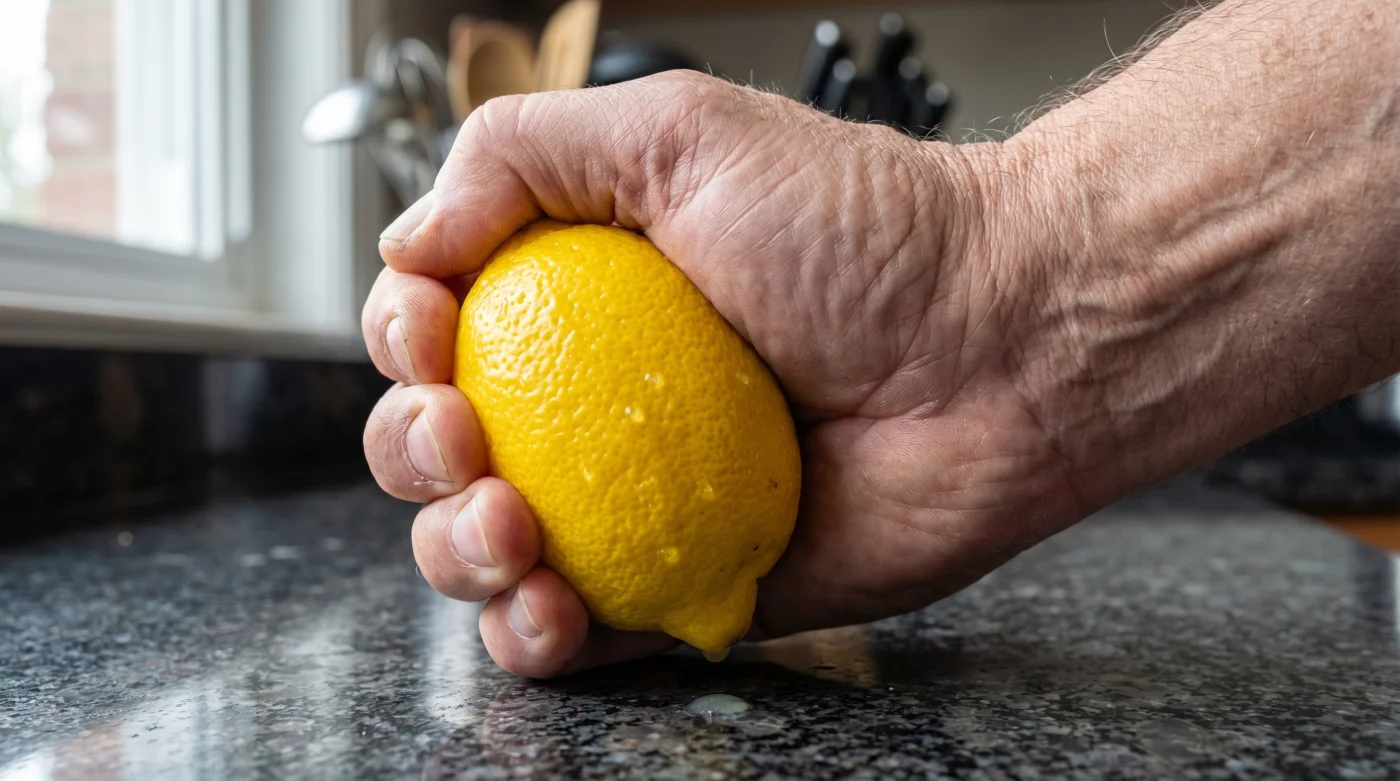
The pale morning light catches the condensation on a lemon you just pulled from the crisper drawer. It is beautifully firm, bright yellow, and completely unyielding. You slice it in half, the knife meeting stubborn resistance, and squeeze it heavily over your mixing bowl. A few reluctant drops fall. Your fingers smell fiercely of bright citrus oils, but the liquid you actually need remains trapped inside.
In that moment, you are wrestling a yellow stone. This is the quiet frustration of winter mornings and hurried dinners, where a simple squeeze becomes a test of sheer grip strength.
In a professional prep kitchen, the rhythm of extraction is entirely different. There is a distinct, rhythmic thud against a stainless steel workbench before any blade touches the rind. The fruit gives up its water freely, pooling thick and heavy in the bottom of a measuring cup.
The difference relies on manipulating the internal pressure. It isn’t about buying a specific variety of fruit, but a quiet understanding of physical tension and structural release.
The Architecture of a Citrus Wedge
Think of a cold lemon not as a solid mass, but as a densely packed collection of microscopic water balloons tucked tightly inside a thick, fibrous leather jacket. Cold temperatures in your fridge keep those tiny juice vesicles rigid, tight, and highly resistant to pressure.
When you simply slice and press, you are fighting the internal bracing of the fruit. By pressing the intact lemon into a hard surface before you cut it, you pop those internal balloons from the outside.
The perceived flaw of a cold, firm lemon—its dense, unyielding nature—actually becomes your greatest advantage. The rigidity of the chilled rind allows you to apply heavy mechanical tenderization without tearing the skin and making a mess.
You effectively pre-juice the fruit while it is still safely sealed shut. The simple swap of rolling before slicing will double your fresh citrus yield instantly.
The Vancouver Prep Station
Elara Vance, a 42-year-old pastry chef running a bustling bakery in Vancouver’s East End, understands this friction intimately. Her daily lemon curd requires three litres of fresh juice, and her produce arrives chilled to four degrees Celsius on the morning delivery truck.
She does not waste time microwaving citrus, an outdated trick that cooks the delicate flavour and alters the acidity. Instead, she leans her body weight into the counter.
Elara treats the cold fruit like a tight muscle needing a deep tissue massage. She rolls each one beneath the heel of her hand until the skin gives a soft, yielding sigh, saving her staff hours of physical strain and hundreds of lemons a week.
Adjustment Layers for Your Routine
Depending on the demands of your kitchen, this technique shifts slightly to accommodate different citrus profiles.
For the quick breakfast: You only need a tablespoon of juice to curdle milk for pancake batter. Use the heel of your hand and a quick, aggressive ten-second roll against the cutting board. The lemon will feel suddenly heavy and soft.
For the weekend mixologist: Limes are notoriously tighter and more stubborn than lemons. They require you to lean your entire upper body weight into the roll, pushing until you hear a faint internal popping sound.
For the batch prepper: If you are making a large volume of marinade or lemonade, take your chilled lemons and roll them one by one using a heavy wooden rolling pin. Press down firmly as if flattening a thick piece of dough.
This mechanical pressure ensures you leave no usable liquid behind in the compost bin.
The Mechanics of the Roll
Executing this swap requires nothing more than your own body mechanics. You do not need expensive presses or specialized gadgets taking up space in your drawers.
Keep your shoulders relaxed and use your core weight rather than straining your wrist or fingers.
- The Grip: Place the thickest part of your palm directly over the centre of the chilled fruit.
- The Pressure: Lean forward until you feel the rind begin to soften and give under your weight.
- The Motion: Roll it back and forth firmly for ten to fifteen seconds, pressing it into the counter.
- The Cut: Slice it through the equator only after it feels distinctly soft and bruised in your hand.
The moment your knife breaks the skin, the juice will immediately pool onto your cutting board. Have your bowl positioned and ready.
You will immediately notice a dramatic visual yield difference, pulling twice the volume you would from a rigid fruit.
Finding Abundance in the Mundane
There is a specific, quiet satisfaction in coaxing a stubborn ingredient to yield its full potential without resorting to sheer force. It changes the way you approach the daily rituals of feeding yourself.
You stop viewing meal prep as a series of rigid instructions, and start feeling the physical realities of your food. You learn to work with the tension rather than fighting it.
Mastering this minute detail brings a sense of competence and calm to your kitchen. You stop wasting good food, and you find a strange, grounded comfort in the simple act of pressing a lemon into a cold counter.
It is a reminder that abundance is already there, waiting for a slight shift in your approach to be released.
“You cannot force a cold ingredient to perform; you must physically persuade it to let go.” – Elara Vance
| Key Point | Detail | Added Value for the Reader |
|---|---|---|
| Straight Squeezing | Cutting cold fruit directly from the fridge | High physical effort, low liquid return. |
| The Counter Roll | Pressing and rolling before cutting | Breaks internal cell walls, doubling your volume. |
| Microwave Method | Heating citrus to soften it | Alters flavour profile negatively, risks burning. |
Common Citrus Frustrations
Does this work for grapefruit and oranges?
Yes. While grapefruits are larger and require more open counter space, the internal structure responds exactly the same way to applied physical pressure.What if my lemon is already at room temperature?
Rolling will still break the internal vesicles, but a room-temperature lemon is already slightly more relaxed. You will still see an increase in liquid, but the contrast won’t be as stark as with chilled fruit.Can I use a rolling pin instead of my hand?
Absolutely. If you have joint pain or are processing a large batch, a heavy wooden pin offers excellent mechanical advantage without straining your wrists.Will rolling cause the skin to split?
Not if you apply steady, downward weight. Avoid sudden striking motions. The thick rind is designed to stretch and bruise long before it actually tears open.Does this release more bitterness from the pith?
No. The oils in the skin and the bitter compounds in the pith remain trapped. You are only bursting the water-filled vesicles inside the flesh of the fruit.