The papery skins cling to your fingertips like damp tissue. You stand at the counter, carefully picking away the translucent layers of a single clove, trying not to bruise the flesh. Your hands will smell like pungent sulfur for the rest of the evening, despite the frantic scrubbing with lemon and salt. It feels like a necessary, unavoidable tax you pay for wanting a decent, well-seasoned meal.
In the fluorescent hum of a commercial kitchen, nobody has time for this slow, sticky ritual. When a recipe calls for forty cloves of garlic to simmer in a rich tomato braise, there is no delicate peeling. There is only kinetic energy. The pros rely on physics rather than patience, utilizing a method so brutally simple it feels entirely unearned.
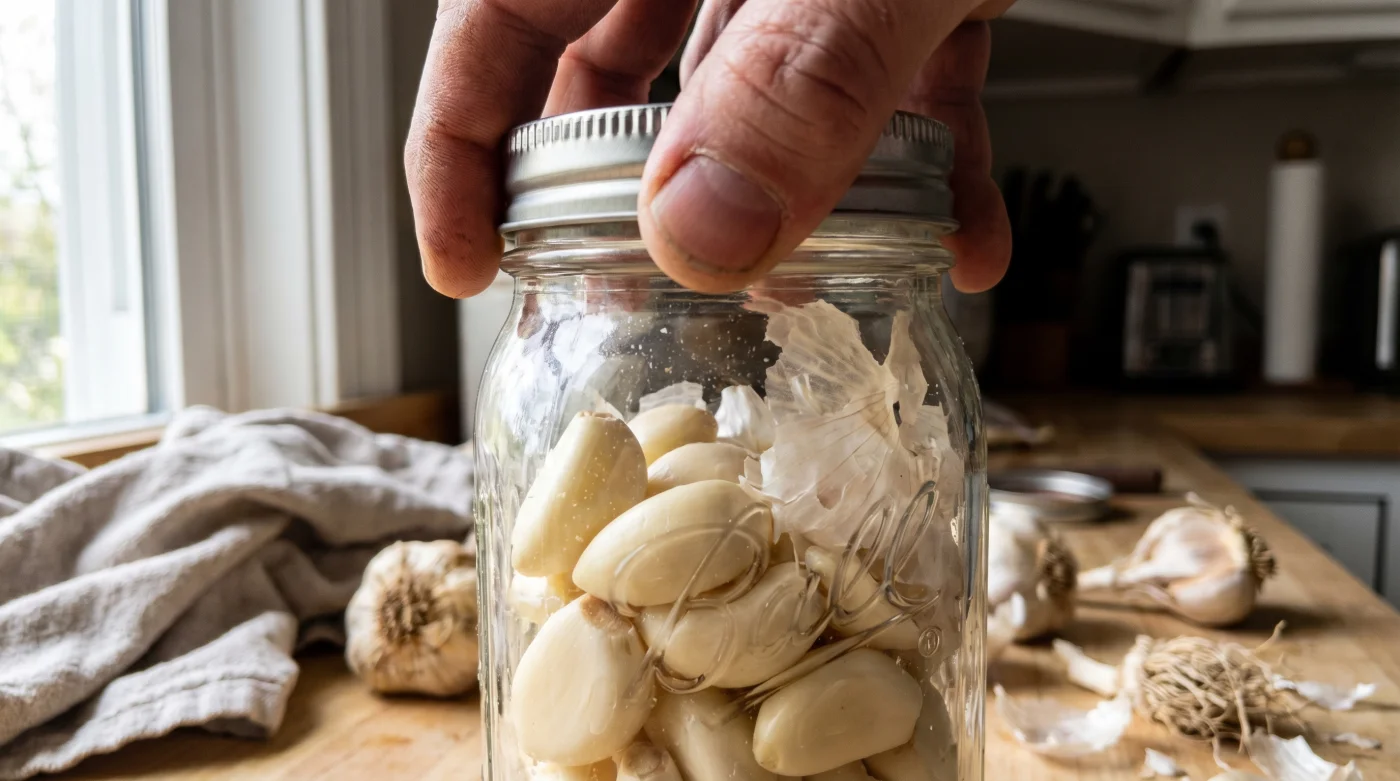
The secret lies in an empty glass jar. It sits in your recycling bin right now, smelling faintly of old marinara or pickles, waiting to become the most efficient prep tool you own. By turning a tedious manual task into a short, aggressive burst of percussion, you completely bypass the frustration that usually begins your cooking process.
The Centrifuge Effect
You might have been taught to crush the clove with the flat of a heavy blade. While this separates the skin, it also ruptures the cell walls of the garlic, immediately releasing allicin. This chemical reaction dictates the sharpness of the flavour. If you want a mellow, slow-roasted sweetness, a crushed clove is already structurally compromised.
Think of a glass jar not as storage, but as a closed-loop wind tunnel. By sealing an entire head of separated cloves inside a hard-walled vessel and shaking it violently, you rely on blunt force and friction. The heavy cloves batter against the glass and against each other, bruising the fragile, dry skins just enough to loosen their grip without crushing the wet flesh inside.
This shifts your prep from tedious micromanagement to a systemic solution. The mundane, discarded jam jar transforms from recycling waste into a high-speed peeling chamber, capable of stripping an entire head in ten seconds flat.
Elias, a 31-year-old prep cook at a frantic Montreal brasserie, processes six kilos of whole garlic before the lunch rush even begins. He laughs at the fancy silicone peeling tubes sold in boutique homeware shops. For him, the day always starts with two large, heavy glass Mason jars. He loads the stiff, unpeeled cloves into the glass, seals the metal lids, and shakes them like a bartender mixing a desperately dry martini. Within fifteen seconds, he dumps a mound of pristine, naked garlic onto his board, ready for the chopping block, while the papery debris floats harmlessly to the side.
Adjusting the Variables
Not all cooking requires the exact same approach to prep. The way you treat the ingredient before it hits the pan dictates the final flavour profile of your dinner.
For the Aromatic Purist
If you are building a delicate, clear broth or a slow-braised stew, you want the garlic whole and unblemished. Shaking them in glass removes the skin but keeps the firm structure intact. This allows the clove to melt softly over a low flame, releasing a subtle, earthy warmth rather than a sharp, pungent bite.
For the Weekend Batch Planner
Perhaps you prefer to knock out your prep on a Sunday afternoon. Strip three whole heads simultaneously using a larger, litre-sized jar. Once the cloves are bare, you can submerge them in olive oil in the fridge, or blitz them into a rough paste to freeze in ice cube trays. The sheer volume you can process turns an hour of annoying work into a two-minute task.
The Ten-Second Rhythm
To execute this properly, you need to trust the aggression of the movement. A gentle rattle will do nothing but frustrate you. The garlic needs to hit the hard walls of the glass with genuine force.
Before you begin, place the whole bulb on your cutting board. Press the heel of your hand firmly against the top until you hear a satisfying crack, separating the individual segments from the dry root base.
- Drop the loose, unpeeled cloves into a sturdy, clean glass jar.
- Ensure the jar is no more than half full; the cloves need empty space to gain momentum.
- Screw the lid on tightly.
- Shake violently up and down for ten to fifteen seconds, listening for the sound to change from a dull thud to a sharp, distinct rattling.
The Tactical Toolkit
Vessel: A 500ml to 1L glass jar with a metal lid (plastic muffles the impact).
Time: 10 to 15 seconds of vigorous shaking.
Visual Check: Look through the glass; when you see the pale yellow cloves cleanly separated from the white, papery flakes, the job is done.
Frictionless Cooking
Removing the resistance at the very beginning of a recipe changes your entire relationship with the stove. When chopping garlic feels like a chore, we tend to skip it, reaching for stale powders or those sad, acidic jars of pre-minced paste. We compromise on flavour because the physical toll of preparation outweighs the desire for a good meal.
Mastering this simple jar technique strips away that mental barrier. It returns the joy to cooking. You stop viewing recipes as a list of exhausting demands and start seeing them as fluid, manageable processes. A handful of fresh, pungent cloves suddenly becomes a readily available luxury rather than a sticky inconvenience, grounding your daily cooking in practical, effortless confidence.
Physical friction in the kitchen is the enemy of creativity; remove the sticky, frustrating prep work, and you create the mental space required to actually taste your food.
| Key Point | Detail | Added Value for the Reader |
|---|---|---|
| Vessel Material | Thick glass rather than plastic. | Maximizes blunt impact force, removing skins faster. |
| Clove Integrity | Leaves the cell walls uncrushed. | Prevents premature allicin release for a sweeter flavour. |
| Capacity Limit | Fill jar no more than half full. | Provides the necessary kinetic space to generate friction. |
Frequently Asked Questions
Does the jar need to be completely dry?
Absolutely. Even a single drop of water will cause the papery skins to adhere to the glass and the cloves, ruining the friction effect.Why did my garlic barely peel after shaking?
You either overfilled the jar, preventing the cloves from gaining momentum, or you did not shake with enough aggression. Hit it harder.Can I store the peeled cloves in the same jar?
Yes. Once peeled, blow away the skins, seal the clean cloves in the jar, and keep them in the fridge for up to a week.Does this work for older, softer garlic?
It is less effective. Older garlic loses moisture, causing the skin to fuse tightly to the shrinking clove. Fresh, firm bulbs work best.Do I need to cut the hard root end off first?
No. The violent shaking will shatter the dry skin away from the root base entirely. You can trim the tiny woody end off afterward with a knife.