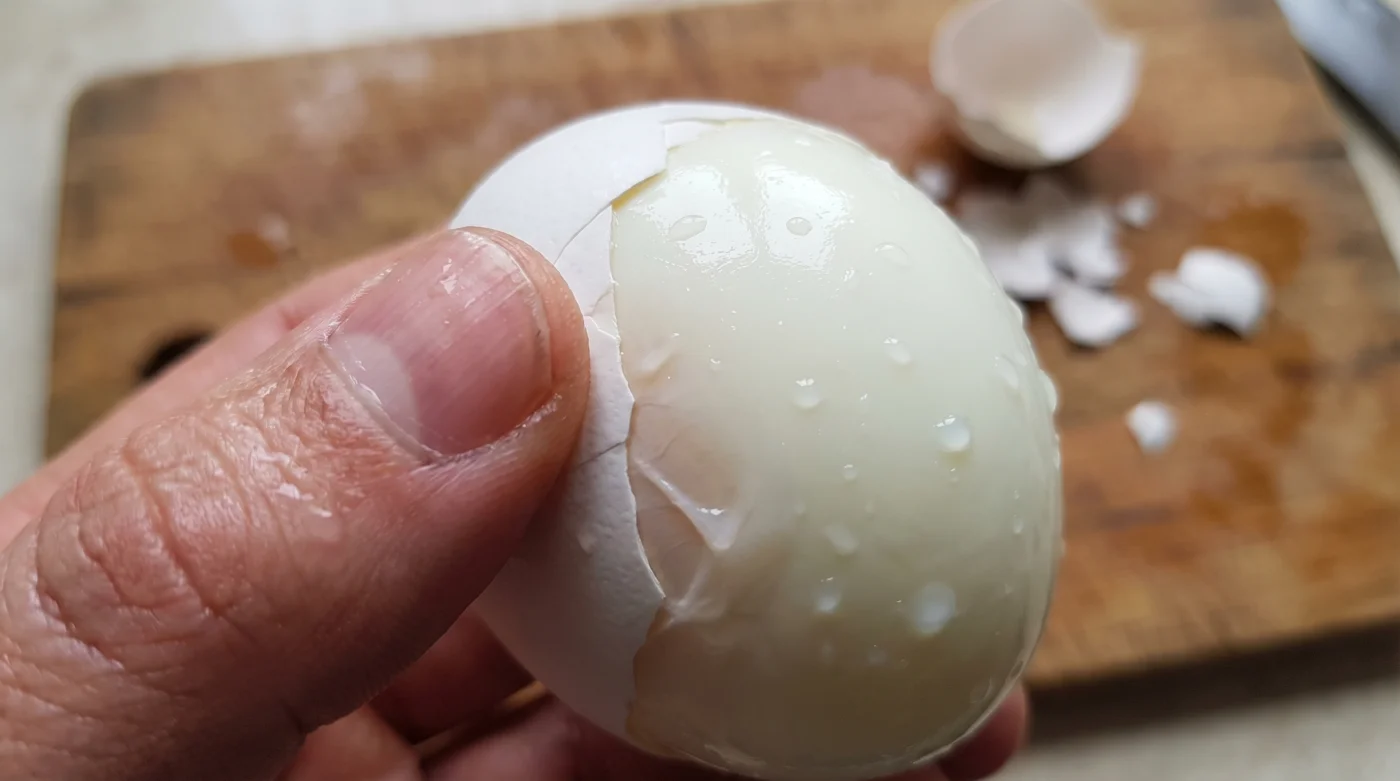
The kitchen is quiet, save for the rhythmic bubbling of water in a stainless steel pot. Frost clings to the edges of the windowpane, blurring the grey winter morning outside. You lower half a dozen farm-fresh eggs into the rolling boil, anticipating the satisfying snap of a perfectly peeled snack for the week ahead.
But fifteen minutes later, standing over the sink, that anticipation dissolves. You are picking at microscopic shards of calcium, watching helpless as chunks of delicate egg white tear away, leaving a pockmarked ruin rather than a smooth, pristine oval.
We often blame ourselves for this culinary disaster. We curse our lack of patience, blame the age of the eggs, or swear we did not chill them fast enough. Yet, the true culprit is an invisible chemical bond working against you from the inside out.
The solution is not found in expensive gadgets or complex chilling rituals. It is sitting quietly in your baking cupboard. A simple, alkaline powder transforms the water, breaking the chemical grip between membrane and white, offering the lazy fix for flawless peeling every single time.
The Perspective Shift: Rethinking the Membrane
When you boil an egg, you are essentially initiating a rapid protein coagulation. Fresh eggs naturally possess a slightly acidic albumen. This acidity causes the egg white proteins to bind fiercely to the inner shell membrane, fusing them together like a tightly woven sweater shrinking in the wash.
You can try to fight this physical bond with brute force or frantic ice baths, but you are still battling the egg’s natural chemistry. By adding baking soda to the cooking water, you alter the pH balance of the entire environment, subtly shifting the odds in your favour.
The baking soda permeates the porous calcium carbonate shell just enough to raise the alkalinity of the egg white. This causes the membrane to detach, turning that tight, shrinking sweater into a loose, unbuttoned coat. The shell practically sighs and releases its hold.
It is a profound shift in how you approach the stove. Instead of bracing yourself for a tedious battle of fingernails versus shell, you create a hostile environment for stubbornness, turning a frustrating chore into an effortless, predictable rhythm.
The Diner Cook’s Secret
Elias Thorne, a forty-two-year-old line cook at a bustling diner in downtown Halifax, understands this better than anyone. On a busy Saturday morning, his station churns through hundreds of eggs. He does not have the luxury of time, nor can he afford the waste of torn, unusable whites.
Elias does not rely on old wives’ tales or complicated peeling contraptions. His morning prep always involves a heavy pinch of baking soda tossed into the commercial boiler. It is a shared industry secret that saves his morning sanity, allowing him to slide shells off in single, satisfying ribbons while the breakfast orders pile up.
Tailoring the Alkaline Trick
Not every boiling task carries the same stakes. How you apply this lazy fix depends on the specific culinary outcome you are chasing. Let us look at how to adjust the environment for your particular kitchen rhythm.
For the Deviled Egg Purist: When visual perfection is the only metric that matters, precision is your ally. You need pristine, unblemished whites that can hold a rich, piped filling. Adding a full half-teaspoon of baking soda to your rolling boil ensures that the shell falls away without taking a millimetre of white with it, preserving the structural integrity of your delicate base.
For the Sunday Meal Prepper: You are batch-cooking for the week, prioritizing speed and volume over absolute visual perfection. You want to peel a dozen eggs before your morning coffee gets cold.
Here, the baking soda acts as a pure time-saver. By tossing a generous teaspoon into a large pot, you guarantee that you can crack and slip the shells off under running water in mere seconds, cutting your prep time completely in half.
For the Soft-Boiled Aficionado: Chasing the perfect jammy yolk requires exact timing. Soft-boiled eggs are inherently fragile, making them terrifying to peel. The alkaline water softens the membrane’s grip so effectively that you can gently nudge the shell away without applying pressure to the delicate, trembling centre.
Executing the Lazy Fix
Implementing this method requires almost no extra effort, but it does demand a quiet attention to your setup. You are setting up a chemical reaction, not just heating water. Treat the process with a mindful approach to timing.
Start with enough water to fully submerge your eggs by at least an inch. Bring the water to a rapid, rolling boil before you even think about adding the eggs. This thermal shock is the first step in separating the inner membrane.
Once the water is boiling, add your alkaline agent. You will notice a slight, immediate fizz as the powder hits the hot water, signalling the chemical shift before you lower your eggs in gently.
Maintain a steady simmer rather than a violent boil to prevent the shells from cracking against each other. When your timer rings, immediately transfer the eggs to a deeply cold ice bath to halt the cooking process instantly.
- Water Volume: 2 litres for up to six eggs.
- Alkaline Agent: 1/2 teaspoon of pure baking soda.
- Temperature: Rolling boil (100 Celsius) to start, reduced to a gentle simmer.
- The Chill: Submerge in ice water for a minimum of 5 minutes before peeling.
Finding Peace in the Prep
Kitchen frustrations often stem from feeling like we lack control over our ingredients. A torn, clinging eggshell is a tiny, mundane failure, but it sets a tone of annoyance. It makes cooking feel like a chore rather than an intentional craft.
When you adopt this lazy fix, you are not just saving three minutes of peeling time. You are reclaiming a sense of mastery over your morning routine. You are replacing a physical frustration with a quiet, reliable victory.
There is a distinct, tactile pleasure in feeling a shell slip away in two clean halves. It feels almost magical, a small reward for understanding the silent chemistry of the food you prepare. Every smooth surface is a quiet victory over the mundane.
Let this simple white powder be a reminder that the best solutions in the kitchen rarely require more effort. Often, true culinary authority is simply a matter of knowing exactly how to let the ingredients yield gracefully to your intentions.
The best cooks do not fight their ingredients; they change the environment until the ingredients cooperate.
| Key Point | Detail | Added Value for the Reader |
|---|---|---|
| The Alkaline Shift | Baking soda raises the water’s pH level. | Prevents the egg white from bonding to the inner membrane. |
| Thermal Shock | Dropping eggs directly into boiling water. | Forces the egg contents to pull away from the shell instantly. |
| The Ice Bath | Submerging cooked eggs in cold water for 5 minutes. | Shrinks the egg slightly, creating a micro-layer of steam for easier peeling. |
Frequently Asked Questions
Does baking soda change the flavour of the eggs?
No, a half-teaspoon in two litres of water is not enough to penetrate the shell deeply enough to alter the taste. Your eggs will taste perfectly normal.
Can I use baking powder instead?
No, baking powder contains added acids which defeat the purpose of creating a highly alkaline environment. Stick to pure baking soda.
Does this work on fresh farm eggs?
Yes, this method is especially valuable for farm-fresh eggs, which are notoriously difficult to peel due to their naturally lower pH levels.
How long should I boil them for a hard yolk?
For a standard large egg, twelve minutes at a gentle simmer will give you a firm but creamy yolk without the dreaded green ring.
Do I peel them warm or cold?
Always peel them cold. Let them rest in the ice bath for at least five minutes; the cold water shrinks the egg inside the shell, making the release much smoother.