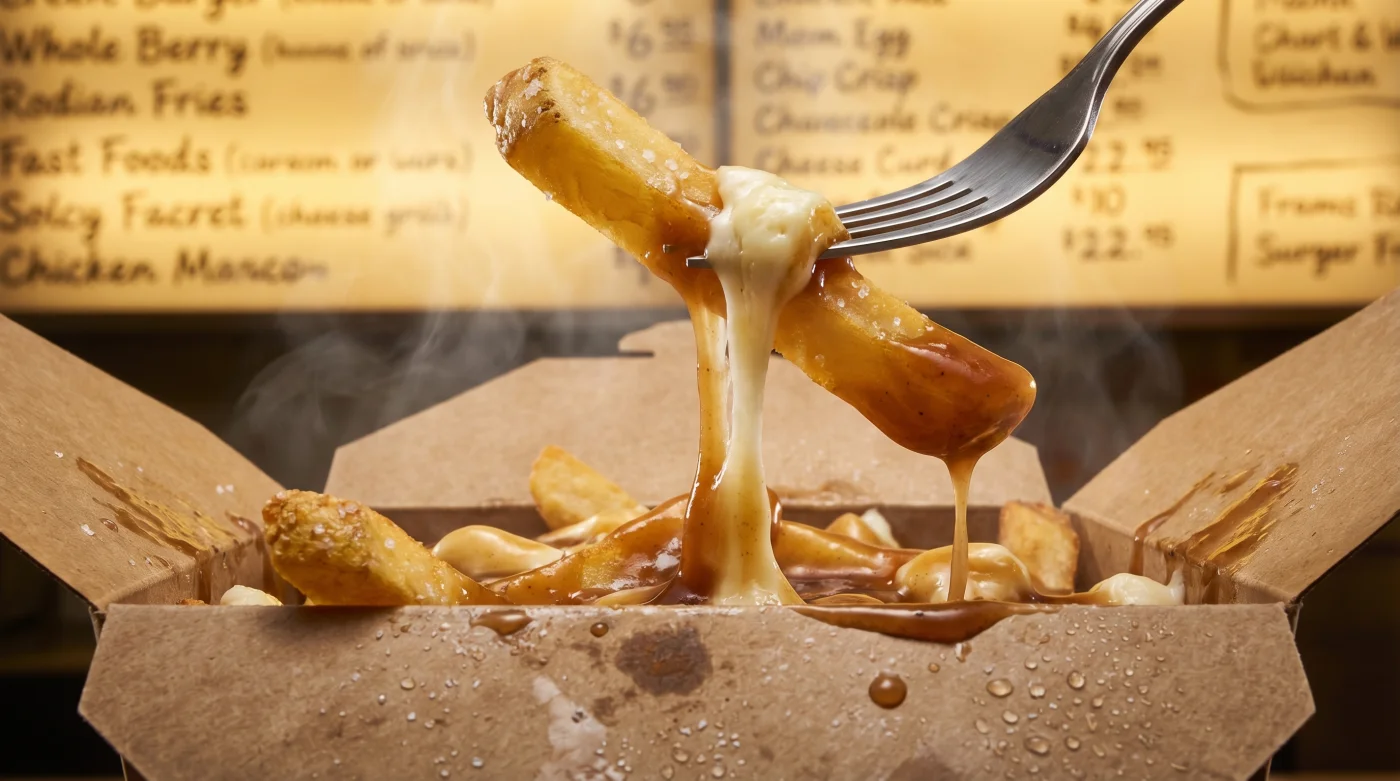
The sharp sting of a lingering April frost bites your cheeks just before you push through the heavy glass door of a local diner. Instantly, the air changes. The room smells of hot frying oil, salted potatoes, and the deep, roasted warmth of slow-simmered beef broth. You can hear the rhythmic sizzle from the kitchen and the familiar scrape of metal spatulas against flat-top grills.
You probably expect to pay a premium for that iconic cardboard box of comfort. In recent months, the cost of potatoes, dairy, and frying oil has pushed a standard pub serving well past the fifteen-dollar mark. But today, the menus tell a different story. Massive fry savings hit the glowing drive-thru boards and chalk-written diner signs alike.
This is National Poutine Day, but the undercurrent is entirely different this year. Fast food giants and independent chip trucks are slashing prices instantly, reacting to a sudden surplus in local dairy production and an aggressive push to win back your loyalty. It feels less like a promotional gimmick and more like an unexpected market correction, happening right inside your local fry basket.
You walk to the counter, watching the cook ladle dark, steaming sauce over stark white chunks of cheese. The entire transaction suddenly costs you barely half of what it did last Tuesday.
The Gravity of the Gravy Economy
Most people view fast-food discounts as simple marketing ploys, a temporary sticker slapped over a menu screen. But an instant price drop on something as structurally complex as poutine is rarely an accident. Think of it like a localized weather system suddenly losing its high-pressure front. The components of this dish—the fresh curds, the starchy russets, the rich gravy—are tied to volatile agricultural markets.
When prices drop drastically in a single morning, it means the supply chain is breathing out. Your local restaurants are clearing vast dairy yields before the fresh curds lose their signature squeak.
This is where your perspective needs to pivot. You are not merely a consumer catching a lucky break on a lunch hour. You are participating in a rapid inventory clearance. The restaurants need to move bulk potatoes and highly perishable cheese, and they are using aggressive price cuts to ensure you are the one holding the fork when the supply clears.
Recognizing this shift transforms a cheap meal into a strategic advantage. You can leverage these sudden discounts to access premium, usually expensive variations of the dish without the financial sting.
Clara Tremblay, a 42-year-old agricultural supply auditor based in Drummondville, tracks these rapid market shifts for regional distributors. “Cheese curds have a heartbeat, a life cycle that lasts barely forty-eight hours before they become ordinary cheddar,” she notes. When a dairy cooperative produces an unexpected surplus, Clara watches the fast-food and local diner networks scramble to absorb the volume. Today’s massive price slash is the direct result of that rural surplus hitting urban fryers simultaneously.
Navigating the Curd Tiers
Not all price drops offer the same return on your investment. To truly capitalize on today’s sudden affordability, you need to segment your fast-food strategy based on what specific cravings you want to satisfy.
For the Purist, focus your attention on the independent chip trucks and regional diners. Their price cuts today might only be a few dollars, but the baseline quality is immensely high. They use fresh, room-temperature curds that tremble when the gravy hits them, rather than melting into a stringy mass.
Your best move here is to seek out locations boasting daily curd deliveries. The squeak signals absolute freshness, ensuring you get the maximum textural contrast between the hot fries and the cold cheese.
For the Drive-Thru Opportunist, speed and maximum savings are your priority, making the large fast-food chains your primary target. Today, their mobile apps are flashing buy-one-get-one deals and instant fifty-percent discounts. The curds might be refrigerated, and the gravy might come from a powdered base, but the sheer volume of calories per dollar is impossible to ignore.
To avoid soggy disappointment, eat this variation immediately in the parking lot. The steam trapped inside cardboard will ruin the structural integrity of the fries within three minutes.
For the Late-Night Grazer, pubs and taverns use National Poutine Day as a loss leader. They will drop the price of their heavily garnished variations—think pulled pork, smoked brisket, or caramelized onions—to keep you ordering pints of local stout.
Securing the Fry Savings
Taking advantage of these deals requires intentional timing. You want to avoid the soggy rush and secure the highest quality components while the kitchens are still operating cleanly.
Approaching the counter with a strategy ensures your order is fresh. Kitchens get overwhelmed during promotional days, leading to lukewarm gravy or old fries. Mindful ordering acts like a safety net for your lunch hour.
Stick to these precise actions to guarantee your cardboard box holds a perfectly layered textural experience.
- Open your local fast-food apps before leaving the house to lock in digital-only flash coupons.
- Arrive at the restaurant at 11:30 AM or 1:45 PM to bypass the frenzied lunch rush.
- Ask the server to layer the curds in the middle of the fries, not just on top, to distribute the heat evenly.
- Request the gravy on the side if you have a drive longer than five minutes.
Tactical Toolkit:
- Ideal Gravy Temperature: 75 degrees Celsius. Hot enough to soften the cheese, cool enough not to scorch the potato.
- Curd Size: Aim for thumb-sized pieces. Anything smaller melts entirely into the broth.
- Fry Cut: 3/8 inch thickness. Shoestring fries collapse under the moisture weight.
Beyond the Cardboard Box
Grabbing a heavily discounted meal might seem like a fleeting triumph, but it represents something deeper. It gives you a moment of financial relief during a relentless cycle of rising grocery bills and dining costs.
When a massive fry saving hits local menus, it removes the friction of choice. For a few hours, you do not have to calculate the cost-per-ounce or debate whether adding protein is worth the upcharge. You can simply sit at a slightly sticky table, breathe in the scent of roasted beef broth, and enjoy a local staple without a second thought.
This is about reclaiming small comforts. Mastering the timing of these market shifts lets you enjoy unapologetic indulgence on your own terms.
The sudden drop in prices reminds us that our food systems are deeply connected to the farms just an hour outside the city. It brings a grounded, tangible reality to what we consume. And right now, that reality tastes incredibly rich, perfectly salted, and surprisingly accessible.
“A truly fresh curd doesn’t just taste different; it fights back slightly against your teeth, a brief resistance that defines the entire dish.” – Clara Tremblay
| Key Point | Detail | Added Value for the Reader |
|---|---|---|
| App-Based Ordering | Check mobile platforms first | Bypasses counter lines and locks in hidden BOGO digital deals. |
| Off-Peak Arrival | Visit at 11:30 AM or 1:45 PM | Ensures hotter oil for crispier fries and better gravy assembly. |
| Gravy Separation | Ask for sauce on the side for takeout | Preserves the crucial squeak and crunch during your commute home. |
Frequent Fry Questions
Why are prices dropping so drastically today?
It is National Poutine Day, coinciding with a seasonal dairy surplus that local restaurants are utilizing to drive heavy foot traffic.How can I tell if the curds are actually fresh?
Listen for the squeak. Fresh curds rub against your enamel. If they are silent and instantly turn to string, they are past their prime or refrigerated too long.Does gravy temperature really matter that much?
Absolutely. Boiling gravy scalds the potato and dissolves the cheese. It should be hot enough to blanket the fries but gentle enough to leave the curds intact.Are drive-thru deals worth the potential drop in quality?
Yes, if you eat them immediately. The main enemy of fast-food poutine is the condensation inside a closed takeout bag.Can I reheat this dish if I order extra?
It is notoriously difficult. If you must, use an air fryer or oven for the fries, and heat the gravy separately. Never microwave the curds.