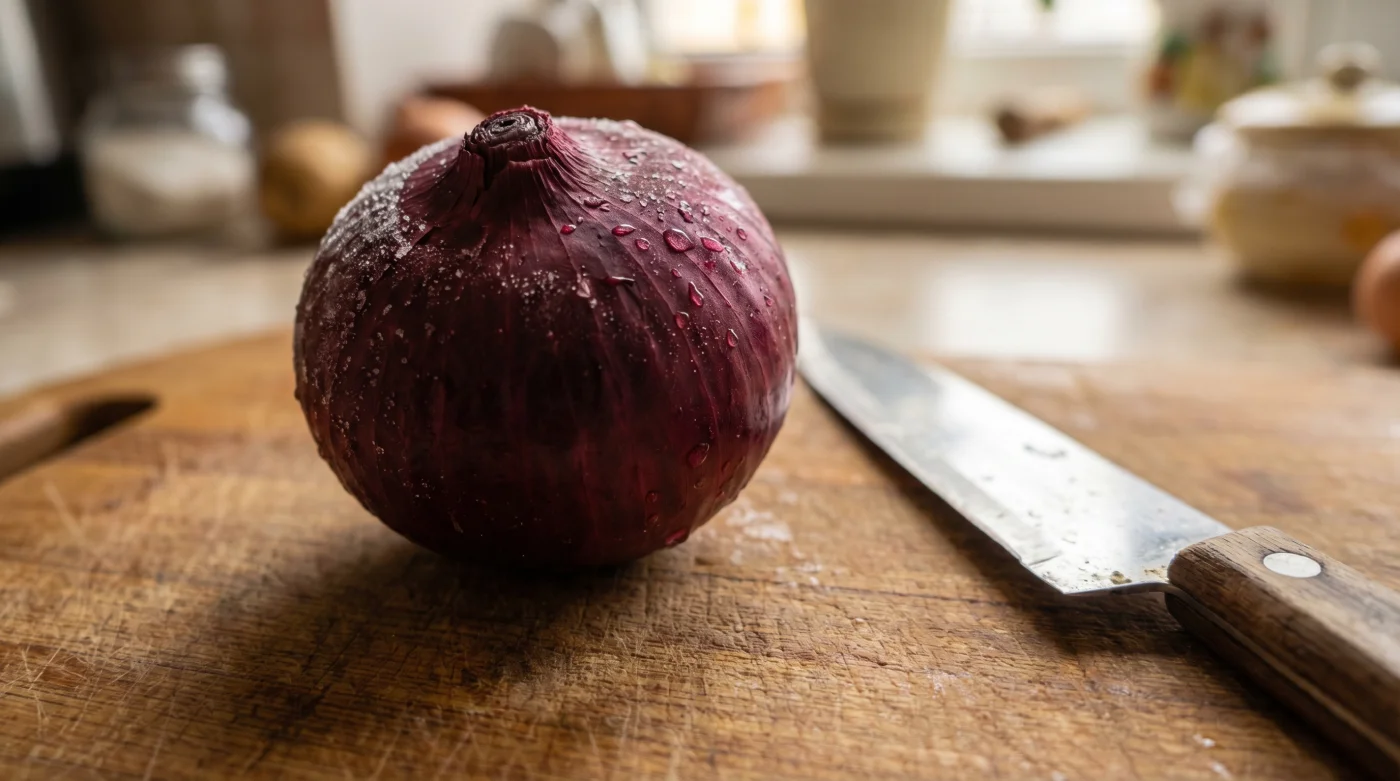
The cutting board sits under the harsh kitchen light, a familiar evening battleground. You split the papery skin of a yellow onion, the brittle layers rustling like dry autumn leaves. Within seconds, the invisible sting hits the air, creeping up your nasal passages and settling directly into your tear ducts. You blink rapidly, swiping your wrist across your face, trying to finish the knife work before your vision blurs completely.
This is the ritual we accept. We have internalized the strange belief that building rich, foundational flavour requires a brief period of physical misery. You chop faster, breathing heavily through your mouth, perhaps lighting a candle or running the cold tap—desperate, ineffective folklore passed down through generations of frustrated home cooks.
But watch a line cook working a busy prep service in a downtown Toronto bistro. They are slicing through fifty pounds of alliums without a single sniffle, their movements rhythmic and entirely unbothered. They aren’t wearing swimming goggles, nor are they holding a piece of bread in their mouths. They might commute miles in the snow just to get to their station, but they refuse to suffer over a cutting board.
They know something fundamental about the biology of the vegetable sitting on your counter. The secret to keeping your eyes dry isn’t about speed or strange kitchen hacks; it is entirely about managing thermal energy. By manipulating the temperature of the ingredient, you change the chemical reaction entirely.
The Alchemy of Cold Over Chaos
Think of a raw onion not as a simple pantry staple, but as a densely packed botanical pressure cooker. When your knife severs its cellular walls, an enzyme called alliinase mixes with amino acid sulfoxides. This reaction creates propanethial S-oxide—a highly volatile sulfur gas that aggressively seeks out the moisture in your eyes, forming a mild sulfuric acid upon contact.
Your tears are a panicked biological defense mechanism. Fighting the stinging gas once it hits the air is a losing battle. The true fix requires you to stop the gas from launching in the first place, turning an aggressive chemical reaction into a dormant one.
This is where the lazy fix becomes your greatest culinary advantage. Gas molecules are excitable; ambient heat makes them buoyant, eager to leap from the cutting board into the air. Cold, however, acts like a heavy, weighted blanket. By lowering the internal temperature of the onion, you force that sulfur compound to remain sluggish and grounded. You aren’t just following a recipe step; you are dictating the physical environment of your workspace.
Consider Marc Tremblay, a 42-year-old prep chef managing the morning shift at a bustling French-Canadian brasserie. Before the sun fully rises, Marc breaks down three massive sacks of cooking onions for the daily soup base. ‘If I kept them at room temperature, I’d be legally blind by nine in the morning,’ he laughs. Marc pulls his supply directly from the 3-degree Celsius walk-in cooler, extracting only what he can slice in a ten-minute window. He knows that the moment the flesh warms up to ambient room temperature, those invisible chemical alarm bells start ringing all over again.
Tailoring the Chill to Your Schedule
Every cooking rhythm requires a slightly different approach to the cold treatment. The goal remains the same, but how you integrate this thermal shift depends entirely on the cadence of your evening. Here is how you adapt the method to your specific reality.
For the Frantic Weeknight Warrior: You walk through the door at six, the house is hungry, and you need a mirepoix sizzling in the pan immediately. The freezer is your tactical strike zone. Toss your whole, unpeeled onions directly onto the freezer shelf for exactly fifteen minutes while you change clothes and gather your pots. This flash-chill penetrates just deep enough to subdue the outer layers where the gas is most potent, buying you enough tear-free time to execute a rapid, precise dice.
For the Sunday Meal Planner: If your weekends involve standing over the counter preparing batches of chili, stews, or salads for the week ahead, the crisper drawer is your staging area. Relocate your heavy bag of aromatics to the bottom of the fridge twenty-four hours before your prep session. Sustained exposure to a cold environment creates a deeply chilled, entirely dormant vegetable. You can chop at a leisurely pace, enjoying the rhythmic sound of the knife without a single sting.
For the Raw Garnish Purist: When you are slicing thin rings for a backyard burger or scattering minced red onion over a delicate ceviche, texture is just as vital as flavour. Protecting the crisp snap requires the ice bath method. Peel and halve your onions, then submerge them in a bowl of heavily iced water for ten minutes. The cold water shocks the cells, locking in the crunch while simultaneously rinsing away the surface sulfur. Your eyes stay dry, and the raw bite is beautifully tempered.
Executing the Frost Protocol
Bringing this technique into your daily routine requires very little effort, but it demands specific timing. If you leave an onion in the freezer too long, the cellular walls burst from ice expansion, leaving you with a mushy, unusable mess the moment it thaws.
Here is your tactical toolkit for mastering the lazy fix. Treat these parameters with the exact respect you would give to resting a steak or proofing bread dough.
- The 15-Minute Rule: Set a hard timer if using the freezer. At 15 minutes, the ambient surface drops below 10 Celsius, perfect for gas suppression without causing frost damage.
- Keep the Root Intact: Always leave the hairy root end attached until the very last cut. The absolute highest concentration of sulfur compounds lives right at the base.
- Sharpen the Steel: A dull blade crushes cells, creating massive gas release regardless of temperature. A sharply honed knife cleanly separates them, minimizing the damage.
- Work in Batches: If you are preparing an industrial amount of aromatics, keep the reserve batch chilling in the fridge while you chop the first round.
Reclaiming the Cutting Board
It seems like such an absurdly simple adjustment—moving a bulb from the dry pantry basket to the cold drawer. Yet, removing the physical discomfort from your daily cooking routine fundamentally changes how you approach the stove. Preparing food should feel restorative, never like a punishment.
When you stop bracing yourself for the inevitable burning eyes, the act of chopping becomes a quiet meditation. You begin to notice the subtle translucence of the layers, the clean, percussive sound of steel hitting wood, and the satisfying geometry of a perfect brunoise.
The dread dissipates. You are no longer rushing blindly through the foundational steps of your meal, racing against a chemical reaction. By employing a few degrees of cold, you take quiet control of your kitchen environment. You reclaim your focus, your comfort, and your evening, proving that sometimes the absolute best culinary technique is simply knowing how to keep things perfectly cool.
‘The best kitchen hacks aren’t gadgets; they are just basic physics applied with a bit of common sense.’ — Marc Tremblay, Prep Chef
| Key Point | Detail | Added Value for the Reader |
|---|---|---|
| The Freezer Flash | 15 minutes in the freezer before chopping. | Provides immediate, tear-free prep for rushed weeknight dinners without altering texture. |
| The Fridge Rest | 24 hours in the crisper drawer. | Perfect for heavy batch-cooking; allows you to chop massive quantities peacefully. |
| The Ice Bath | 10 minutes submerged in ice water after peeling. | Crisps the flesh and removes harsh sulfur bite, ideal for raw garnishes and salads. |
Frequently Asked Questions
Will chilling the onion change its flavour in the final dish?
Not at all. Once the cold onion hits a hot pan, it cooks down exactly like a room-temperature one, developing the same deep, sweet caramelization.Can I just store all my onions in the fridge permanently?
It is generally better to store them in a cool, dark, dry pantry long-term to prevent premature rotting, moving them to the fridge only a day before you plan to cook.Does this trick work for shallots and garlic?
Yes. While garlic rarely causes tears due to its smaller volume, chilling shallots using the 15-minute freezer rule works perfectly to suppress their potent gas.What happens if I forget the onion in the freezer?
The water inside the cells will freeze and expand, bursting the cell walls. When it thaws, it will be mushy—fine for a pureed soup, but terrible for a raw salad.Why does leaving the root on help?
The root plate holds the highest density of sulfur compounds. By leaving it intact and discarding it at the very end, you prevent the largest pocket of gas from escaping into the air.