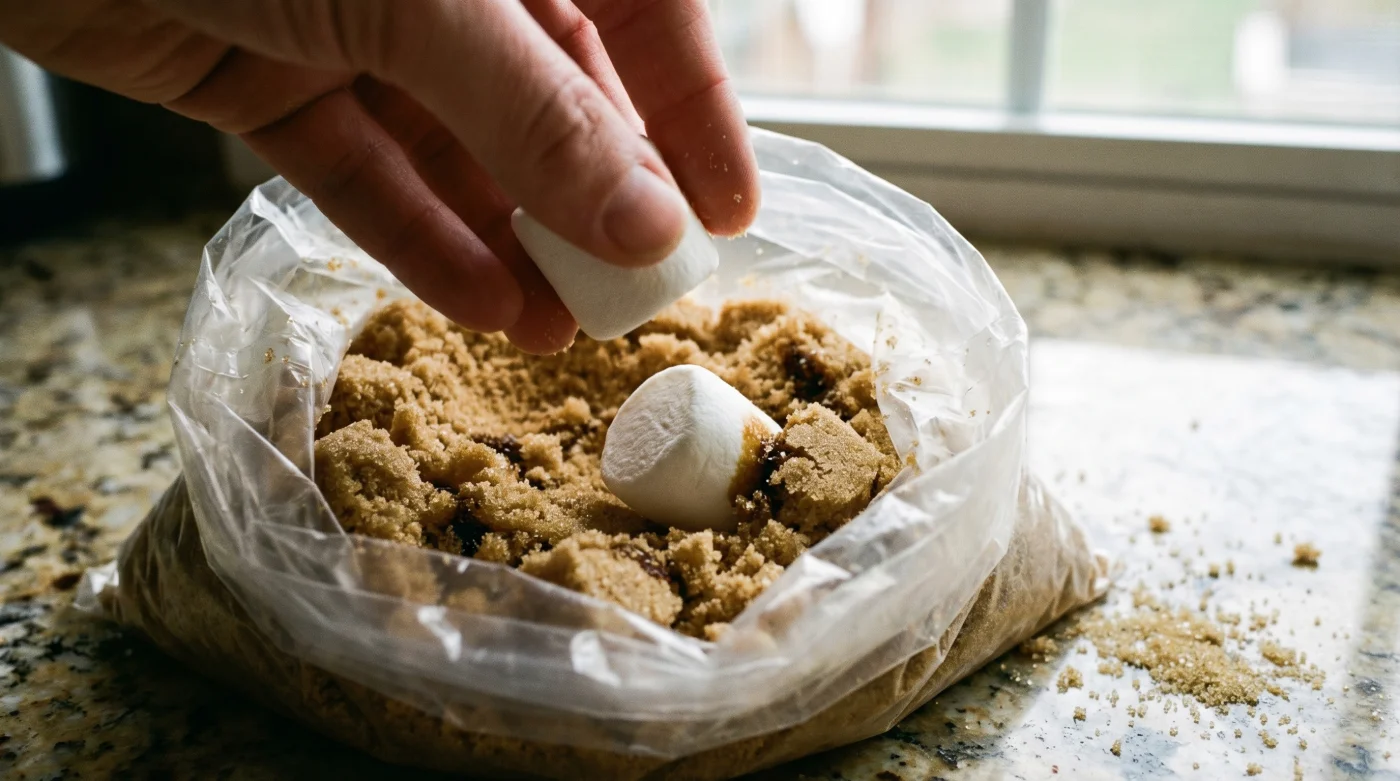
You know the exact sound. It is the heavy, discouraging thud of a plastic bag hitting the kitchen counter, signaling that your baking plans have just hit a literal wall. You reached for the sweet, molasses-rich staple, expecting soft crumbles for your weekend oatmeal cookies, only to find a solid amber brick. It is a shared Canadian culinary disaster, born from dry winter heating and forgotten pantry corners.
Most home cooks resort to brutal tactics when faced with this scenario. They hack at the block with butter knives, creating dangerous slips and jagged shards. Some microwave the bag, watching helplessly as the sugar melts into a sticky, useless puddle before re-hardening into an even tougher glaze. You fight the ingredient, treating it as an adversary rather than a fragile compound.
The professional reality handles this entirely differently. You do not need expensive, single-use gadgets or violent kitchen interventions to solve this. Instead, the fix relies on a surprisingly simple transfer of moisture. By borrowing a soft, pillowy confection from your hot chocolate stash, you can stabilize the microclimate inside that plastic bag forever.
It turns out that the kitchen secret to keeping sugar fresh is already sitting in your cupboard. By choosing to add soft marshmallows directly to the container, you create an effortless equilibrium. The frustration of ruined Sunday mornings vanishes, replaced by a reliable, scoopable ingredient ready the moment you crave a warm batch of muffins.
The Molasses Microclimate
To understand why this works, you have to stop looking at brown sugar as a dry good. Think of it instead as a delicate, damp sponge. The dark, sticky granules are simply white sugar coated in a thin film of molasses. When exposed to the notoriously dry air of a Canadian winter, that molasses evaporates. The sugar crystals lock together, forming a structural matrix harder than concrete.
The perspective shift happens when you stop fighting the crystallization and start managing the humidity. A marshmallow is a hydrocolloid marvel—a matrix of sugar, water, and gelatin that holds onto moisture fiercely but releases it slowly into a dry environment. When you drop one into the bag, it acts as a sacrificial humidity engine. The dry molasses draws moisture from the marshmallow, softening the surrounding sugar while the marshmallow itself gradually turns stale. It is a perfectly balanced, low-tech ecosystem.
Professional Provisioning
Consider the daily routine of Elara Davies, a 48-year-old pastry chef running a high-traffic café in Calgary. In a climate famous for aggressive dry spells and Chinooks, managing ingredient moisture is a daily battle. Elara used to soak terra cotta disks in water to keep her 20-kilogram bins of dark brown sugar workable, but found they often grew mould or made localized pockets too wet. Two years ago, she switched entirely to burying a handful of jumbo marshmallows in her bulk containers. She notes that the gelatin structure regulates the moisture transfer far more gently than a wet piece of clay, keeping the sugar uniformly soft for months without a single clump.
Adjusting for Your Pantry Style
Your approach to this technique depends entirely on how often you bake and how you store your dry goods. Not every kitchen operates at the same rhythm.
For the Occasional Baker
If you only open the bag for Thanksgiving pies and the occasional batch of banana bread, your sugar sits dormant for long stretches. You need to transfer it from plastic to an airtight glass or acrylic canister. Place two large, extremely fresh marshmallows right in the middle of the sugar, ensuring they are surrounded by the granules. This central placement ensures the moisture radiates evenly over those long, quiet months.
For the Weekend Batch-Cook
If you are rolling out cookies every Sunday, you likely keep your sugar in its original bag with a clip. Here, the air exchange is frequent. Drop one large marshmallow near the top of the bag, right where you scoop. You will notice the marshmallow hardening within about three weeks due to the constant opening and closing. Simply toss the stale one out and drop a fresh one in to keep the sugar fresh continuously.
For the Vegan Kitchen
Since traditional marshmallows contain gelatin, vegan bakers might assume this kitchen fix is off-limits. However, agar-based vegan marshmallows perform the exact same osmotic function. Because plant-based gels release moisture slightly faster, you may need to replace them more frequently, but they will still successfully prevent the dreaded sugar brick.
The Five-Minute Kitchen Fix
Implementing this requires almost no effort, but a few mindful steps ensure you get restaurant-quality results. Do not just throw a handful of mini marshmallows into a bag and hope for the best. The size and placement matter greatly for proper moisture distribution.
Follow these specific parameters to stabilize your pantry:
- Select the right size: Use standard or jumbo marshmallows. Mini marshmallows dry out too quickly to affect a standard one-kilogram bag of sugar.
- Check for freshness: Squeeze the marshmallow before using it. It should feel like breathing through a pillow—bouncy and slightly damp. If it is already firm, it has no moisture to give.
- Bury the confection: Push the marshmallow halfway down into the sugar. This allows the moisture to disperse in all directions, rather than just softening the top layer.
- Seal aggressively: Expel as much air as possible from the bag or use a container with a silicone gasket. The trick only works if the moisture is trapped inside.
The Tactical Toolkit
- Ideal Temperature: Store between 18 and 22 degrees Celsius. Avoid placing the container near the stove, where heat will accelerate the marshmallow’s drying process.
- Replacement Timeframe: Check the marshmallow every 4 to 6 weeks.
- The Rescue Method: If your sugar is already hard, do not add a marshmallow yet. Microwave the block with a damp paper towel for 20 seconds to break it apart, let it cool completely, and then add soft marshmallows to maintain that newly restored texture.
A Smoother Culinary Rhythm
Cooking should never begin with an obstacle. When you eliminate the friction of unworkable ingredients, you invite spontaneity back into your kitchen. You no longer have to plan your baking hours in advance just to chisel away at a block of hardened molasses.
By understanding how moisture moves through your ingredients, you gain a quiet authority over your pantry. It is no longer a dark cupboard of degrading goods, but a curated system working in your favour. A simple marshmallow, acting as a humble sentinel, ensures that whenever the mood to bake strikes, your ingredients are yielding, ready, and perfectly preserved.
The best kitchen habits aren’t about buying more tools; they are about understanding the physical nature of your ingredients and letting them do the work for you.
| Key Point | Detail | Added Value for the Reader |
|---|---|---|
| Marshmallow Size | Standard or Jumbo only | Ensures enough moisture volume to penetrate a full bag without drying out immediately. |
| Placement | Buried halfway down | Provides even, 360-degree humidity distribution rather than just a soft top layer. |
| Container Type | Airtight glass or sealed bag | Stops ambient winter air from neutralizing the moisture transfer, saving you money on wasted sugar. |
Frequently Asked Questions
Will the marshmallow change the flavour of my brown sugar?
No. Marshmallows are primarily sugar and gelatin, which are neutral enough that they will not impart any vanilla or artificial flavours into the heavy molasses profile of the sugar.
What happens if I accidentally leave the marshmallow in too long?
The marshmallow will simply turn into a hard rock itself as it gives up all its moisture. It will not mould or spoil; it just stops providing humidity to the sugar.
Can I use this trick for white granulated sugar?
White sugar hardens due to moisture exposure, not moisture loss. Adding a marshmallow to white sugar will actually cause it to clump, so reserve this method strictly for brown sugar or muscovado.
Do coloured marshmallows work the same way?
Yes, the osmotic properties are identical, but the food colouring may occasionally bleed a tiny speck of colour onto the adjacent sugar granules. Plain white is recommended.
How long does it take a marshmallow to soften a brick of sugar?
A marshmallow is a preventative measure, not a rapid cure. It takes about three days to subtly soften a semi-hard bag, which is why aggressive pre-softening with a damp paper towel is required for severe bricks.