The kitchen is quiet, save for the rhythmic humming of the refrigerator and the soft patter of rain against the windowpane of your Toronto apartment. You pry the plastic lid off a tub of store-bought vanilla icing, and the scent hits you immediately—a cloying, synthetic sweetness that feels heavy in the air. It is the smell of a shortcut that usually tastes like a compromise. You look at the cake cooling on the wire rack, a beautiful sponge you spent two hours perfecting, and the thought of masking it in that grainy, throat-burning sugar paste feels like a minor tragedy. It is the classic dilemma of the home baker: the desire for a professional finish versus the reality of a busy Tuesday evening.
Standard grocery store frosting is designed for shelf stability, not for the sophisticated palate. It is packed with hydrogenated oils and an aggressive amount of sugar meant to preserve it for months. When you spread it straight from the tub, it sits on the tongue like a thick blanket, refusing to melt or release any nuance of flavour. It is the culinary equivalent of listening to a symphony through a thick woollen scarf. You know there is something better, a buttercream that tastes of fresh dairy and subtle vanilla bean, but the prospect of sifting icing sugar and tempering butter feels like a mountain you aren’t ready to climb today.
However, there is a middle ground that most professional caterers keep tucked away in their mental recipe box. It involves a fundamental pivot in how we perceive that plastic tub. Instead of seeing it as a finished topping, we must treat it as a raw ingredient—a highly concentrated sugar base that is waiting to be balanced. The secret doesn’t lie in adding more flavourings or extracts, which often just layer noise over the sweetness. Instead, the solution is found in the cooling, acidic embrace of a staple found in the dairy aisle of every Canadian corner store.
The Chemistry of the Acidic Anchor
To understand why this works, you have to look at the ‘Sugar Trap.’ Most people assume that if a frosting is too sweet, you need to add something to dilute it. They reach for milk or heavy cream, but these additions only make the frosting thinner and more susceptible to sliding off the cake. The real issue isn’t the volume of sugar; it’s the lack of structural contrast. In a high-end bakery, a true Swiss Meringue or French buttercream relies on the balance of fat and air to mask the bite of the sugar. When you introduce sour cream into the mix, you aren’t just thinning the icing; you are introducing a lactic acid that chemically cuts through the grease of the shelf-stable fats.
- Artisan cheese nationwide recalls spark urgent listeria warnings for consumers.
- Canned frosting whipped with sour cream tastes exactly like buttercream.
- Poached eggs demand a fine mesh strainer for perfect spheres.
- Stale bread transforms into premium thickeners for watery winter soups.
- Mashed potatoes piped through star tips elevate cheap dinner plates.
The Halifax Secret: Clara’s Twenty-Minute Miracle
Clara, a 54-year-old retired pastry chef from Halifax, spent three decades running a high-volume catering business where time was often more valuable than the finest Madagascar vanilla. She tells a story of a wedding cake emergency where a batch of traditional buttercream split an hour before delivery. Her solution wasn’t to start from scratch, but to grab four tubs of standard vanilla icing and a large container of full-fat sour cream. She whipped them together with a pinch of sea salt and a handful of cornstarch. The guests never knew the difference; in fact, the bride’s mother requested the ‘special recipe’ for years afterward. Clara calls it the ‘Working Class Buttercream’—a testament to the fact that resourcefulness often trumps expensive ingredients when you understand the underlying science of flavour.
Tailoring the Texture: Adjustment Layers
The beauty of this technique is its adaptability. Depending on the occasion or the base flavour of your cake, you can adjust the ratios to find your perfect equilibrium. For the ‘Purist’ who wants a classic vanilla experience, a 2:1 ratio of frosting to sour cream provides a stiff enough peak for piping while removing the synthetic aftertaste. If you are a ‘Busy Parent’ just trying to get through a school bake sale, even a few tablespoons of sour cream folded in by hand will improve the structural integrity of the icing, making it less likely to melt in a warm classroom.
For those working with chocolate canned frosting, the addition of sour cream is even more transformative. Chocolate icing often has a ‘tinny’ taste due to the cocoa processing used for shelf-stable goods. When you whip in the sour cream, it creates a deep, mousse-like consistency that resembles a ganache. If you really want to lean into the professional pivot, a teaspoon of instant espresso powder dissolved into the sour cream before mixing will highlight the cocoa notes and provide a sophisticated bitterness that completely masks the grocery-store origins.
The Mindful Application: A Tactical Guide
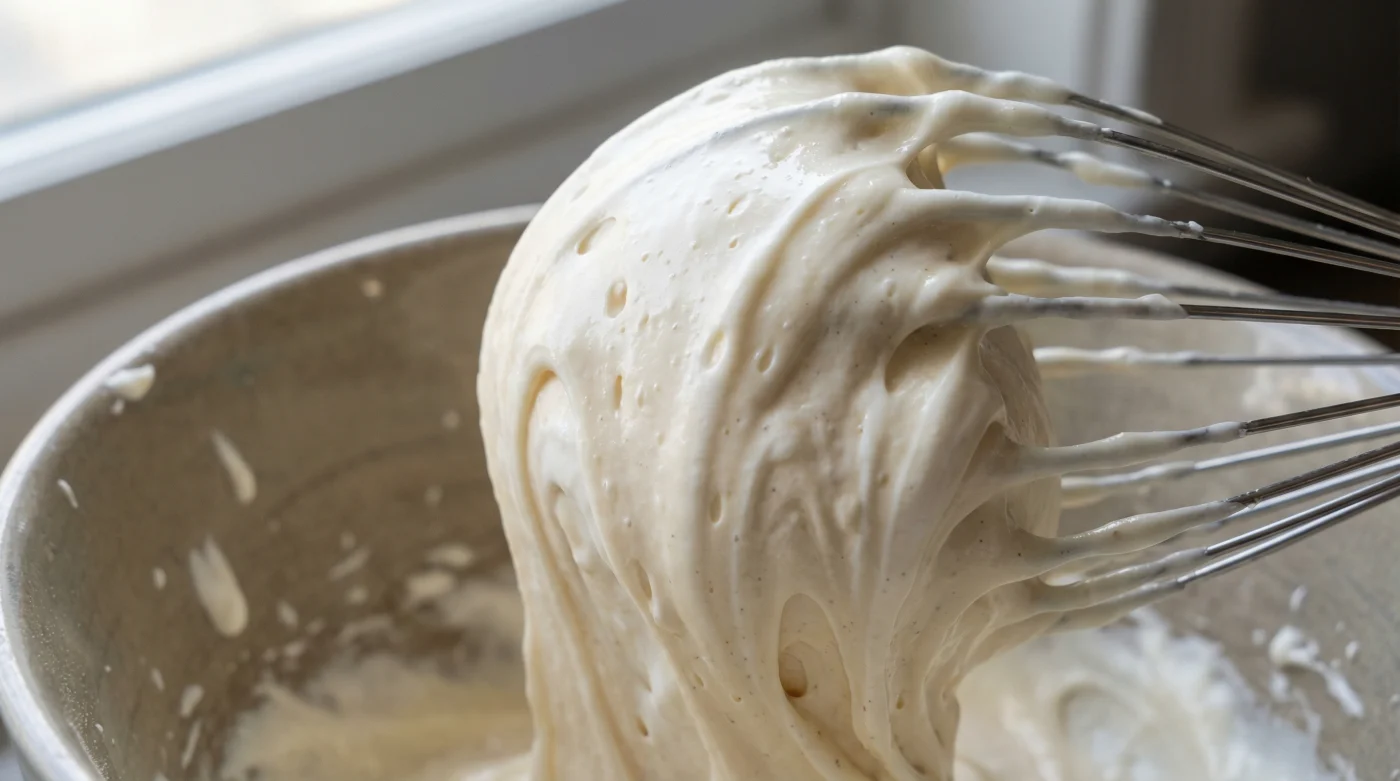
Transforming your icing requires a gentle hand and a bit of patience. You cannot simply dump the ingredients together and hope for the best; you must coax the air into the mixture to achieve that bakery-style loft. Use a stand mixer or a hand mixer with whisk attachments for the best results. The cream should tremble slightly when you stop the motor, indicating it has reached the perfect level of aeration. Follow these steps for a flawless finish:
- Ensure your canned frosting and your sour cream are at the same temperature—ideally slightly cooler than room temperature (around 18°C).
- Start by whipping the canned frosting alone for two minutes to break up the factory-set structure and introduce the first layer of air.
- Add the sour cream in three separate additions, beating on medium-high speed after each to ensure the emulsion doesn’t break.
- For every tub of icing, add a loonie-sized pinch of fine sea salt to further sharpen the flavour profile.
- If the mixture feels too soft, sift in one tablespoon of cornstarch; this provides stability without adding the grittiness of extra icing sugar.
Once you reach the desired consistency, let the frosting sit in the refrigerator for ten minutes before piping. This allows the fats to firm up, giving you crisp edges on your rosettes or smooth, architectural sweeps on the sides of your cake. This short rest period is the difference between a cake that looks ‘home-made’ and one that looks ‘hand-crafted.’
The Bigger Picture: Reclaiming Your Time
Mastering this small kitchen hack is about more than just better-tasting cake. It is about removing the guilt often associated with convenience. In our modern world, we are told that ‘authentic’ experiences must be difficult or time-consuming, but the true art of cooking is found in the clever modification of the tools we have at hand. When you cut through the cloying sweetness of a canned frosting, you are exercising a form of culinary agency. You are taking a mass-produced product and making it your own, ensuring that your celebrations are marked by quality rather than stress. By understanding the system of balance—fat, acid, and sugar—you gain the freedom to create moments of delight without the burden of perfectionism. It turns a chore into a discovery, and a plastic tub into a professional tool.
“Balance is not something you find; it is something you create by inviting the sharp to dance with the sweet.”
| Key Point | Detail | Added Value for the Reader |
|---|---|---|
| Acidic Contrast | Full-fat sour cream cuts sugar. | Eliminates the ‘burning’ sweetness of canned goods. |
| Aeration Method | Whip the base before adding dairy. | Creates a light, mousse-like texture that mimics buttercream. |
| Temperature Sync | Both ingredients at 18°Celsius. | Prevents the frosting from curdling or becoming runny. |
Is this stable enough for outdoor summer parties? While the sour cream adds moisture, the addition of a tablespoon of cornstarch acts as a stabilizer, making it quite resilient in Canadian humidity. Can I use Greek yogurt instead of sour cream? Yes, but ensure it is full-fat and strain any excess liquid first to maintain the thick, pipeable consistency. How long does the modified frosting last? Because of the fresh dairy, you should store the finished cake in the fridge and consume it within three days for peak flavour. Does this work with dairy-free frosting? Absolutely; use a high-quality vegan sour cream and follow the same ratios to improve ‘accidentally vegan’ canned brands. Will it change the colour of the frosting? The sour cream actually makes the icing appear whiter and more matte, which is ideal for wedding or formal occasion cakes.