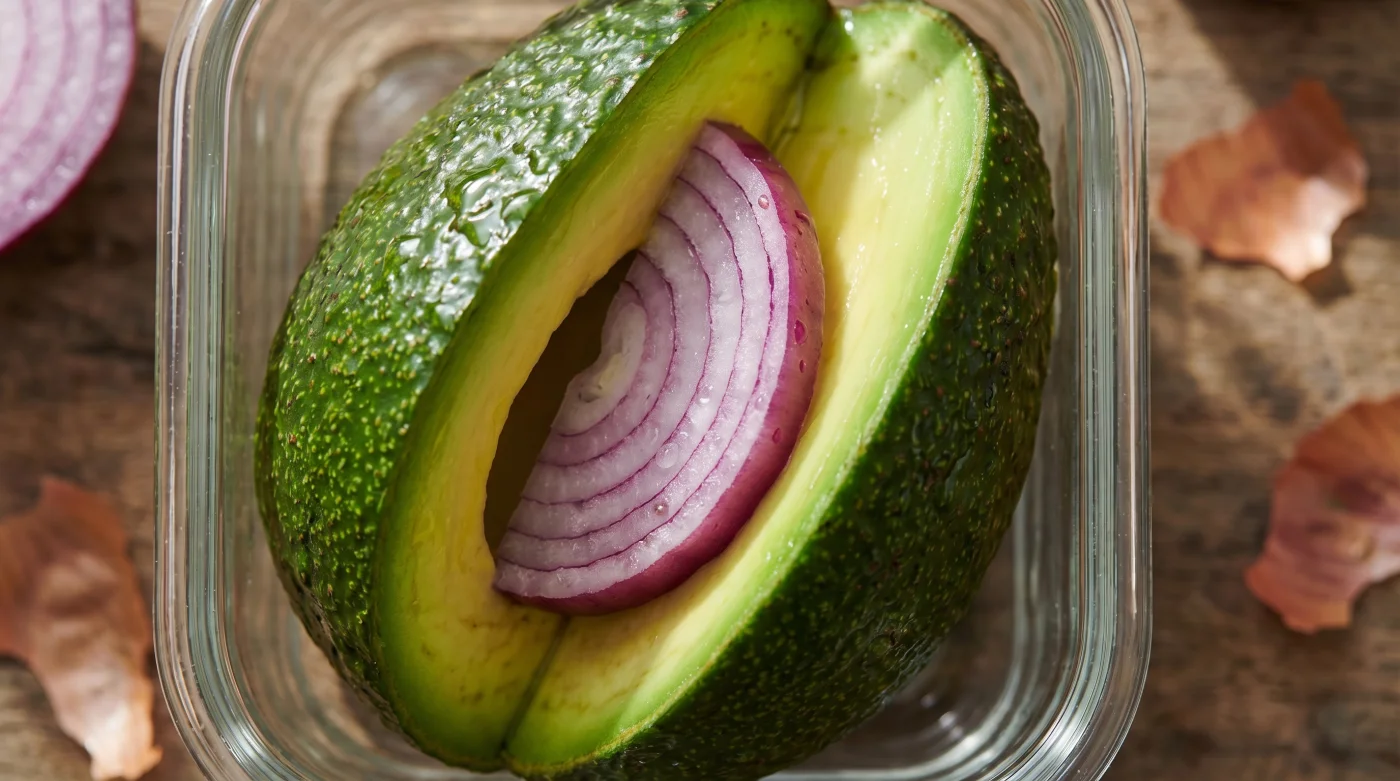
The morning light barely breaks over the frost-covered windowpanes of your kitchen. The thud of your knife hitting the cutting board sounds heavy in the quiet room. You slice through the dark, pebbled skin of a perfectly ripe avocado, separating the halves to reveal that brilliant, pale green flesh. It is a fleeting moment of culinary perfection.
You wrap the remaining half in cling film, pulling the plastic taut against the exposed fruit, hoping to banish the air. You toss it into the crisper drawer, secretly knowing that tomorrow morning will bring a familiar, frustrating disappointment.
Twenty-four hours later, you unwrap a bruised, oxidized mess. The surface resembles tarnished copper, and the texture has gone slightly slimy. You inevitably scrape away the top layer, tossing a quarter of that expensive, nutrient-dense fruit straight into the compost bin. It feels like a minor daily defeat.
But behind the swinging doors of a high-volume service kitchen, prep cooks do not rely on a flimsy layer of plastic. They use a reactive chemical barrier, something hiding in plain sight right there on the cutting board. It requires no special equipment, just a subtle shift in how you understand food preservation.
The Invisible Sulphur Shield
We treat oxidation as a purely physical problem, believing that if we just wrap the fruit tightly enough, the ambient air cannot reach it. You might squeeze lemon or lime juice over the flesh, trusting the citric acid to slow the browning, but that fundamentally alters the flavour, adding a sharp tang where there should only be rich, grassy fat.
The simple swap involves addressing the chemistry of the fruit itself. By placing a thick slice of red or white onion into the same sealed container as your avocado half, you create an invisible, protective gas barrier. The onion naturally emits sulphur dioxide compounds—the exact same compounds that make your eyes water when chopping them.
These gases act as a natural preservative, lingering in the trapped air of the container and halting the enzymes in the avocado that react with oxygen. You are no longer trying to smother the fruit; you are altering the atmosphere it breathes in.
A Kitchen Fix Born on the Line
Consider Elias, a 34-year-old sous-chef at a bustling, plant-based bistro in downtown Vancouver. For years, his morning prep involved brushing hundreds of halved avocados with olive oil or citrus, techniques that either made the flesh overly slick or ruined the creamy profile the chef demanded. The wastage costs were quietly eating into the restaurant’s slim profit margins.
Then, an older prep cook showed him a different way. Instead of painting the avocados, Elias began storing them in deep, airtight tubs lined with rough-chopped red onions. The sulphur compounds preserved that perfect, vibrant green hue for over 48 hours without transferring a single sharp, allium flavour note to the high-fat avocado. It was a revelation in efficiency.
Tailoring the Swap to Your Routine
Whether you are packing a lunch for the office or preparing for a weekend brunch, adjusting your storage method to include this simple swap takes only seconds. The technique bends easily to fit different types of meal preparation.
For the Morning Toast Purist: If you only ever use half an avocado at a time, keep a designated glass storage container in your fridge. Place a single, thick slice of raw onion at the bottom. Rest the avocado half face-up on top of the onion slice, or face-down directly on the glass with the onion beside it. The orientation matters less than the sealed environment.
For the Batch Guacamole Maker: Perhaps you are making a large bowl of guacamole hours before your guests arrive. To stop brown spots from forming on the surface, scatter large, easily removable chunks of raw onion over the top of the dip before sealing the bowl. The gases settle evenly across the mashed surface, keeping it vibrant until you are ready to serve.
For the Texture Sensitive: You might worry that storing a delicate, fatty fruit next to a pungent root vegetable will contaminate your breakfast. Fat does absorb odours, but because the avocado skin acts as a bowl, and the sulphur compounds dissipate the moment you open the lid, the transfer is negligible. Just ensure the cut face of the avocado does not physically press against the onion flesh.
Setting Up Your Produce Defence System
Implementing this kitchen fix requires minimal effort, but setting up the environment correctly ensures maximum longevity. You want to trap the sulphur gas effectively without creating a breeding ground for excess moisture.
Begin by selecting a container that closely fits the size of your avocado. Too much empty space dilutes the concentration of the protective compounds, forcing the onion to work much harder to fill the volume.
- Slice a sturdy base: Cut a one-centimetre thick slice of any standard onion (red, yellow, or white).
- Position the fruit: Lay the avocado half, skin side down, beside or resting gently on the onion. Leave the pit in the avocado to further reduce the exposed surface area.
- Seal the environment: Clamp the lid firmly onto the container, ensuring an airtight seal.
- Control the climate: Store the container in the main compartment of your fridge, ideally at a steady 4 degrees Celsius.
The Tactical Toolkit:
- Temperature: 4 degrees Celsius (standard fridge temp slows enzymatic breakdown).
- Container: Glass with a silicone-sealed, snap-locking lid.
- Duration: Expect 48 to 72 hours of flawless preservation.
Reclaiming the Morning Ritual
Mastering this small, mundane detail shifts the way you interact with your groceries. You stop seeing a halved avocado as a ticking clock, a fragile ingredient that demands immediate consumption to avoid waste. Instead, you gain control over your pantry, utilizing a brilliant, natural synergy between two incredibly common plants.
It is deeply satisfying to open your fridge two days later and lift the airtight lid, revealing a surface as flawlessly green as the moment you first cut it. The morning rush feels slightly less chaotic when your ingredients cooperate, waiting patiently for you exactly as you left them.
You are no longer wasting money, throwing away perfectly good food, or compromising the delicate flavour with harsh citrus juices. You simply let the natural chemistry of the kitchen work quietly in the background, preserving your peace of mind alongside your produce.
“The best culinary preservation methods do not fight the natural chemistry of the food; they quietly redirect it.”
| Method | Mechanism | Reader Benefit |
|---|---|---|
| Plastic Wrap | Physical barrier against oxygen. | Familiar, but highly prone to failure and trapped moisture. |
| Citrus Juice | Acid slows enzymatic browning. | Effective for a few hours, but ruins the natural, creamy flavour. |
| The Onion Swap | Sulphur gas stops oxidation. | Zero flavour transfer, preserves the perfect green colour for days. |
Common Preservation Queries
Does the avocado absorb the raw onion taste?
No, as long as the cut flesh does not physically rest against the onion, the sulphur gases prevent browning without penetrating the fat enough to alter the flavour.Do I need to use a specific type of onion?
Red, white, and yellow onions all produce enough sulphur to stop oxidation. Use whatever scrap you already have sitting on your cutting board.Can I leave the avocado pit in?
Yes. Leaving the pit in place reduces the total surface area exposed to the air, giving the sulphur gas less ground to cover.How long will this trick keep the avocado green?
When stored in an airtight glass container at 4 degrees Celsius, expect the flesh to remain vibrant and fresh for up to 72 hours.Does this work for mashed avocado as well?
Absolutely. Place large, easy-to-remove onion wedges on top of the mash before sealing the bowl to blanket the surface in protective gas.