It is 6:30 PM on a Tuesday evening. The kitchen window is completely fogged over, masking the sharp drop in Celsius outside as winter presses against the glass. A heavy steel pot sits on the front burner, a rolling boil thumping aggressively against the sides. You stand there holding a plastic colander, wiping steam from your forehead, waiting for the stove’s timer to finally buzz.
The routine is deeply ingrained in how we operate at the stove. You carefully lift the heavy pot, carry it to the sink, and watch the pale, cloudy liquid spiral quickly down the drain. You shake the remaining moisture from the noodles and drop them onto a plate, spooning a heavy ladle of red sauce over the top. The water was just a cooking medium, a temporary environment to be discarded once the physical softening was achieved.
But behind the swinging doors of a professional kitchen, that exact routine is considered a cardinal error. In the chaotic, high-heat environment of a restaurant line, that starchy bath is never treated as waste. It is collected, respected, and utilized with precision.
That cloudy, salted liquid is the single most valuable ingredient missing from your evening meal. You might feel miles away from a professional kitchen, but you are about to fundamentally change the way your food looks and tastes, using nothing more than what you were already going to throw away.
The Architecture of Emulsion
When you toss naked, drained noodles into a pan of hot olive oil or pure tomato purée, they tend to reject the coating. The fat separates, pooling sadly at the edges of your plate, while the noodles remain slick and isolated. The sauce feels like an afterthought, a separate entity merely resting on top of the pasta.
Think of the starchy water as the mortar between your culinary bricks. As pasta boils, it gradually releases its natural starches into the surrounding water. This starch acts as a mechanical binder, a microscopic net that grabs onto fleeing fats and water molecules, forcing them to hold hands and stabilize.
It is not merely about adding moisture back into the pan. It is a structural transformation of the fats. What was once a thin, broken, oily mess rapidly shifts into a glossy, clinging glaze that hugs every single curve of the noodle. You are no longer dressing a dish; you are building an emulsion.
He would quietly step in, sliding a dented aluminum ladle into the boiling pot to rescue the dish. Matteo, a 42-year-old line cook in a frantic Vancouver trattoria, used to watch new kitchen hires make this exact mistake. They would violently shake the spaghetti dry before tossing it into sizzling garlic oil. Matteo would drag a few ounces of the cloudy pasta water directly into the sputtering pan. “The water builds the bridge,” he would mutter, vigorously tossing the pan until the aggressive fat and starchy liquid merged into a smooth, trembling cream.
Tuning the Starch Ratio
Different bases require different approaches to this technique. Not all pans behave the same when introduced to a sudden influx of hot liquid.
For the Olive Oil Purist
The heat must remain high to force the violent bubbling required for a purely oil-based sauce like Aglio e Olio. You are forcing water and olive oil to combine. Add a generous ladle of water, keep the pan moving constantly, and watch the sharp, clear oil turn into an opaque, creamy coating.
For the Heavy Tomato Base
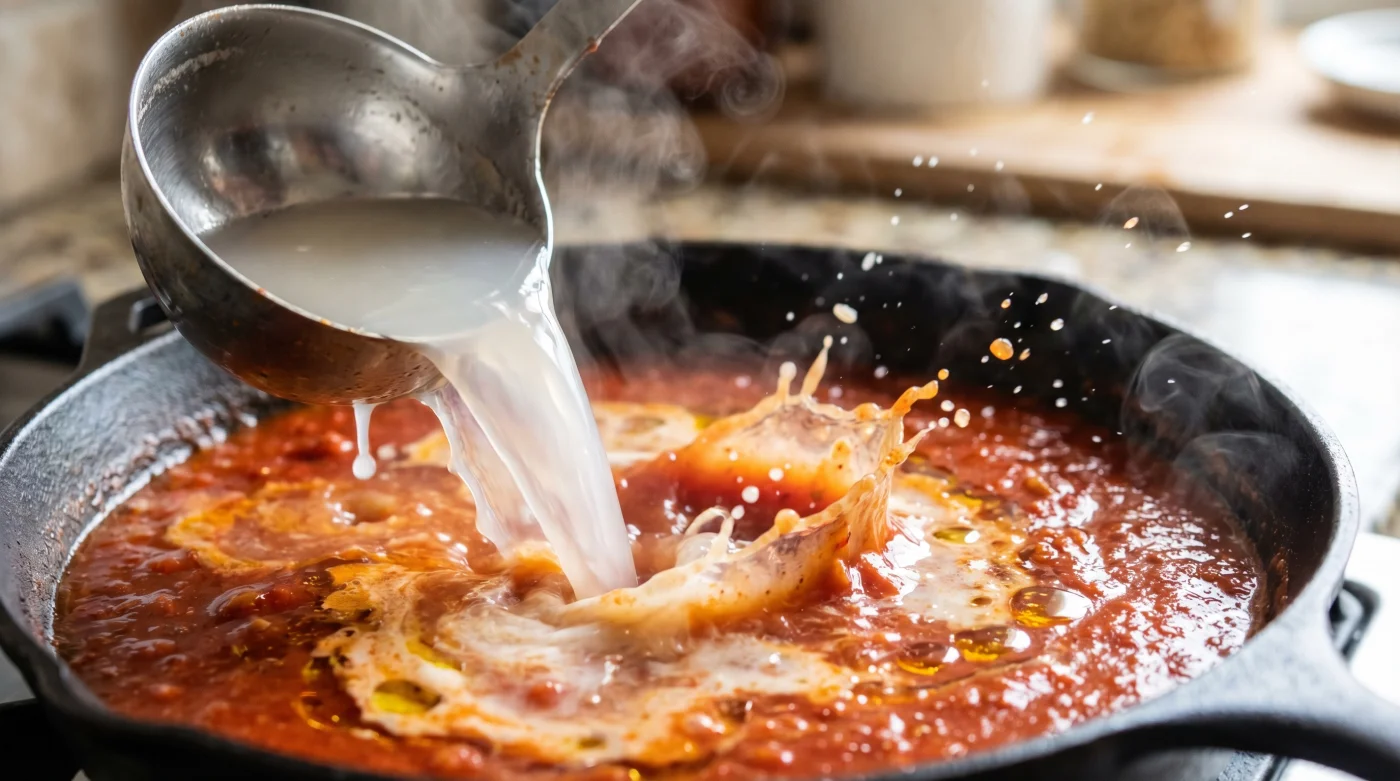
Thick, slow-simmered ragùs or acidic marinara bases often become too dense as they reduce on the stove. The pasta water here acts as a loosening agent that does not dilute the flavour.
Watch the colour shift slightly as the starch integrates into the deep red tomatoes. You only need a splash here to revive the sauce, allowing it to easily slip into the hollow tubes of rigatoni or penne.
For the Butter and Cheese Minimalist
When working with delicate preparations like Cacio e Pepe, the water is the absolute star of the show. If the pan is too hot, the cheese will instantly seize into rubbery, greasy clumps.
The temperature must drop significantly before adding the hard cheese. You rely entirely on the residual heat of the pasta water to gently melt the pecorino, allowing the starches to suspend the dairy fat without it separating.
The Pan-Finishing Method
Executing this properly requires a slight adjustment to your timing. You need to abandon the sink entirely.
Stop using the colander entirely and pull your noodles straight from the boiling pot. Use tongs or a spider skimmer to drag the pasta directly into the waiting sauce pan. This naturally carries over a healthy amount of the starchy water right from the start.
- The Timing: Pull your noodles exactly two minutes before the package instructions suggest. They should still have a rigid bite in the centre.
- The Volume: Reserve at least one full cup (250 ml) of the cloudy water in a mug, just in case the pan dries out too quickly.
- The Heat: Maintain the saucepan at a medium-high temperature to encourage rapid evaporation and binding.
- The Motion: Toss or stir vigorously. The mechanical action of the noodles rubbing against each other in the pan releases even more starch.
You will see the liquid at the bottom of the pan begin to thicken. When you drag a wooden spoon across the bottom, it should leave a brief, clean trail before the sauce slowly collapses back into the empty space.
Reclaiming the Discarded
Mastering this simple swap fundamentally changes how you interact with your ingredients. You begin to see utility where you previously only saw waste. The pan becomes a cohesive environment rather than a dumping ground for separate components.
You find a quiet satisfaction in turning a perceived flaw—cloudy, dirty-looking cooking water—into a major advantage. It is a reminder that the best results in the kitchen rarely come from buying more expensive items.
They come from paying close attention to the processes happening right in front of you. By simply moving a ladle of water from one pot to another, you stop fighting the ingredients and finally let them work together.
“The entire difference between a clumsy home-cooked bowl of noodles and a beautifully plated restaurant dish is usually just four ounces of starchy, aggressively boiling water.”
| Key Point | Detail | Added Value for the Reader |
|---|---|---|
| Emulsion | Starch mechanically binds fleeing oil and water molecules. | Prevents broken, greasy sauces from pooling unpleasantly on the plate. |
| Texture | Creates a velvety, clinging consistency across the dish. | Coats every single noodle evenly, guaranteeing consistent flavour in every bite. |
| Timing | Finish cooking the underdone pasta directly in the pan. | The noodle actively absorbs the sauce as it softens, rather than just wearing it on the outside. |
Common Emulsion Questions
How much pasta water should I actually add?
Start with a quarter cup per serving of pasta. It is always easier to add a splash more if the pan looks dry, but very difficult to fix a soup-like consistency if you flood it immediately.Can I use the water from gluten-free pasta?
Yes. Corn, rice, and chickpea pastas still release plenty of starch into the boiling water, and often require this technique even more to prevent the noodles from becoming sticky and clumping together.What if my tomato sauce is already too thin?
If your base is watery, let it reduce on the stove until it is thick and paste-like before adding the noodles and the starchy water. The water is meant to bind, not to rescue an already diluted base.Does the salt in the water make the final dish too salty?
It balances the dish. You should be under-salting your base sauce slightly, knowing that the seasoned pasta water will provide the final correction as it reduces in the pan.Should the heat be on absolute high when adding the water?
For oil-based sauces, yes, you want a violent bubble to force emulsification. For dairy or cheese-based sauces, turn the heat entirely off to prevent the milk fats from separating and turning grainy.