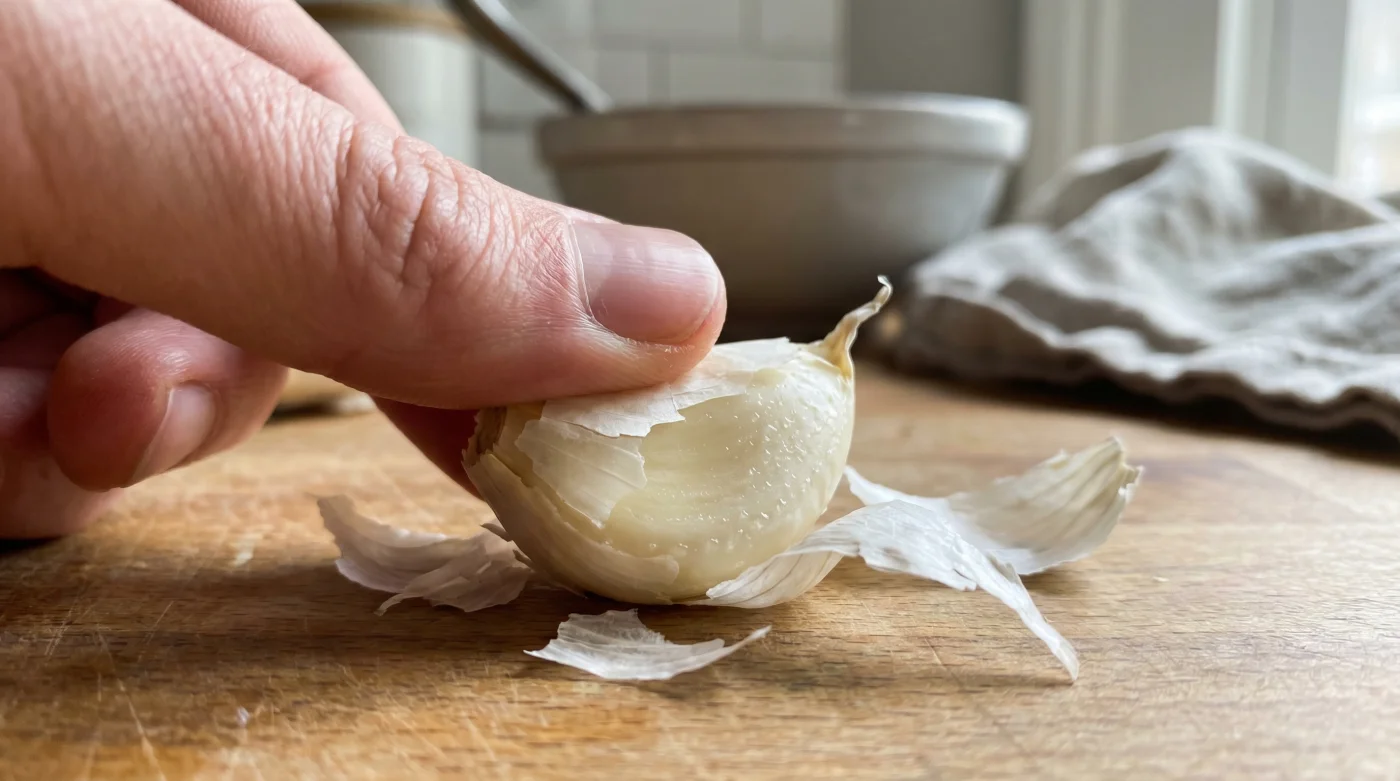
Picture the late-afternoon sunlight hitting your cutting board. You are staring down a whole head of garlic, preparing to build a robust Sunday roast or perhaps a simple weeknight pasta. The sharp, papery rustle of the skins fills the quiet kitchen, a sound that usually signals the beginning of a sticky, frustrating chore.
For years, you have likely approached this task with heavy hands. The heavy thwack of a chef’s knife against the clove is standard practice, hoping the outer layer splits wide enough to pull away clean. Instead, you are often left picking brittle, sticky shards from your fingers, the pungent oil seeping into your cuticles long after the meal is eaten.
But the frantic smashing is entirely unnecessary. The secret to pristine, whole cloves lies not in aggressive force, but in a gentle, atmospheric shift. By utilizing a common kitchen appliance, the stubborn paper slips away like a loose silk glove, leaving the flesh completely intact and perfectly ready for your skillet.
The Physics of the Garlic Sweat
The protective membrane clinging to a fresh bulb is naturally designed for survival. It acts as a watertight seal, holding vital moisture tightly against the living plant to protect it through long, cold Canadian winters. When you try to peel it raw and cold, you are fighting against natural preservation.
Instead of fighting, you simply need to change the immediate climate. When you introduce a brief, intense warmth, the trace amounts of water trapped inside the clove begin to expand rapidly. The garlic essentially exhales, creating a microscopic layer of steam between the firm flesh and its papery jacket.
Think of it like taking off a heavy winter coat after stepping into a heated room. The heat loosens the rigid tension immediately. In a matter of seconds, the once-stubborn wrapper loses its grip, slipping off the clove in one incredibly satisfying motion.
Elias Thorne, a forty-two-year-old prep cook in a busy Montreal bistro, processes upwards of ten pounds of garlic every single afternoon. He doesn’t own a fancy silicone tube or spend hours smashing bulbs with the heel of his hand. Elias simply throws whole heads into the staff microwave for a twelve-second cycle. He calls it the great exhale. As he pulls the warm bulbs out, he simply pinches the root, and the pristine, unbruised cloves pop right out, untouched by sharp edges and ready for the roasting pan.
Tailoring the Heat to Your Kitchen
Not every recipe demands the identical approach to your aromatics. Depending on what you are building on the stove, your preparation needs to shift accordingly to protect the final profile of the dish. A slow simmer requires a different foundation than a fast, aggressive skillet sear.
For the Weekend Roaster: If your goal is a slow-cooked braise or a buttery confit, you need the cloves entirely intact. Smashing them breaks the delicate cell walls, releasing the harsh allicin enzyme that turns aggressively bitter over long periods. A ten-second radiant heat burst ensures your garlic remains whole, sweet, and structurally sound for a long simmer.
For the Weeknight Sprinter: When you are throwing together a quick stir-fry and just need three cloves minced immediately, you lack the patience to fuss. Microwaving just those individual pieces softens the skin just enough that a gentle twist leaves them bare and ready for the knife blade.
For the Large-Scale Preserver: Canning pickles or cooking large batches of late-summer tomato sauce demands serious volume. You can easily process two entire heads of garlic simultaneously for twenty seconds. The sheer volume creates a collective steam room effect within the appliance, letting you prep an enormous amount of flavour rapidly.
The Seamless Peeling Ritual
Execution requires a degree of restraint. You are not trying to cook the ingredient; you are merely startling it into letting go. Overheating will turn the flesh soft and rubbery, muting the sharp flavour you are trying to capture.
Approach the appliance with a precise, deliberate count in mind. Focus on the subtle physical shift in texture rather than watching the digital clock endlessly. Trim the tough, woody root end off your garlic with a paring knife. Place the unpeeled pieces on a flat ceramic plate, spacing them out evenly. Run the appliance on high heat for exactly five to seven seconds. Remove the plate, pinch the top tip, and slide the skin away.
For your tactical toolkit, keep the timing between five to seven seconds for loose pieces, or twelve to fifteen seconds for a whole bulb. Use a standard high setting, typically around a thousand watts. Rely on a sharp paring knife for the root base and a flat ceramic plate. Cooking this way keeps you clean, organized, and maintains your culinary momentum from the cutting board to the stove.
Reclaiming Your Routine
There is a quiet, profound satisfaction in outsmarting a daily frustration. Food preparation should ideally act as a grounding transition from the chaotic noise of the day into the warm comfort of the evening.
When you eliminate the frantic scraping and sticky fingertips, you fundamentally change how you experience the kitchen. The act of cooking stops feeling like a chore against stubborn, unyielding raw ingredients and returns to a fluid act of mindful creation.
You quickly realize that the best kitchen secrets aren’t about buying expensive, single-use gadgets. They are about understanding the natural physical properties of the food in front of you. By shifting your approach, this simple act becomes a momentary, peaceful pause, a smooth motion that sets the rhythm for the rest of your meal.
“When you understand how moisture naturally moves within the plant, the ingredient itself ends up doing the heavy lifting for you.”
| Key Point | Detail | Added Value for the Reader |
|---|---|---|
| The Knife Smash | Bruises the flesh and immediately releases harsh oils | Quick, but messy and permanently alters the flavour profile. |
| Silicone Rollers | Requires pressing and rolling firmly back and forth | Keeps cloves whole, but clutters your drawer with single-use plastics. |
| The Steam Method | Five seconds of gentle, radiant heat | Zero financial cost, perfect whole cloves, and completely clean hands. |
Frequently Asked Questions
Does microwaving cook the garlic? No, a brief five-second burst only warms the trace moisture trapped just beneath the skin, leaving the flesh raw and firm.
Will this change the flavour of my dish? Actually, keeping the clove perfectly intact prevents the premature release of allicin, ensuring a smoother, sweeter flavour base.
Can I process an entire bulb at once? Yes. Just increase the radiant time to roughly twelve to fifteen seconds, then slice off the root end and squeeze the pieces out.
Why are my garlic cloves getting rubbery? You left them in the heat too long. Start with just five seconds and only add more time if the paper still fiercely resists.
Does this trick work with older, dry garlic? Older bulbs have less internal moisture to create steam, so it might take an extra two seconds to achieve the same clean release.