You know the feeling. You reach into the dimly lit crisper drawer of your fridge, anticipating the firm, earthy bite of a cremini or the delicate ruffle of an oyster mushroom. Instead, your fingers meet a cold, tragic squish. The plastic punnet you bought just days ago has betrayed you. The cellophane wrap is beaded with condensation, and underneath, the once-proud fungi have collapsed into a dark, weeping puddle of decay. It smells faintly of damp basement and regret.
This rapid deterioration isn’t a failure of the ingredient, but a fundamental misunderstanding of what a mushroom actually is. We treat them like sturdy root vegetables, tossing them into the chilliest, most humid corners of our appliances. Yet, these delicate fruiting bodies are practically vibrating with moisture, constantly exhaling water vapour long after they leave the soil. When left wrapped in supermarket packaging, they are trapped in their own breath. The condensation drips back down, accelerating rot at a frightening pace.
The Perspective Shift
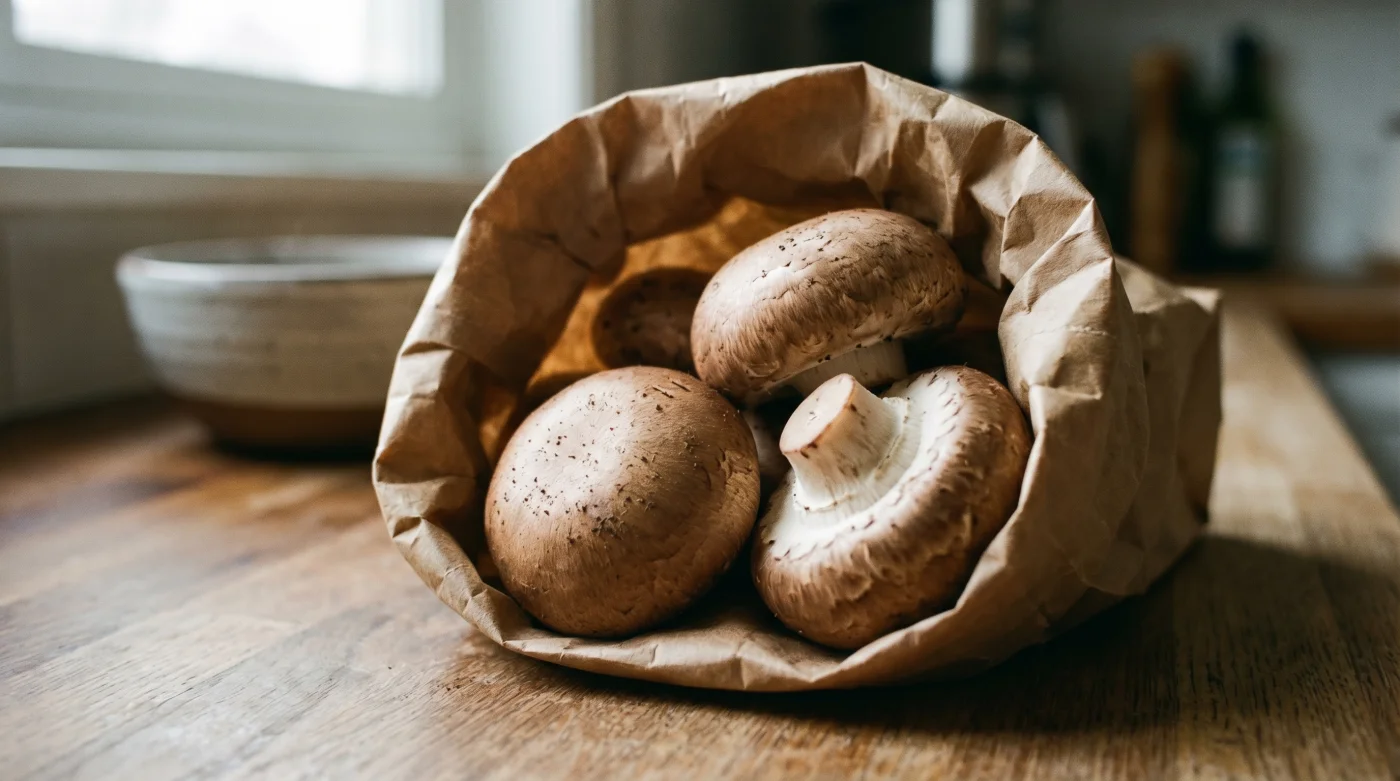
Let’s stop treating mushrooms like carrots and start treating them like living, breathing sponges. If you wore a tight plastic raincoat on a humid August afternoon in Toronto, you’d be drenched in minutes. That is exactly what happens under that tight cling film. The secret to firm, perfectly preserved mushrooms isn’t high-tech storage—it’s the simple, porous embrace of a brown paper bag.
This mundane piece of packaging acts as a flawless, regulating microclimate for your produce. It absorbs the excess moisture the fungi release while allowing enough air circulation to prevent them from drying out completely. What feels like a lazy fix—tossing your market haul into a crinkled sack—is actually the precise physical environment required to suspend them in perfect condition.
Consider Elias, a 42-year-old line cook at a hyper-seasonal bistro in Montreal’s Plateau neighbourhood. He handles kilos of delicate chanterelles and robust portobellos every single afternoon. If you walk into his prep area, you won’t see a single plastic container. Instead, his walk-in cooler is lined with neatly folded brown paper bags, each labelled with black marker. Elias learned years ago that paper is the only material that respects the structural integrity of the mushroom, turning a chaotic, ticking time bomb of slime into a manageable, multi-day inventory.
Adapting to Your Kitchen Rhythm
Not every kitchen operates like a busy restaurant service, so your approach to the paper bag method should reflect how you actually cook. The rules change slightly depending on the volume and type of fungi you keep on hand. Modifying your storage habit requires minimal effort but delivers exponential returns on ingredient longevity.
For the Bulk Buyer
If you routinely bring home massive two-pound boxes from the warehouse club, a single bag won’t cut it. The weight of the pile will crush the ones at the bottom, creating pressure points that bruise and rot. Divide your haul among three smaller bags, and slip a single, dry piece of paper towel between the layers. This acts as an insurance policy, wicking away the concentrated dampness that gathers when too many caps rest against each other.
For the Weekend Forager
When you bring home wild varieties with literal forest floor still clinging to the stems, resist the urge to rinse them before storage. Moisture is the enemy of longevity, and adding tap water to the equation guarantees a slimy disaster. Brush the loose dirt off with a dry pastry brush, then drop them directly into the paper sack. The porous walls slowly draw out the surface moisture left over from the morning dew.
For the Weeknight Scrambler
If you prefer to prep your ingredients on Sunday for faster Tuesday night dinners, you can pre-slice your button mushrooms. However, sliced fungi expose vastly more surface area to the air, making them prone to drying out too quickly. Place them in a paper bag, but fold the top over tightly, twice. Store this bag in the main compartment of the fridge—ideally around 3 Celsius—rather than the high-humidity crisper drawer, which is practically a sauna for delicate produce.
The Mindful Application
Transitioning to this storage method requires a brief moment of attention when you unpack your groceries. It’s a quiet ritual of moving away from convenience packaging toward mindful preservation. The process takes less than thirty seconds, but it fundamentally rewrites your meal prep.
- Remove the plastic immediately. Rip off the cellophane the moment you set your grocery bags on the counter.
- Inspect the batch. Discard any broken, bruised, or already-slimy pieces, as one rotting cap will rapidly infect the entire bag.
- Transfer gently into a standard brown paper lunch bag, filling it no more than two-thirds full to allow air to circulate.
- Fold the top down loosely—just enough to keep out fridge odours, but not so tight that you create a seal.
- Place the bag on a middle shelf in the main fridge cavity, entirely avoiding the crisper drawers.
Your tactical toolkit is straightforward. Target an environment of 3 to 4 Celsius. Source unwaxed, unbleached kraft paper bags. Guard your prep window fiercely: do not wash until the exact minute you turn on the burner, ensuring the pan is hot before water ever touches the cap.
A Quieter Mind, A Cleaner Fridge
Adopting this incredibly simple habit does more than just save a few dollars on ruined groceries. It shifts your kitchen relationship completely. There is a specific, quiet relief in opening the refrigerator door and knowing exactly what condition your ingredients are in. No dreading the dark corners of the crisper, and no guilt over scraping gelatinous brown sludge into the compost bin.
By replacing a plastic trap with a breathable paper sanctuary, you are working with the nature of the ingredient rather than fighting it. You gain time, you eliminate waste, and most importantly, you ensure that when you finally heat the skillet to brown those caps, they will sizzle beautifully instead of steaming in their own tragic bathwater.
Treating a mushroom like a damp sponge rather than a root vegetable changes everything; give it paper, give it air, and it will give you perfection.
| Key Point | Detail | Added Value for the Reader |
|---|---|---|
| Ditch the Plastic | Remove store wrapping immediately upon arriving home. | Stops condensation and slime before it starts. |
| Use Kraft Paper | Transfer to an unwaxed brown paper lunch bag. | Balances humidity, keeping caps firm and dry. |
| Avoid the Crisper | Store on a middle fridge shelf at around 3 Celsius. | Prevents the high-humidity rot typical of vegetable drawers. |
Frequently Asked Questions
Can I use a paper towel if I don’t have a paper bag?
Yes. Wrapping them loosely in a dry paper towel and placing them in an open bowl works in a pinch, though a bag offers better protection from fridge odours.
Should I wash them before putting them in the bag?
Never. Introducing water before storage accelerates rot. Wipe them with a dry brush, and only wash immediately before cooking.
How long will they last using this method?
When stored properly in paper on a middle shelf, standard cremini or white button mushrooms easily maintain their firmness for five to seven days.
What if the paper bag gets soggy?
If the bag absorbs too much moisture and feels damp to the touch, simply transfer the mushrooms to a fresh, dry bag to maintain the microclimate.
Does this work for wild varieties like chanterelles?
Absolutely. It is arguably more critical for wild, delicately structured fungi, as they hold more natural moisture and break down faster in plastic.