The woodsmoke hangs low over the snowbanks, clinging to the damp wool of your heavy winter coat. Inside the sugar shack, the air is thick with a sweet, blinding steam that coats your eyelashes and warms your cheeks. You stand there watching the evaporator roar, a massive stainless steel beast turning pale, watery sap into amber gold. The smell alone is enough to soothe the back of your throat, carrying heavy notes of toasted sugar, wet earth, and split hardwood.
For the past three years, the narrative around this harvest has been entirely bleak. Empty reserve barrels echoed loudly through the provincial warehouses, driving prices to dizzying heights at the grocery store. We braced for the reality that real sirop d’érable was becoming an elite luxury good, something strictly rationed for Sunday mornings and special occasions.
But the forest rarely obeys our strict economic forecasts or our anxieties. The late winter delivered a chaotic sequence of bitter frosts followed immediately by brilliant, unseasonable warmth. This violent freeze-thaw cycle acted like a massive biological pump, pushing sap through the maples with a ferocity no one in the industry anticipated.
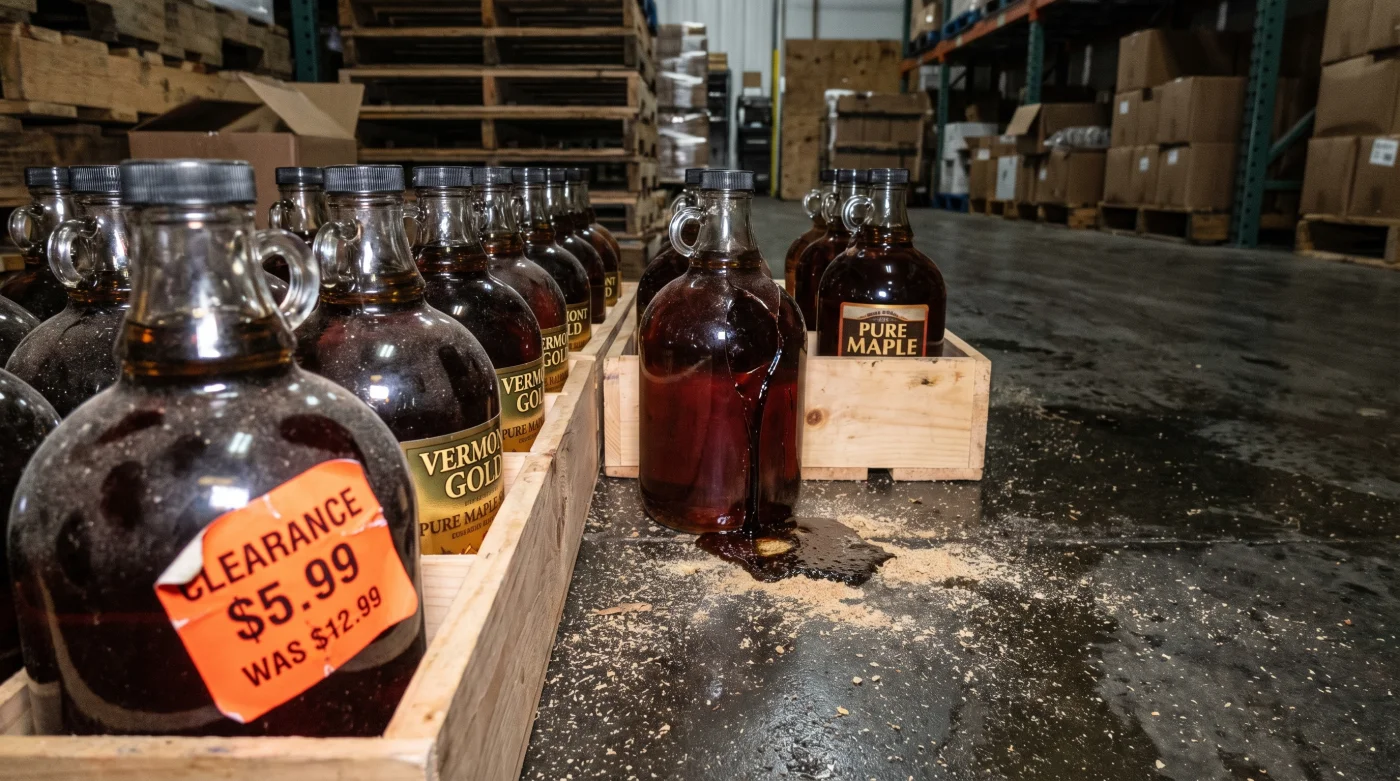
Almost overnight, the market flooded with premium grades, completely tanking the wholesale value of the province’s most famous export. The structural flaw of our unpredictable climate accidentally produced an overwhelming abundance, turning a heavily guarded commodity into an immediate buyer’s market.
The Perspective Shift: From Scarcity to Strategic Abundance
Think of a mature maple tree as a massive, organic pressure valve. It requires the deep, hard freeze of a Canadian winter night and the sudden, thawing warmth of the afternoon sun to push water up from the roots. When temperatures swing wildly from minus ten Celsius at night to plus eight by midday, that valve stays wide open.
You might feel hesitant buying bulk right now, conditioned by recent price gouging to expect lesser quality when retail prices suddenly drop. Yet, the exact opposite is true in this specific situation. The rapid flow of this sap means the sugar sand hasn’t had time to build up in the lines, resulting in some of the clearest, most delicate golden syrups seen in a decade.
This sudden surplus shifts the power dynamics entirely back to your own pantry. Instead of treating pure maple like a fragile, expensive garnish to be used in careful droplets, you can finally use it as the foundational, everyday ingredient it was historically meant to be.
Expert Context: The Sugar Woods Panic
Émile Bouchard, 54, a third-generation acericulturist in the Beauce region, felt the massive shift before the meteorologists even reported it. “We were still repairing the vacuum lines in late January when the drops started hitting the metal buckets,” he notes, shaking his head. His crews worked thirty-six hours straight, boiling sap furiously just to keep the collection tanks from bursting. The sheer volume was terrifying but deeply beautiful, resulting in an emergency sell-off to clear warehouse floor space before the next run.
Deep Segmentation: Adapting the Surplus to Your Kitchen
Not all syrup behaves the same way when it hits a hot pan or a mixing bowl. With prices plummeting, you have the rare, practical opportunity to stock up on different grades for distinct culinary purposes without draining your weekly grocery budget.
For the Strategic Baker
You already know that swapping white sugar for liquid maple requires intense precision. The golden, delicate grades currently flooding the supermarket shelves are ideal for cold applications where clarity matters. Whip it into heavy cream until the cream just barely trembles, or gently fold it into a meringue. The exceptionally low moisture content of this early-run syrup won’t destabilize your sensitive baking chemistry.
For the Savoury Cook
The darker, robust grades usually fetch a massive premium by the time they reach urban markets, but right now, they are priced almost like common cooking oils. Use this temporary anomaly to your distinct advantage. Glaze a heavy roasted pork shoulder, whisk the dark syrup into a sharp mustard vinaigrette, or let it slowly caramelize bitter winter root vegetables in a cast-iron skillet.
For the Long-Term Prepper
If you are simply looking to secure your household supply for the next two or three years, strategic bulk purchasing is your best tactic. Liquid gold freezes perfectly well without expanding or crystallizing, provided you handle the initial storage conditions correctly and keep out unwanted moisture.
Mindful Application: Building the Reserve
Taking full advantage of a market crash requires a little quiet foresight and preparation. Buying a massive four-litre jug of sirop d’érable is only a genuine bargain if it doesn’t accidentally ferment and spoil in your warm cupboard by August.
Implementing a long-term storage routine in your kitchen is incredibly straightforward. Think of cold preservation simply as putting the loud, productive forest back to sleep until you need it.
Follow these exact steps to protect your sugary investment:
- Portion the heavy bulk jug into clean, sterilized glass mason jars while the liquid is cold.
- Leave exactly a half-inch of headspace at the top of each jar to prevent pressure cracks.
- Wipe the glass rims with a damp, warm cloth to ensure a perfect, airtight seal.
- Place the sealed jars in the dark chest freezer, keeping only one small bottle in the refrigerator for active daily use.
The Tactical Toolkit
To execute this transfer properly without creating a sticky disaster, gather your basic supplies first before cracking open the main jug. You need a wide-mouth canning funnel, a heavy ladle, and a chest freezer set reliably to at least minus eighteen Celsius. Real, unadulterated syrup will not freeze into a solid block of ice; it will just become thick and heavily viscous, ready to pour the moment you bring it back up to room temperature.
The Bigger Picture: Reclaiming the Harvest
We live in a stressful era where the grocery aisles often feel like hostile, unpredictable territory. Prices surge completely without warning, and the overall quality of our basic, comforting foods seems to slowly deteriorate with every passing season.
Catching a massive, unexpected break like this offers a rare, quiet victory. It is a gentle reminder that while the natural world is shifting in strange, chaotic ways, it still occasionally tilts heavily and beautifully in our direct favour.
Stocking your pantry shelves with pure, locally drawn sap isn’t just about saving a few dollars at the checkout counter. It grounds your daily kitchen routines in the harsh, rewarding reality of the Canadian landscape, letting you pour a generous, heavy stream of sweetness over a Tuesday morning bowl of oatmeal without a single second thought about the cost.
“The best cooks don’t blindly follow the market; they follow the weather, quietly adjusting their pantries to the erratic rhythm of the thaw.”
| Key Point | Detail | Added Value for the Reader |
|---|---|---|
| The Price Crash | Wholesale values dropped rapidly due to unseasonable warm-cold weather cycles. | Direct access to premium, export-grade syrup at standard local commodity prices. |
| Grade Availability | Clear Golden and rich Amber grades are unusually abundant early this season. | Perfect for delicate home baking and cocktails without dominating the core flavour profile. |
| Storage Protocol | Deep freezing completely stops fermentation and preserves the syrup’s clarity. | Allows you to safely buy in heavy bulk right now to hedge against any future shortages. |
Common Questions on the Maple Crash
Is the cheap syrup in stores right now lower quality?
Absolutely not. The market is highly saturated with early-run sap, which is actually heavily prized for its light colour and delicate taste. You are getting a top-tier product at wholesale rates.
How long will these incredibly low prices last?
Retailers are frantically trying to clear physical floor space quickly. Expect prices to completely normalize within a few months once the large global export buyers finish scooping up the provincial surplus.
Can I safely store my sirop d’érable at room temperature?
Only while the seal is completely unopened. Once that factory seal is broken, it must live in the refrigerator to prevent any mold growth, or in the deep freezer for long-term holding.
Why does the syrup feel so thin this specific year?
Early, fast-running sap often has less complex sugar development before boiling. It is boiled to the exact same strict density regulations, but the physical mouthfeel is often naturally lighter.
Should I intentionally buy plastic jugs or metal cans?
Classic metal cans block all light, preventing long-term colour degradation, but they can be terribly hard to reseal. Plastic is perfectly fine if stored in a dark, cool place immediately after purchase.