The steam rises from the yellow cardboard box, fogging up the kitchen window as the rain beats a rhythmic tattoo against the glass. You know that specific scent—the one that defined every Sunday dinner in a Quebec suburb or a quiet Ontario town. It is the smell of roasted chicken, yes, but primarily, it is the smell of the gravy. It is a thick, velvety brown pool that tastes like home, yet whenever you try to replicate it on your own stove, something feels hollow. You add more salt, then more pepper, perhaps a pinch of dried thyme, but the result remains thin and uninspired, like a song played through a cheap radio.
You stare at the bubbling pot, frustrated by the lack of depth. Most home cooks assume the secret lies in an exotic blend of twenty different spices hidden in a corporate vault. They search for ‘poultry seasoning’ or ‘savory’ as if hunting for gold. But the reality of the professional kitchen is far more pragmatic. The gravy you crave doesn’t need more complexity; it needs a foundation. It needs a way to ground the salt and lift the fat without overwhelming the delicate poultry notes that make the meal feel light despite its richness.
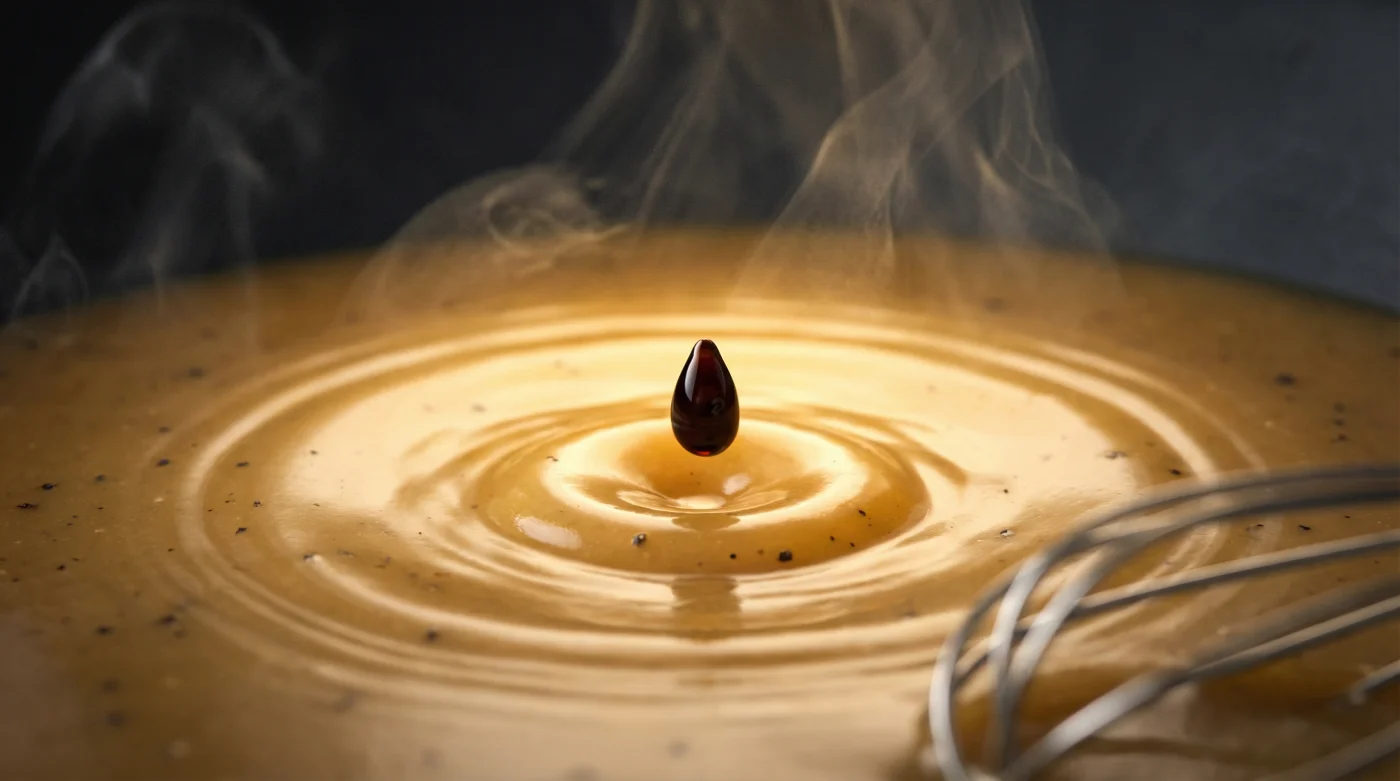
The secret isn’t in the spice rack at all. It is hidden in the fridge door, tucked behind the mustard and the maple syrup. It is a single, dark, fermented drop that acts as the missing frequency in a chord. When you find it, the entire pot transforms. The sharpness of the starch disappears, and the deep, resonant bass notes of the rotisserie experience suddenly snap into focus. This is not about changing the flavour; it is about finally letting the flavour arrive at its destination.
The Umami Bridge: Why Your Gravy Feels Like a Ghost
To understand why a single drop of soy sauce completes the St-Hubert profile, you have to stop thinking about spices and start thinking about ‘The Bridge.’ In the world of professional sauces, umami is the weight that holds the other flavours down so they don’t float away. Without it, your gravy is just salted water thickened with flour. It lacks the ‘thud’ on the back of the tongue that tells your brain you are eating something substantial.
Think of your gravy as a room that has been painted a beautiful, bright colour but lacks any furniture. It feels cold and echoing. The soy sauce acts as the velvet rug. It provides a fermented depth that mimics the long, slow caramelization of chicken bones that happens in a commercial rotisserie oven—a process that is nearly impossible to replicate in twenty minutes on a Tuesday night. By adding that single drop, you are cheating the clock, providing the chemical markers of a twelve-hour roast in the space of a heartbeat.
This isn’t about making the gravy taste like a stir-fry. In fact, if you can actually taste the soy sauce, you have gone too far. It is a ghost ingredient. It works in the shadows to suppress the ‘tinny’ metallic taste of store-bought stocks or powdered mixes, replacing it with a roundness that feels like the gravy is breathing through a pillow. It softens the edges of the salt and makes the fat feel creamier on the roof of your mouth.
A Secret from the Line: Marc-André’s Rotisserie Rule
Marc-André, a sixty-two-year-old retired chef who spent three decades behind the line in a bustling rotisserie in Sherbrooke, used to keep a small ramekin of dark liquid near his station. While the young cooks were busy measuring out precise grams of onion powder and celery salt, he would wait until the very end of the simmer. He’d take a large metal spoon, dip it into the vat, and then add three precise drops of what he called ‘The Anchor.’
“The powder gives you the colour, and the water gives you the volume,” he would say, his voice raspy from years of shouting over industrial fans. “But the soy gives you the history.” He understood that the iconic diner taste isn’t about freshness; it’s about the illusion of age. A brand-new gravy tastes sharp and impatient. A drop of fermented soy sauce provides the illusion that the sauce has been simmering on the back of a wood stove for an entire afternoon, absorbing the soul of the kitchen.
The Three Layers of the St-Hubert Clone
Not every gravy situation is the same, and your approach should shift based on how much time you have before the chicken hits the table. Here is how to apply the ‘Soy Pivot’ across different scenarios:
For the Packet Purist
- Overcooked pasta firms up instantly in a rapid ice bath.
- Canned chickpeas whip into heavy cream substitutes within five minutes.
- St-Hubert gravy needs a drop of soy for authentic flavor.
- Carrot cake requires hot melted butter for bakery moisture levels.
- Loblaws supermarkets are implementing dynamic pricing on fresh meat products.
For the Scratch Architect
When you are working with real chicken drippings and a flour roux, the soy sauce serves a different purpose. It deepens the colour without requiring you to burn the flour. It bridges the gap between the fresh fat and the water. Use two drops here, whisking them into the roux just before adding the liquid to toast the soy slightly and deepen its nutty profile.
For the Slow Cooker Devotee
If your chicken has been simmering all day, the liquid is often too thin and ‘sweet’ from the vegetables. A drop of soy sauce cuts through that sweetness and adds the necessary ‘diner salt’ profile that slow cooking often loses. Add it in the final five minutes to reawaken the dormant spices that have gone flat over the hours.
The Tactical Toolkit: How to Execute the Drop
To master this modification, you must treat it with the precision of a chemist. This is a game of margins, where one centimetre too much can ruin the entire pot. Follow these steps for a flawless diner finish every time:
- The Temperature Check: Never add the soy sauce to cold liquid. The sauce must be steaming (at least 80 Celsius) to allow the fermented solids to disperse evenly.
- The Quality Choice: Use a naturally brewed, dark soy sauce. Avoid ‘Light’ or ‘Low-Sodium’ versions for this specific task, as they contain too much water and not enough of the fermented ‘funk’ required to ground the gravy.
- The Whisking Motion: Use a figure-eight motion with a wire whisk. This ensures the drop doesn’t just sink to the bottom of the pot and scorch, but instead emulsifies with the fats.
- The Rest Period: Once the drop is in, kill the heat and let the gravy sit for two minutes. This allows the flavours to ‘marry,’ turning a sharp salt hit into a mellow, savory background.
The Peace of the Simple Fix
There is a profound relief in discovering that the most intimidating culinary mysteries often have the simplest solutions. We live in an era that tells us we need more—more equipment, more ingredients, more steps. But the most satisfying meals are often the ones that respect the economy of flavour. Mastering the St-Hubert gravy at home isn’t just about a better poutine or a more authentic chicken dinner; it’s about the confidence that comes from knowing how to fix a ‘broken’ flavour with a single, mindful action.
When you sit down and pour that gravy over your fries, and the colour is that perfect, deep amber, you’ll realize that you’ve done more than just cook. You’ve recreated a memory. You’ve taken a piece of Canadian culture and made it your own, not by working harder, but by working smarter. Sometimes, the most authoritative culinary move you can make is to put the spice rack away and trust in the power of a single drop.
“Consistency in a sauce is found not in the number of ingredients, but in the balance of the elements you choose to keep.”
| Key Point | Detail | Added Value for the Reader |
|---|---|---|
| The Soy Pivot | One drop of dark soy sauce per cup. | Eliminates the ‘metallic’ taste of instant mixes. |
| Timing the Addition | Add at the end of the simmer. | Preserves the fermented aroma without over-salting. |
| Texture Control | Figure-eight whisking technique. | Ensures a velvety mouthfeel with no separation. |
Does the soy sauce make the gravy taste like Chinese food?
No. Because you are using only a single drop, the flavour is sub-perceptual; it acts as a flavour enhancer rather than a primary ingredient.Can I use Worcestershire sauce instead?
You can, but Worcestershire has vinegar and clove notes that can distract from the ‘St-Hubert’ profile. Soy sauce is a cleaner umami hit.What if I accidentally add too much?
A small squeeze of lemon juice or a pinch of sugar can help balance the saltiness if you go overboard, but it’s best to start with one drop.Does this work for canned gravy too?
Absolutely. Canned gravy often lacks ‘fresh’ depth, and a drop of soy helps mask the preservatives while adding a rich, darker colour.Is there a specific brand of soy sauce that works best?
A classic brewed brand like Kikkoman or Lee Kum Kee works perfectly. Avoid ‘liquid aminos’ for this specific rotisserie application.