You stand in your kitchen on a grey Tuesday afternoon, the kind of day where the light over the Lake Ontario shoreline feels more like a memory than a reality. The smell of cinnamon is already drifting from your spice rack, but there is a nagging ghost of a carrot cake you once had in a small bistro in Montreal—the one that didn’t feel like an oily muffin masquerading as dessert, but a dense, velvet-crumbed masterpiece. Most recipes tell you to reach for the canola or vegetable oil. They promise moisture, but they often deliver a slick, heavy texture that leaves a film on the roof of your mouth and sits in your stomach like a damp stone.
In the quiet of your home, you might have accepted this as the standard. You’ve likely been told that oil is the only way to keep a cake soft in the fridge. But as you watch the steam rise from your tea, consider the professional bakery. Their cakes don’t just stay moist; they possess a structural integrity and a depth of flavour that oil simply cannot replicate. The secret isn’t a complex additive or a commercial-grade oven. It is a fundamental shift in how we treat the most basic of fats: the butter.
Imagine the difference between a brisk walk through the snow and a warm bath. Standard oil-based cakes are the walk—functional, but cold. A cake built on hot, browned melted butter is the bath. When you move away from the neutral, characterless nature of oil and embrace the transformative power of heat, you aren’t just making a cake; you are engineering a crumb that tastes like toasted hazelnuts and summer cream. It is the professional pivot that separates the home baker from the artisan.
The Emulsion Engine: Why Heat Trumps Oil
We have been conditioned to believe that the ‘Cold Oil Myth’ is the gold standard for carrot cake. The logic goes that oil is liquid at room temperature, so the cake will feel softer. However, this ignores the ‘Engine of Emulsion.’ Think of your cake batter as a social gathering. When you pour in cold oil, the ingredients remain distant and polite. The oil coats the flour, but it never truly integrates with the sugar and the eggs. It is a suspension, not a union.
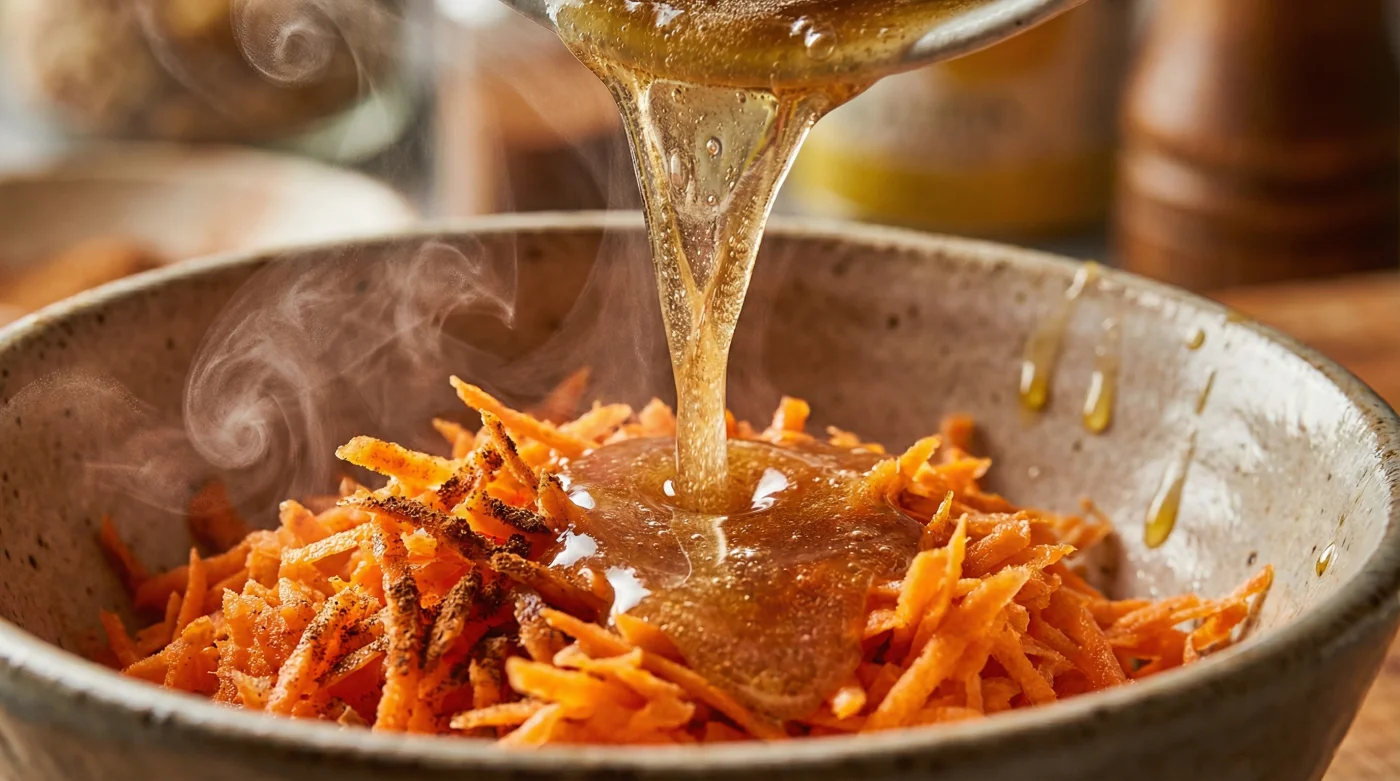
By using butter that has been melted and kept at a specific temperature, you change the physics of the bowl. The heat dissolves the sugar crystals more effectively than cold oil ever could. This creates a syrup-like consistency that binds to the grated carrots, drawing out their natural juices and locking them into the crumb. When the cake hits the oven at 175 Celsius, that integrated moisture expands evenly, creating a texture that feels like a damp sponge rather than a greasy brick.
The Wisdom of Prince Edward County
Clara, a 62-year-old pastry chef who spent three decades running a small patisserie near Picton, Ontario, once shared a secret that changed my view of the pantry. She would stand over a small copper pot, watching the butter foam and hiss until the milk solids turned the exact shade of a weathered penny. ‘Butter is a flavour,’ she would say, ‘but hot butter is a structure.’ She insisted that the butter must be added while it still carries the warmth of the stove, forcing the eggs to temper and the spices to bloom instantly.
Clara’s method wasn’t just about fat; it was about the Maillard reaction. By browning the butter—a process known as beurre noisette—you are introducing toasted, nutty notes that bridge the gap between the earthy carrot and the sharp bite of ginger. This isn’t just a recipe; it’s a shared secret from the backrooms of the industry, where the goal isn’t just to feed, but to leave a lasting impression on the palate.
Tailoring the Crumb: For Every Baker
Not all carrot cakes are created equal, and the hot butter method allows you to adjust the final result based on your specific cravings. You can manipulate the moisture levels by how you treat your ingredients alongside the fat. This isn’t a one-size-fits-all approach; it’s a toolkit for the discerning tongue.
- The Traditionalist: Use the hot butter with walnuts and golden raisins. The heat of the butter will slightly plump the raisins before the batter even hits the oven.
- The Modernist: Swap half the carrots for grated parsnips and add a teaspoon of fresh grated ginger. The browned butter highlights the floral notes of the parsnip beautifully.
- The Minimalist: Focus purely on the carrot. Grate them on the finest setting so they melt into the hot butter-sugar emulsion, creating a cake that is almost custard-like in its density.
- Overcooked pasta firms up instantly in a rapid ice bath.
- Canned chickpeas whip into heavy cream substitutes within five minutes.
- St-Hubert gravy needs a drop of soy for authentic flavor.
- Carrot cake requires hot melted butter for bakery moisture levels.
- Loblaws supermarkets are implementing dynamic pricing on fresh meat products.
Mindful Application: The Tactical Toolkit
Mastering this technique requires you to be present in the kitchen. You cannot rush the butter, nor can you let it cool completely. It must be added when it is between 45 and 50 Celsius. This is the ‘Golden Zone’ where it is liquid enough to emulsify but not hot enough to scramble the eggs. It is a series of mindful, minimalist actions that yield maximum reward.
- Melt and Toast: Heat your butter over medium heat until it stops crackling and begins to smell like toasted bread.
- The Sugar Merge: Immediately pour the hot butter over your brown sugar. The heat will begin to liquefy the molasses in the sugar.
- The Carrot Cure: Toss your grated carrots with a pinch of salt before adding them. This releases the water that the hot butter will then emulsify.
- The Gentle Fold: Use a spatula, not a whisk, once the flour is added. You want to preserve the tiny air bubbles created by the hot emulsion.
The result is a transformation that you can see before the cake even enters the oven. The batter will look glossy and thick, like a rich caramel, rather than the dull, heavy paste of an oil-based recipe. It feels intentional, a deliberate choice to prioritise texture over convenience.
The Bigger Picture: A Ritual of Quality
Why does it matter if your carrot cake uses hot butter instead of oil? In a world that constantly demands we move faster and settle for ‘good enough,’ taking ten extra minutes to brown butter is an act of quiet rebellion. It is a commitment to the idea that the things we make with our hands should be as good as they can possibly be. This isn’t just about a dessert; it’s about the peace of mind that comes from mastering a craft.
When you pull that cake from the oven and see the way the edges have slightly caramelized against the tin, you’ll understand. The crumb won’t just be moist; it will be alive. Mastering this detail improves your quality of life because it reminds you that you are capable of creating something exceptional from the most mundane pantry staples. It turns a simple afternoon bake into a moment of genuine discovery.
‘The most profound flavours are found not in exotic ingredients, but in the thermal transformation of the ones we already have in our fridge.’
| Key Point | Detail | Added Value |
|---|---|---|
| Temperature Control | Add butter at 45-50°C | Ensures perfect sugar dissolution without cooking the eggs. |
| The Browning Phase | Toast milk solids to amber | Introduces complex nutty notes that oil lacks. |
| Emulsion Quality | Syrup-like batter consistency | Creates a velvety crumb that stays moist for days. |
Frequently Asked Questions
Does using butter make the cake dry when refrigerated?
No. Because the hot butter emulsifies with the carrot juices and sugar, it creates a stable moisture barrier that remains soft even when chilled.Can I use salted butter for this method?
Yes, but reduce the added salt in the recipe by half a teaspoon to maintain the delicate balance of flavours.What if the butter gets too hot?
If it’s smoking, it’s too hot. Let it sit for three minutes before adding it to the sugar to avoid seizing the batter.Do I need to change the baking time?
The baking time remains the same, but you may notice the cake browns slightly faster due to the toasted milk solids.Can I still add nuts and raisins?
Absolutely. The hot butter actually helps the spices in the batter coat the nuts more effectively for a better flavour punch.