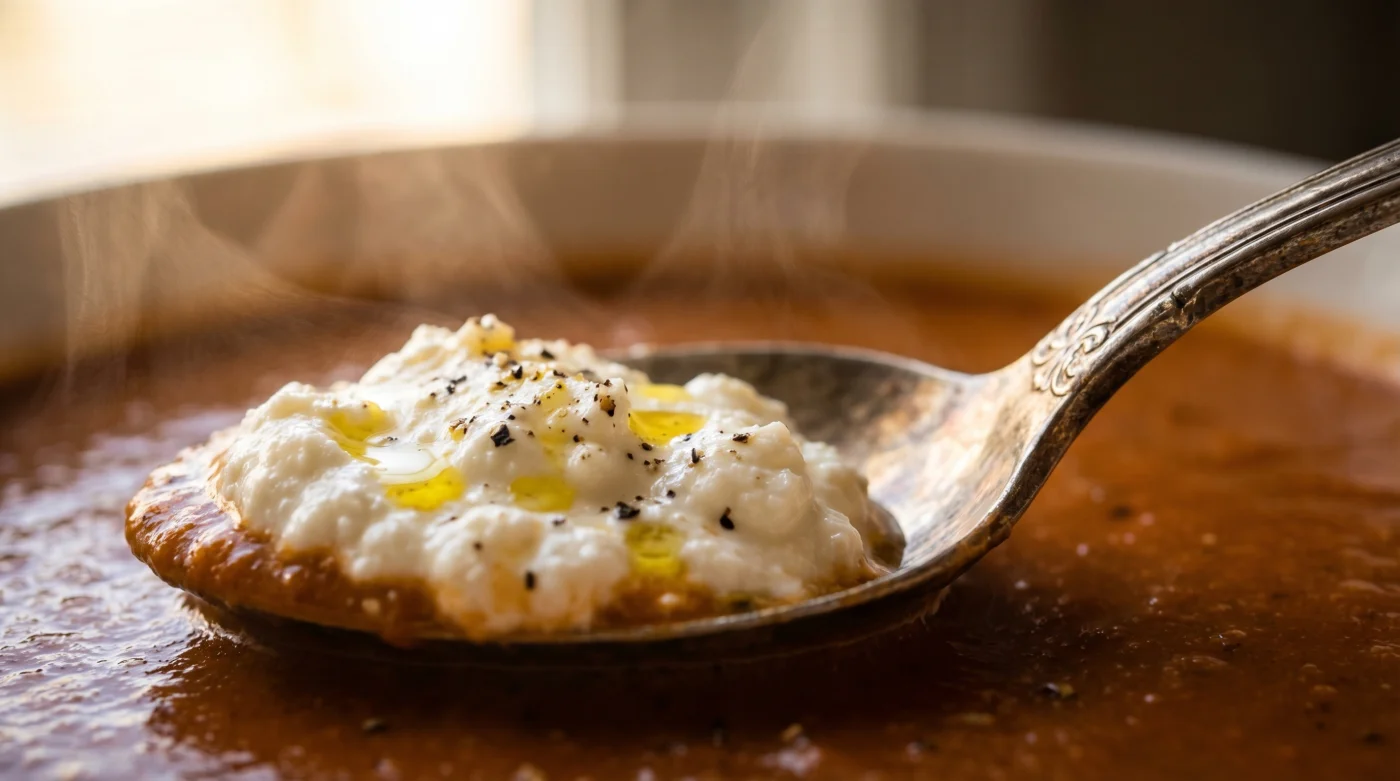
You stand over a steaming bowl of roasted butternut squash and carrot puree, the kitchen window heavily fogged against the deep, biting chill of a late November Canadian evening. The surface of your soup is flawless, a glossy expanse of burnt orange that smells faintly of smoked paprika and roasted garlic. Most home cooks reach for a carton of heavy cream at this exact moment, aiming to pour a pristine, smooth spiral right in the centre.
It is the standard expectation of comfort food, but that perfectly uniform swirl is entirely forgettable. When you watch the cream pool into the hot liquid, it simply dilutes the visual weight of the dish rather than contrasting it. You are missing the opportunity to create a striking, tactile contrast that commands attention.
Professional kitchens, however, view that flawless surface through a completely different lens. They do not want smooth resting upon smooth; they crave friction. By taking heavy cream and deliberately introducing a few drops of sharp citrus, you force a reaction that most home cooks spend their entire lives trying to avoid.
You watch the pristine white liquid fracture, separating into distinct, snowy curds and thin whey. Instead of an amateur mistake, you have just crafted a high-end, rustic garnish that transforms a humble bowl of puree into a visually arresting centrepiece.
The Beautiful Ruin of Split Dairy
Think of a smooth soup as a flat coat of paint. It serves its purpose, but it lacks the depth that makes you want to reach out and touch it. We are conditioned to fear the sight of separated dairy, viewing it as a sign of spoilage or poor temperature control.
This fear keeps you locked into boring plating habits. When you flip that narrative, you realize that a fractured cream is essentially a rapid, loose cheese. You are building deliberate visual tension by allowing the curds to rest like rugged little islands against the velvety backdrop of the broth.
In the dimly lit prep kitchen of a bustling Montreal bistro, a forty-two-year-old sous chef named Marcella observes this reaction every evening. She stands beside the pass, watching new culinary graduates nervously whisk their cream sauces, terrified of a break.
When a nervous line cook inevitably accidentally curds a lemon-infused finishing cream, Marcella stops them from throwing it down the sink. She spoons the separated, slightly trembling clumps over a dark, earthy wild mushroom bisque, showing the cook how the sharp, jagged white edges instantly make the bowl look like a thirty-dollar appetizer. She calls it controlled chaos, a technique that turns a flaw into a signature.
Crafting the Curd: Adjustment Layers
Not all broken dairy behaves the same way, and controlling the split allows you to tailor the garnish to the specific mood of your meal. The fat content and the nature of the acid dictate the size and texture of the resulting curd.
For the Purist: You want heavy whipping cream—at least 35 percent milk fat. The high fat content ensures the curds remain soft and luxurious rather than turning rubbery. A simple squeeze of fresh lemon juice is all you need, stirring just once and letting the chemistry do the work.
For the Herb-Seeker: Consider the aromatic profile of your dish. Before you break the cream, bruise a sprig of fresh thyme or rosemary and let it steep in the lemon juice for ten minutes.
When you strain that infused citrus into your heavy cream, you are not just altering the texture. You are introducing a sharp, botanical bite that cuts through the rich, heavy blanket of winter squash or potato soups.
For the Bold Contrast: Step away from the lemon entirely and reach for a high-quality, aged vinegar. A few drops of a dark balsamic or a sharp chili-infused cider vinegar will fracture the cream just as effectively.
This method yields a slightly tighter curd with a deeply savoury, almost fermented tang. The resulting garnish leaves a marbled, complex trail of flavour that lingers long after the bowl is empty.
Mindful Application
Executing this technique requires you to slow down and observe. You cannot rush the separation, nor can you force it with aggressive whisking, which will only yield a granular, unpleasant paste.
You must treat the mixture with a gentle hand, allowing the acid to quietly unspool the protein bonds within the dairy. Treat the process like breathing through a pillow, letting the physical changes happen naturally and quietly.
- Start with two tablespoons of heavy cream (35%) in a small, shallow ceramic dish. Let it sit until it reaches room temperature, roughly 20°C.
- Squeeze exactly three drops of fresh, strained lemon juice directly onto the surface of the cream.
- Do not stir immediately. Watch the surface for thirty seconds as the acid begins to pull the proteins together.
- Using the back of a small spoon, drag it through the liquid exactly twice. You are folding the acid in, not beating it.
- Let the dish rest undisturbed for three minutes before spooning the thick, rustic curds onto your hot soup.
Your toolkit for this plating technique is remarkably sparse. You need a high-fat heavy cream, a fresh lemon, a dropper or a steady hand, and a warm bowl of a deeply coloured, smoothly blended savoury base.
The contrast in temperature is just as important as the contrast in texture. The hot soup gently warms the cool, sharp fragmented cream, releasing its bright citrus aroma just as the spoon reaches your mouth.
The Bigger Picture
Relinquishing control over perfectly smooth dairy teaches you a subtle lesson about cooking at home. It demonstrates that the things we often view as mistakes—a cracked crust, a charred vegetable edge, a split cream—are actually where the true character of a dish hides.
When you stop fighting the natural chemistry of your ingredients, you free yourself from the sterile expectations of recipe perfection. You begin to plate food with confidence and rugged authenticity, trusting your own eye rather than a staged, highly edited photograph.
A bowl of soup garnished with these deliberate, acidic curds feels undeniably human. It shows that hands made this meal, that someone understood the ingredients intimately enough to break them beautifully.
The next time you heat up a simple, pureed dinner, leave the perfect swirl behind. Drop the acid, watch the heavy cream fracture, and enjoy the rustic, undeniable visual power of knowing exactly what you are doing.
“Perfection in plating often looks machine-made; it is the intentional, controlled flaws that tell the diner a human hand crafted their meal.”
| Key Point | Detail | Added Value for the Reader |
|---|---|---|
| Temperature Control | Allow heavy cream to rest at 20°C before adding lemon drops. | Prevents a sudden, rubbery shock to the dairy proteins, ensuring soft curds. |
| Acid Ratio | Use exactly three drops of citrus per two tablespoons of dairy. | Creates a balanced, rustic fracture without turning the garnish excessively sour. |
| Minimal Manipulation | Drag a spoon through the mixture twice; do not aggressively whisk. | Maintains the high-end visual texture rather than creating a gritty, unpleasant paste. |
Mindful Plating FAQ
Can I use half-and-half or whole milk for this technique?
Lower-fat dairy lacks the necessary lipid structure to form soft, luxurious clumps; it will simply turn thin and watery, so always stick to a minimum of 35 percent milk fat.Will the lemon juice overpower the flavour of my soup?
Because you are only using a few specific drops, the citrus merely brightens the heavy cream, acting as a subtle palate cleanser against the rich, savoury broth.How long can the separated cream sit before serving?
You should prepare this garnish no more than five minutes before plating, as leaving it too long can cause the whey to pool unpleasantly.Does this technique work with cold soups like gazpacho?
It actually thrives on cold soups, providing a stark, tactile contrast that holds its shape beautifully on chilled, acidic bases.What if my curds look too grainy or chalky?
Grainy results usually mean the dairy was too cold or the mixture was over-stirred; always let the cream warm up slightly and handle it with extreme care.