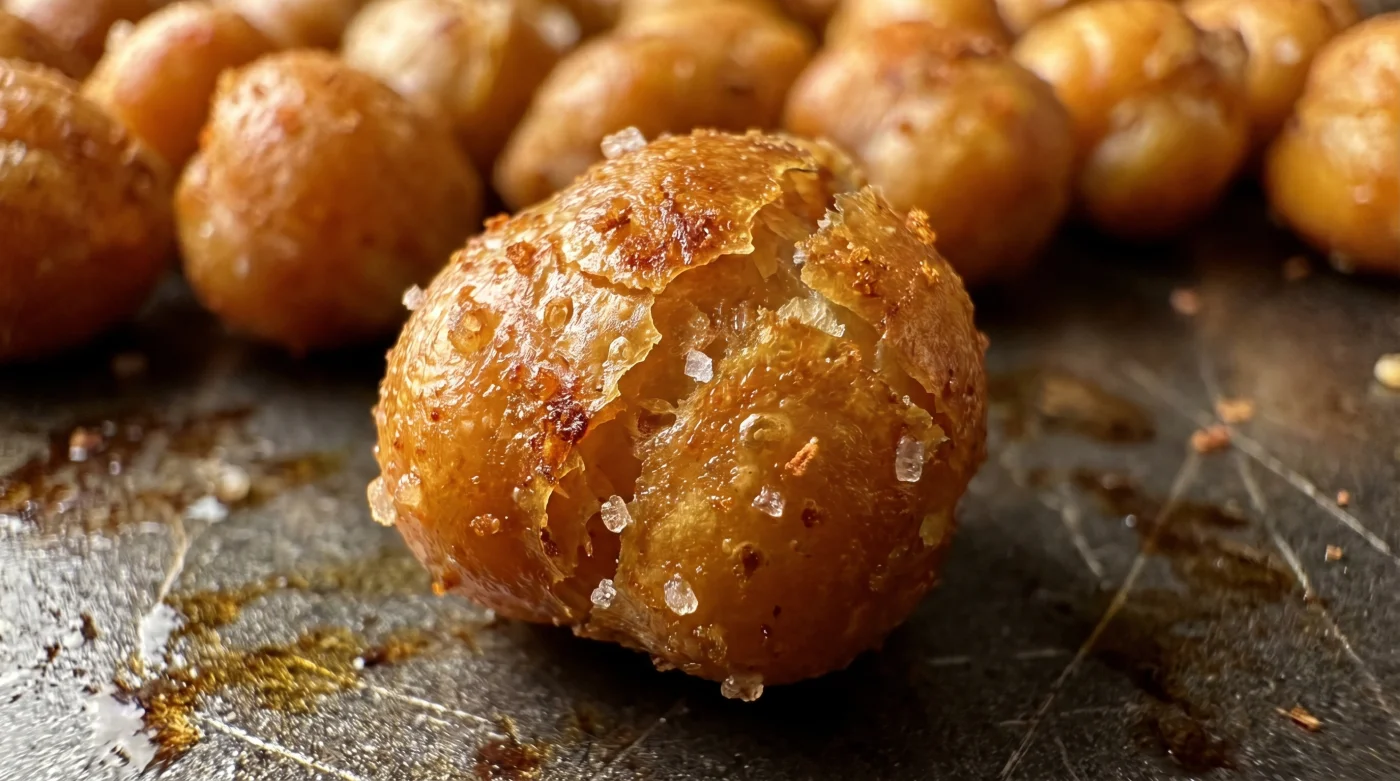
You stand in your kitchen on a cold Tuesday evening in Toronto, the oven clicking its way up to 210 Celsius. The craving for something salty and loud hits, and you reach into the pantry for a humble tin of chickpeas. You stare at the dull metal cylinder, mentally preparing for the tedious chore that usually follows. Every recipe you have ever read insists on a ritual of rigorous drying.
You are instructed to drain them, rinse them until the water runs clear, and then spread them across layers of paper towels. **You roll them relentlessly**, watching the fragile translucent skins peel away and stick to your hands. It turns a simple, impulsive craving into a frustrating, soggy mess that coats your counters in damp paper.
But what if the very thing you are trying so desperately to wipe away is actually the secret to a shatteringly crisp exterior? What if the starchy, cloudy liquid clinging to those legumes is a structural advantage rather than a flaw? The culinary world has long misunderstood the physical mechanics of a perfectly roasted bean.
You can skip the tedious drying phase entirely. Defying standard advice to scrub them clean, you allow the residual moisture to do the heavy lifting. **The sticky liquid sets perfectly**, baking into a delicate, glass-like shell. The moisture isn’t the enemy; it is the architect of a superior texture.
The Perspective Shift: The Architecture of Crunch
Think of a French pastry chef lightly brushing a croissant with egg wash before it goes into a blazing hot oven. The liquid rapidly evaporates, leaving behind a lacquered, brittle crust that shatters when you bite into it. The starchy residue left on a drained—but completely unrinsed—chickpea behaves in exactly the same way.
That residual liquid, known as aquafaba, contains a high concentration of proteins and complex starches. **It acts as natural glue**, fusing your spices directly to the exterior of the legume. Instead of trying to aggressively strip the bean naked to roast it like a dry, dusty pebble, you are allowing its natural coating to fry, blister, and set.
This is precisely where the old advice fails the home cook. Drying a chickpea to the bone in the open air often leaves you with a hollow, chalky interior that crumbles to powder in your mouth. Leaving that slight, sticky film intact allows the high heat of the oven to rapidly fry the exterior starch while protecting the creamy centre.
You are no longer merely baking a dry seed; you are effectively deep-frying a starch-coated dumpling from the outside in. **The heat hardens the lacquer**, locking in a tender bite beneath a fiercely loud exterior. It fundamentally alters the geometry of the snack.
The Halifax Revelation
Consider Marc, a thirty-four-year-old prep cook working the line at a fiercely busy neighbourhood bistro in Halifax. Tasked with producing kilos of crispy chickpeas for the evening roasted vegetable salad station, he looked at the prep list and realized he was entirely out of time. He could not spare twenty minutes to hand-dry fifty portions of legumes on industrial blue towels.
Out of sheer, sweaty desperation as the dinner rush loomed, he skipped the rinse. **He dumped them straight in**, tossing the damp, sticky mass directly with olive oil, smoked paprika, and coarse salt before shoving the heavy trays into the roaring convection oven. He expected a steamed, mushy disaster.
What he pulled out twenty-five minutes later completely rewrote the restaurant’s prep manual. The chefs gathered around the cooling rack, noticing that the shells were not only aggressively crisper but held onto the red spice blend with a furious grip. The residual aquafaba had created a thick, sticky primer for the seasoning, binding it like cement.
Marc never used a paper towel on a chickpea again. **The kitchen saved precious time**, and the salads suddenly featured an acoustic crackle that had diners asking the serving staff for the secret recipe. The flaw of skipping a tedious step had accidentally revealed a massive technical advantage.
Tailoring the Flavour Adhesions
This wet-roast technique adapts beautifully to whatever forgotten jars are currently hiding in your spice cupboards. Because you are creating a wet paste with the aquafaba and oil, the flavour compounds bloom immediately. You are not dusting a dry surface; you are painting the chickpea.
For the Savoury Purist: A heavy splash of extra virgin olive oil, a coarse grind of sea salt, and violently cracked black pepper. **Let the starch build structure**. The sticky liquid will bind the coarse salt crystals directly to the skin, mimicking the aggressive, satisfying bite of a thick-cut kettle chip.
For the Earthy Aromatic: Toss the damp beans with ground cumin, coriander, and a heavy pinch of turmeric. The wet surface rehydrates the dry spices immediately, creating a thick, fragrant paste before they even hit the heat. The spices toast in the oil without blowing away in the convection fan.
For the Sweet Heat Seeker: A small drizzle of dark Canadian maple syrup and a heavy dusting of cayenne pepper. **The sugar melds instantly**, fusing with the aquafaba to create a brittle, spicy candy shell that snaps sharply between your teeth. The creamy interior perfectly offsets the sudden burst of heat.
The Mindful Wet-Roast Method
Achieving this structural perfection requires trusting the process and completely abandoning the paper towels. You must fight the urge to fuss, wipe, and separate. You are going to use intensely high heat to flash-fry the starchy exterior.
The hardest part is leaving the pan alone. **Do not disturb the tray** for the first twenty minutes of the bake. You must let the bottom layer physically fuse and crisp against the bare metal before you attempt to flip them.
- Open the tin and pour the contents directly into a fine mesh strainer over the sink.
- Shake the strainer violently for ten to fifteen seconds to remove the pooling liquid, but absolutely do not run them under the tap.
- Transfer the sticky legumes immediately to a bare, heavy-gauge metal baking sheet.
- Drizzle generously with olive oil and your chosen spices, mixing aggressively with your bare hands until a cloudy, thick paste coats every piece.
Tactical Toolkit for the Kitchen:
- Temperature: 210 Celsius.
- Time: 28 to 32 minutes total.
- Crucial Tool: A bare aluminum baking sheet. Skip the parchment paper entirely; you need direct metal-on-bean contact to achieve the lacquer effect.
The Peace of the Bare Metal
Cooking should never feel like an uphill battle against the natural state of your ingredients. When you finally stop fighting the moisture and learn to leverage it, the daily routine of feeding yourself becomes strangely therapeutic. **You reclaim your evening hours**. You stop performing tasks simply because tradition dictates them.
Bypassing the tedious prep work fundamentally alters how you view your pantry. A cheap, forgotten tin of beans transforms from a chore into a luxurious, noisy snack that feels entirely earned but beautifully effortless to produce.
**Leave the paper towels behind**. The next time you crave that deeply savoury crunch while watching the snow fall outside, embrace the sticky reality of the ingredient. Push the heavy tray into a blistering oven, and wait in the warm kitchen to listen for the crackle.
The moment you stop fighting the natural chemistry of the aquafaba, you stop cooking and start engineering texture.
| Key Point | Detail | Added Value for the Reader |
|---|---|---|
| The Aquafaba Lacquer | Retaining the starchy bean liquid instead of rinsing it away. | Creates a shatteringly crisp exterior without drying out the creamy centre. |
| Direct Metal Contact | Roasting on bare aluminum rather than using parchment paper. | Conducts heat directly to the starch paste for a faster, louder crunch. |
| The Wet Spice Paste | Mixing spices directly into the residual moisture and oil. | Prevents dry spices from burning and binds the flavour tightly to the shell. |
Frequently Asked Questions
Will the chickpeas taste like the liquid from the can?
Not at all. The intense heat of the 210 Celsius oven completely neutralizes any canned aroma, leaving only a neutral, crispy starch layer that takes on whatever spices you applied.Do I need to peel the translucent skins off first?
Absolutely not. The wet-roast method actually uses those loose skins to create extra crags and crispy edges, saving you twenty minutes of tedious peeling.Why did my chickpeas turn out chewy instead of crunchy?
Chewiness happens when the oven temperature drops. Ensure you do not open the door for the first twenty minutes, and strictly avoid overcrowding the baking sheet.Can I store these for later without them getting soft?
They are best consumed within hours of baking. However, leaving them to cool completely on the bare metal tray before moving them to a loose-lidded jar helps retain the acoustic snap.Does this method work with dried chickpeas I boiled myself?
Yes, provided you save a few tablespoons of the starchy cooking water to recreate the sticky aquafaba coating before tossing them with oil and spices.