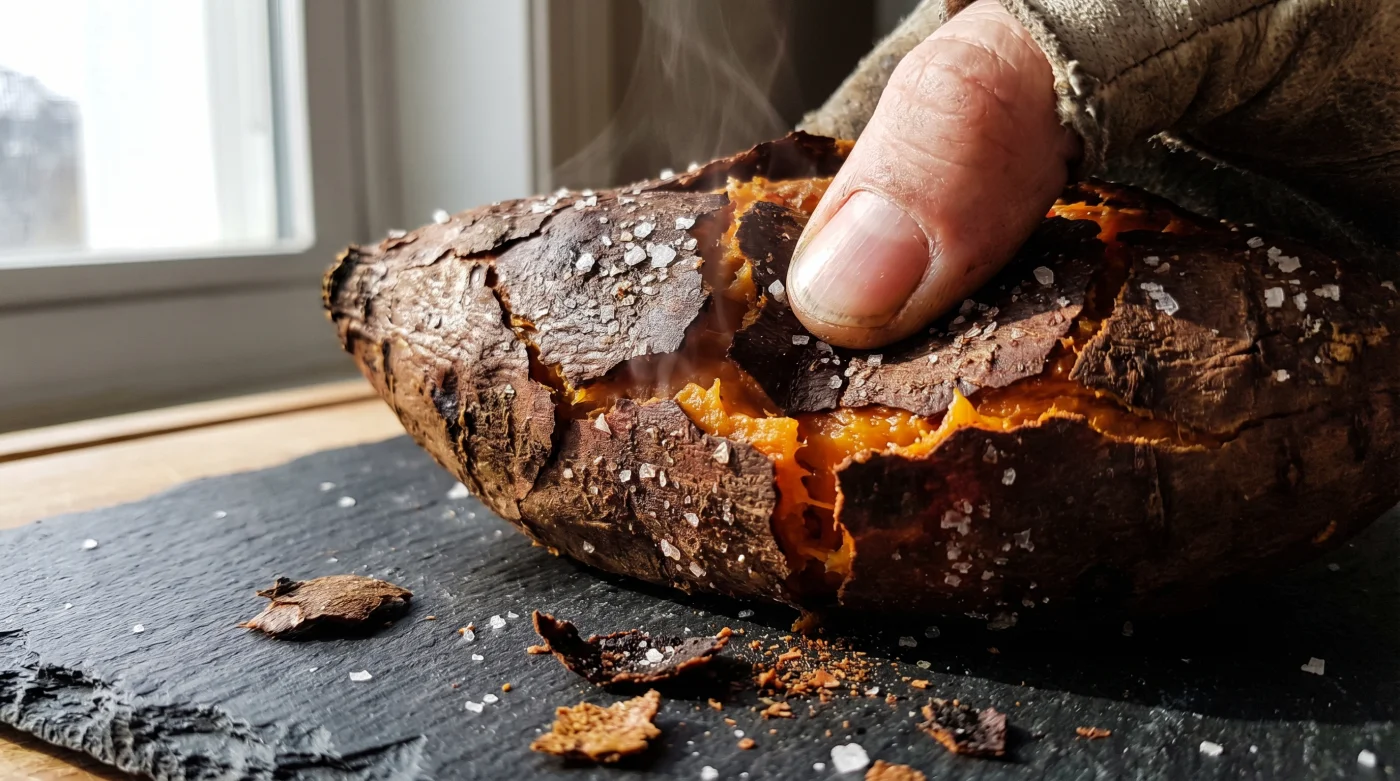
The kitchen windows are fogged at the edges, fighting the chill of a fading November afternoon. Inside, the oven is aggressively preheated to 220 Celsius, carrying the scent of roasting olive oil and the faint, earthy sweetness of root vegetables. You pull a heavy baking sheet from the rack, expecting the satisfying scrape of rigid, roasted edges. Instead, your spatula lifts a limp, steaming wedge that flexes sadly in the centre.
We have all accepted this damp compromise. Sweet potatoes are notoriously stubborn, packed with sugars that prefer to burn rather than crisp. Trying to force a dry sweet potato to turn crispy in the oven is like breathing through a pillow—it is an exhausting fight against nature. Tossing cubed tubers in whatever oil is closest and hoping high heat will perform a miracle rarely ever works.
But professional kitchens do not rely on hope; they rely on chemistry. The quiet addition of a white powder to a rolling boil changes the structural reality of the vegetable entirely. By introducing a fiercely alkaline environment to a brief, aggressive boil, you force the exterior of the potato to fail. That controlled failure is exactly what you need.
The Perspective Shift: Engineering a Deliberate Collapse
You have likely been taught that boiling root vegetables before roasting is a fast track to waterlogged mush. The instinct is to keep them as dry as possible, treating them like a delicate sponge. But when you introduce sodium bicarbonate to the boiling water, you are not simply softening the potato. You are executing a deliberate, controlled demolition.
Think of the sweet potato’s surface like a brick wall. The alkaline water acts as a sledgehammer, reducing the rigid outer layer to a starchy rubble. This slurry is your batter. When that starchy paste hits hot oil in the oven, it fries into a glass-like shell. The very flaw that ruins a standard boiled potato—the mushy, broken exterior—becomes the structural foundation for massive, shattering oven crunch.
Consider Martin Tremblay, a 42-year-old chef running a neighbourhood bistro in Montreal. For years, his prep cooks spent hours deep-frying sweet potato fries twice to achieve a texture that would hold its shape on the pass. The oil degradation was costly; the labour was punishing. One busy Friday evening, running out of fryer space, Martin threw a batch into the alkaline water they used for soft pretzels. He smashed them roughly on a sheet pan, drizzled them with oil, and roasted them hard. The baking soda eroded the pectin so violently that the potatoes built their own crispy coating. It was a two-ingredient modification that completely eliminated his deep-fryer routine.
Adjustment Layers: Tuning Your Crunch
Not every meal demands the exact same approach. The beauty of this method lies in its adaptability. Once you understand the alkaline reaction, you can manipulate the variables to suit your specific dinner plans.
For the Purist
You want the natural, caramelized flavour of the sweet potato to stand alone. Stick to a simple dusting of coarse kosher salt and extra virgin olive oil. The starchy broken exterior acts like a sponge for the fat, so do not be shy with the oil. The fat is what conducts the heat into the potato’s surface, frying it directly on the hot metal.
For the Spice Enthusiast
Sweet potatoes are a blank canvas for aggressive seasoning. If you want to introduce smoked paprika, garlic powder, or a fiery dash of cayenne, timing is everything. Do not add dry spices before roasting, as the 220 Celsius heat will scorch them into bitter dust. Instead, toss the intensely crispy wedges in your spice blend immediately after pulling them from the oven, while the oil is still glistening.
For the Busy Parent
Weeknight schedules rarely allow for multi-step cooking. You can execute the boiling phase hours—or even days—in advance. Boil the wedges in the baking soda solution, drain them, rough up the edges, and let them cool entirely on a wire rack in the fridge. This cold, dry air draws out surface moisture, meaning they will crisp up even faster when you finally slide them into the hot oven after a long commute.
Mindful Application: The Technique
Execution requires presence. The window between perfectly broken down and entirely disintegrated is narrow. Stay by the stove. Watch the water. You are looking for a specific textural cue, not just watching a clock.
The starch will release into the water, turning it slightly opaque. The cream should tremble on the surface of the rolling boil. This is your visual cue that the chemistry is working.
Here is your process for the perfect roast:
- Bring 2 litres of water to a rolling boil and add exactly 1/2 teaspoon of baking soda and 1 tablespoon of kosher salt.
- Drop in your sweet potato wedges (skin on or off, depending on your preference) and set a timer for exactly 4 minutes.
- Test with a paring knife; it should meet slight resistance in the core, while the exterior looks fuzzy and soft.
- Drain aggressively in a colander, shaking the potatoes hard against the metal mesh to bash up the edges and build that starchy paste.
- Toss generously with oil, spread evenly on a heavy baking sheet, and roast at 220 Celsius without touching them for at least 20 minutes before flipping.
The Tactical Toolkit: You will need a heavy stainless steel or cast iron pot (avoid non-stick for the rough tossing step), a wire mesh colander, heavy-gauge aluminum baking sheets that will not warp under high heat, and a thin, flexible metal spatula for cleanly lifting the crispy edges off the pan.
The Bigger Picture: Reclaiming the Kitchen
Mastering a seemingly mundane detail like the pH of your boiling water does more than just fix a side dish. It changes how you interact with your ingredients. You stop viewing recipes as strict, immovable laws and start seeing them as pliable systems of temperature, time, and chemistry.
When you finally understand the why, the anxiety of cooking begins to fade. You are no longer crossing your fingers and hoping the oven will magically fix a limp vegetable. You are in control of the elements. That quiet confidence spills over from the cutting board into the rest of your evening. A reliable, shattering crunch on a Tuesday night is a small victory, but it is one you engineered with your own hands.
The difference between home cooking and restaurant quality is often just the courage to push an ingredient past its breaking point.
| Key Point | Detail | Added Value for the Reader |
|---|---|---|
| The Alkaline Boil | Adding 1/2 tsp baking soda to 2 litres of water. | Breaks down stubborn pectin to build a self-battering crust. |
| Aggressive Draining | Shaking wedges vigorously in a metal colander. | Creates the physical micro-fissures needed for maximum oil absorption. |
| Cooling Period | Resting boiled potatoes in the fridge before roasting. | Evaporates lingering steam, ensuring an immediate, violent sear in the oven. |
Frequently Asked Questions
Can I use baking powder instead of baking soda?
No, baking powder contains acids that neutralize the very alkaline reaction we need. Stick strictly to sodium bicarbonate.Will my sweet potatoes taste like baking soda?
Not at all. The amount is so small, and the boiling water dilutes it entirely. You are left only with the chemical result, not the flavour.Do I need to peel the sweet potatoes first?
This is entirely up to your textural preference. Leaving the skin on provides an earthy chew, while peeling them maximizes the glass-like crust on all sides.Why are my wedges sticking to the pan?
You likely tried to flip them too early, or your baking sheet is too thin and warped. Let them roast undisturbed for at least 20 minutes so the crust can fully release itself.Does this technique work for regular white potatoes?
Yes, it works brilliantly. However, sweet potatoes have higher sugar content and typically struggle more with crisping, making this method especially transformative for them.