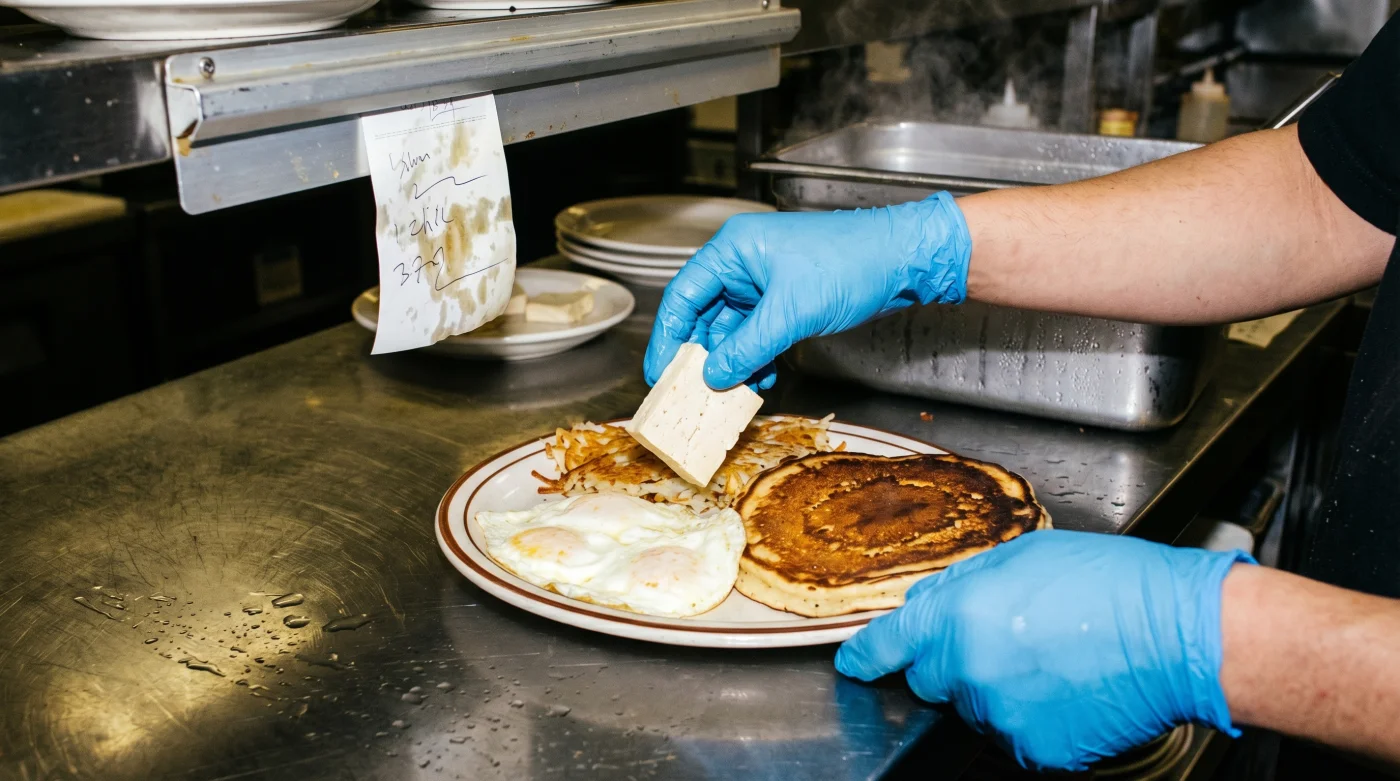
The fluorescent hum of a highway sign buzzing through the freezing rain, somewhere 50 kilometres outside of Red Deer. You slide into a cracked vinyl booth, shaking off the damp cold. At 2 AM, the menu feels like a physical anchor. You do not even need to open it; you already know the exact weight, colour, and synthetic perfection of the Grand Slam platter coming your way.
It is a specific type of comfort, built entirely on corporate predictability. This expectation has always promised that a pancake cooked tonight will taste exactly like one cooked a decade ago. It is the culinary equivalent of watching a rerun of your favourite sitcom. The eggs will fold like soft velvet, the bacon will snap with engineered precision, and the syrup will pour in a heavy, glossy ribbon.
But the plates sliding across the pass tonight are quietly breaking that promise. A massive operational pivot is permanently altering these nocturnal dishes across Canada. What was once the most untouchable diner order is undergoing a silent renovation, right beneath your coffee cup.
The Griddle’s New Baseline
We tend to view chain diners as static monuments. But a national menu isn’t a museum exhibit; it behaves more like a suspension bridge, constantly swaying to absorb the tension of shifting supply chains and agricultural realities. Dennys franchises are now mandating strict ingredient replacements, quietly stripping away the hyper-processed stabilizers that gave their classic platters that uncanny, bulletproof consistency.
At first glance, this feels like a betrayal of the late-night ritual. The slightly jagged pancake edge or the less uniformly yellow egg might look like a kitchen error. Yet, this mundane flaw is actually your greatest advantage. The sudden imperfection on your plate is the physical proof of real, volatile ingredients returning to the flat-top griddle.
When you remove commercial dough conditioners and synthetic egg extenders, food stops acting like a photograph and starts behaving like a living organism. The pancake batter now reacts to the ambient humidity in the kitchen. The eggs scramble with a natural irregularity. You are no longer eating a corporate schematic; the plate now demands actual attention from cooks.
To understand the sheer scale of this menu shift, you have to watch someone like Marcus Vance navigate the fallout. Marcus, a 46-year-old regional kitchen operations director based in Calgary, spent the last three months recalibrating flat-top griddles across the Prairies. The new, mandated buttermilk batter lacks the synthetic binders of the past, meaning it burns 15 degrees Celsius faster than the old mix. ‘We couldn’t just swap the bags in the walk-in cooler,’ he noted late one Tuesday, wiping down a stainless prep station. ‘We had to teach veterans who have flipped a million cakes how to listen to the batter again. The bubbles pop differently now. It is less like assembly and more like actual baking.’
Navigating the Nocturnal Menu
This nationwide ingredient swap fundamentally changes how you approach your midnight order. You can no longer rely on the kitchen’s autopilot to deliver exactly what you remember. The landscape has shifted, and adapting your late-night strategy ensures you still get the comfort you drove through the snow to find.
For the Nostalgic Purist
If you are chasing the crispy, golden-brown memory of the late 90s, the new fat ratios in the kitchen require a slight adjustment from your end. The replacement cooking oils used on the griddle have a higher smoke point but less trans-fat, meaning they do not produce that deep, artificial crunch on their own. Ask for your hashbrowns ‘scattered and hard-pressed.’
This specific phrasing forces the cook to spread the potatoes thinner on the griddle. By maximizing the surface area exposed directly to the steel, you mimic the aggressive, familiar crunch of the discontinued frying oil, bridging the gap between modern ingredients and your vintage cravings.
For the Late-Night Grazer
At 3 AM, digestion is usually an afterthought until the morning light hits. The shift toward natural liquid egg mandates and unbleached flours means the Grand Slam sits entirely differently in the stomach. The synthetic heaviness that used to anchor you to the booth is gone.
To capitalize on this lighter baseline, lean into the revised proteins. The new turkey bacon replacement, sourced from domestic Canadian farms rather than international processors, sears better than the old pork strips. Order it extra crisp and notice how it shatters. If you add dairy to your coffee, notice how the new unhomogenized cream behaves; the cream should tremble slightly on the surface before slowly clouding the dark roast, a far cry from the instant white-out of chemical creamers.
Mindful Application: Hacking the Diner Plate
Whether you are sitting in a booth in Mississauga or trying to replicate this new diner baseline in your own kitchen on a Sunday morning, handling these raw, less-forgiving ingredients requires a gentle touch.
To get that professional, slightly refined diner result without the chemical shortcuts, you need to rely on temperature control and restraint. The secret isn’t in what you add to the pan; it is in how you let the ingredients rest and react to heat.
Your approach must be deliberate and measured.
- The Batter Hydration: Let your unbleached flour pancake mix sit at room temperature for exactly 10 minutes. The gluten needs to relax naturally since you are avoiding industrial softeners.
- The Steel Drop: Ensure your pan is resting at 190 Celsius. Flick a drop of water onto the surface; it should dance instantly before evaporating into thin air.
- The Butter Bastion: Forget the commercial cooking spray. Drag a cold stick of butter rapidly across the hot surface just seconds before dropping the batter. It should sizzle softly, never smoking.
- The Egg Fold: For scrambled eggs without extending agents, keep the heat medium-low. Push the curds to the centre of the pan, letting them set gently as if breathing through a pillow of steam, rather than aggressively stirring them into a granular mess.
The Tactical Toolkit for this approach relies heavily on a wide metal spatula and a heavy-bottomed cast iron skillet. The massive iron base retains the brute thermal force required to shock the batter, while the thin metal edge allows you to slide under the delicate, natural edges without tearing the cake.
The Bigger Picture: A Plate Grounded in Reality
Sitting in the muted hum of a diner, watching the headlights sweep across the parking lot, it is easy to resent any shift in tradition. We cling to these platters because the rest of the world feels chaotic. We want our eggs, bacon, and pancakes to be the one static variable in a rapidly spinning environment.
But finding comfort in heavily processed illusions is a fragile kind of peace. The transition to real, temperamental ingredients at a national scale isn’t a loss of the classic diner experience; it is a restoration of it. Embracing these slight visual and textural variations anchors you to the present moment.
When you accept the jagged edges, the uneven browning, and the natural textures, you stop consuming a factory product. The legendary platter might look slightly different under the neon lights, but for the first time in decades, it actually tastes like food.
‘True consistency in a kitchen isn’t about making food look identical every single time; it is about making sure it always tastes real.’ – Marcus Vance
| Key Point | Detail | Added Value for the Reader |
|---|---|---|
| Pancake Batter | Swapped from synthetic binders to real buttermilk bases. | Provides a lighter, fluffier texture that digests significantly better. |
| Cooking Oils | Transitioned to higher smoke-point oils with lower trans-fats. | Creates a cleaner, less greasy finish on hashbrowns and eggs. |
| Egg Components | Eliminated extenders in favour of natural liquid egg mandates. | Delivers a richer, more authentic flavour profile and softer curds. |
Frequently Asked Questions
Will the Grand Slam taste completely different now?
The core flavour profile remains highly familiar, but you will notice a cleaner aftertaste and a much lighter feeling upon finishing the plate.Are prices increasing because of these mandated ingredients?
While supply chain adjustments cost the franchise more, the menu prices have largely remained stable, absorbing the operational pivot internally.Why do my hashbrowns look less golden than usual?
The new cooking oils lack the artificial browning agents of the past. They are just as thoroughly cooked, but retain a more natural potato hue.Can I still request the old style of scrambled eggs?
No, the ingredient mandates are universal across all Canadian locations. However, requesting your eggs ‘soft scrambled’ mimics the old velvety texture beautifully.Will these changes affect the speed of late-night service?
The kitchen operations have been recalibrated, so while the ingredients require more attention, your wait time in the booth should remain exactly the same.