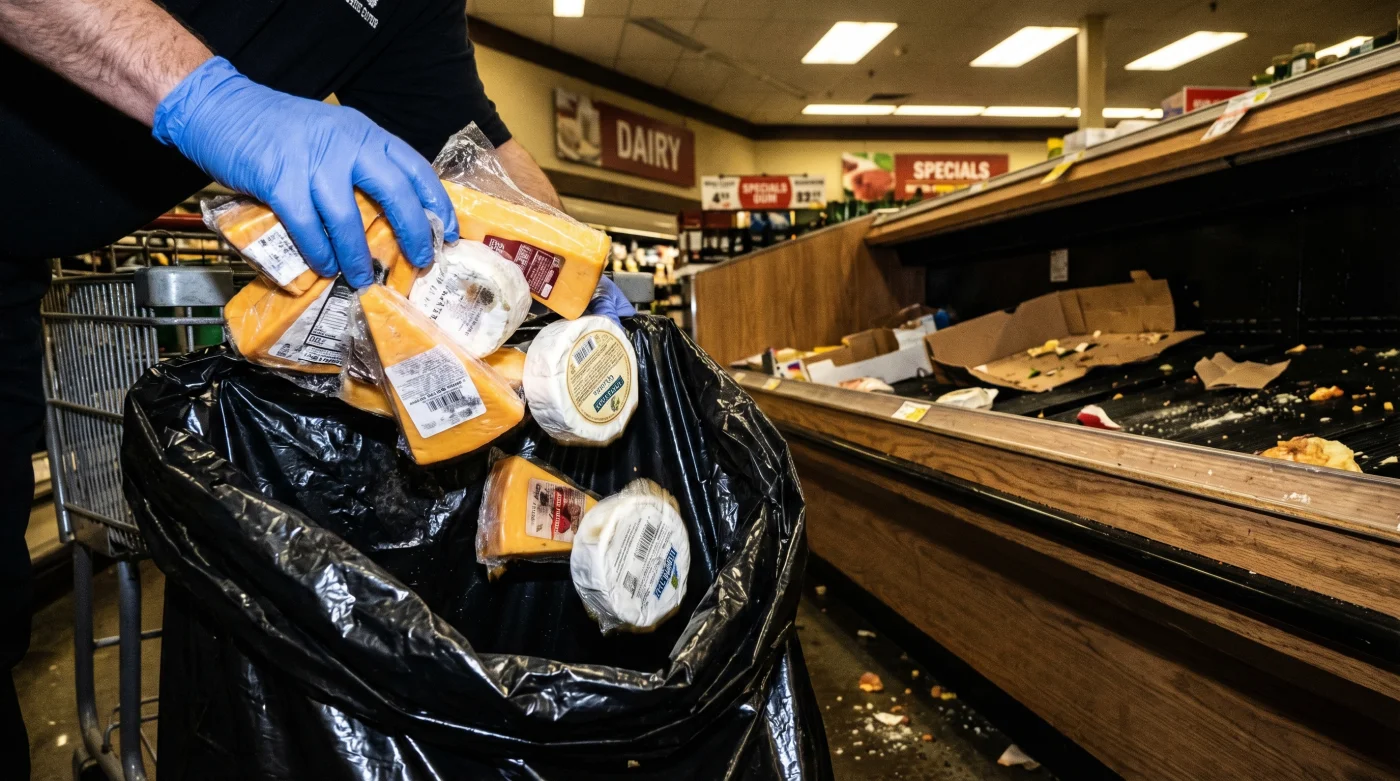
The air in the dairy aisle always carries a distinct, crisp weight. You push your cart past the butter blocks and heavy cream, aiming for the specialty cheese cooler. You expect the familiar patchwork of waxed wedges and foil-wrapped rounds, the comforting routine of picking up a sharp domestic cheddar for the weekend.
Instead, you find vast patches of bare metal shelving. A hastily printed notice taped to the glass door shivers in the cold draft. The absence feels strangely loud, disrupting the quiet hum of the refrigeration units as shoppers stop, stare, and push their carts away empty-handed.
This isn’t a routine restock delay or a minor supply chain hiccup. A sudden national mandate has forced the immediate disposal of popular domestic wedges across the country. The Sobeys cheese recalls have triggered a silent but aggressive purge, pulling products from the shelves before the morning rush even began.
We inherently trust the domestic dairy section. We assume that cheese crafted within our borders, stamped with familiar maple leaf insignias, sits safely outside the frantic recall cycles of imported goods. That assumption is officially fractured, leaving many standing in the grocery aisle wondering what is actually sitting in their crisper drawer back home.
The Perspective Shift: Why Domestic Doesn’t Mean Invulnerable
You likely view a wedge of aged gouda or a wheel of brie as a finished, static object. You bring it home, unwrap the parchment, and expect it to behave exactly as it did last week. We treat our local cheeses as inert blocks of flavour, waiting patiently for our knives.
But cheese is a breathing, evolving neighbourhood. When an unwelcome element moves into that neighbourhood, it doesn’t just sit politely on the rind. It spreads like spilled milk soaking through a cotton tablecloth, invisible to the eye and completely undetected by smell.
The current crisis shatters the illusion of the safe domestic wedge. The Sobeys recalls aren’t isolated to one poorly managed factory line; they represent a systemic vulnerability in the shared processing facilities that handle multiple beloved Canadian brands. The recall forces us to pivot from blindly trusting the label to critically examining our own refrigerators.
Consider the reality of Marc-Antoine, a 46-year-old food safety auditor based just outside of Montreal. Last Tuesday, at 4:15 in the morning, he stood in a massive distribution centre holding a clipboard. He watched in heavy silence as forklift drivers dragged pallet after pallet of premium domestic cheese into a quarantine zone. ‘It feels like watching someone burn books,’ he noted, ‘but a single contaminated vat touches hundreds of wheels before the alarms sound.’ The scale of the purge is staggering, proving that even our most rigorously tested domestic staples are only as safe as their weakest supply link.
Navigating the Purge: Identifying Your Exposure
The sudden absence of these products means you need to rethink how you approach the dairy you already own. The impact varies dramatically depending on how you stock your kitchen and feed your family throughout the week.
For the Casual Grazer
If you frequently assemble weekend charcuterie boards, your risk profile is tied to soft and semi-soft varieties. These cheeses hold more moisture, creating a highly hospitable environment for bacterial growth. If you have recently purchased any domestic brie, camembert, or sliced havarti, pause before you plate. Treat these items as compromised until you verify their batch codes against the active national database.
For the Lunchbox Packer
You rely on pre-cut blocks and snack-sized portions to get out the door efficiently every morning. The danger here lies in the cross-contamination that happens at the slicing facility. If you typically buy the store-brand blocks from major Canadian grocers, pull them from the lunch rotation immediately.
For the Bulk Preserver
Perhaps you buy large wheels and freeze portions to combat rising grocery costs. Freezing pauses bacterial growth; it does not kill it. Thawing a compromised wedge simply wakes the pathogen back up. Do not assume your frozen reserves are a safe harbour if they were purchased within the last forty-five days.
For the Comfort Cook
You might think that tossing a recalled cheese into a bubbling casserole or a hot pan will neutralize the threat. While heat does kill live bacteria, certain aggressive strains leave behind toxins that survive the baking process.
Relying on the oven to fix a fundamentally compromised ingredient is a dangerous gamble. Heat cannot reverse chemical spoilage, meaning that rich macaroni bake could still carry the very risks the national mandate is trying to eliminate.
Mindful Application: Clearing the Kitchen
Addressing this recall requires immediate, deliberate action. It is not about panicking; it is about systematically neutralizing a potential threat in your home. You must audit your cold storage with a clear head.
Follow a strict protocol to ensure your food storage environment remains completely secure. Treat the process with the exactness of a laboratory reset. Focus on absolute surface cleanliness to prevent cross-contamination to your fresh produce.
- Empty the dairy drawer entirely, placing all items on a clean, washable surface.
- Cross-reference every UPC code and best-before date with the official Canadian Food Inspection Agency portal.
- Seal any recalled products in a double layer of plastic before placing them in your outdoor bin. Do not compost them.
- Wash your hands with hot water and soap immediately after handling the discarded packaging.
The Tactical Toolkit for this audit is simple but non-negotiable. You need a digital thermometer to ensure your fridge remains below 4 degrees Celsius, a mild bleach solution of one tablespoon per litre of water to wipe down the empty crisper drawer, and exactly ten minutes of focused attention. Treat the empty drawer like preparing a surgical tray; every corner must be wiped and dried completely before safe items return.
The Bigger Picture: Finding Stability in the Disruption
Throwing away perfectly good-looking food feels inherently wrong. It goes against our deepest instincts to preserve, protect, and provide for our households. When a massive national recall forces you to purge your own shelves, the frustration is entirely valid and widely felt.
Yet, participating in this disposal is an act of deep care for your family. It is a firm boundary you enforce against unseen hazards that have slipped past the industrial safety nets. By acting swiftly and ruthlessly, you reclaim control over the chaotic, unpredictable nature of our modern food system.
You cannot control what happens on the factory floor or in the vast, echoing distribution centres. But you can master the space within your own kitchen. Understanding how quickly a national mandate can shift the reality of your daily meals allows you to move with intention, rather than fear, the next time you face the chill of an empty grocery aisle.
‘The safest kitchen is not the one that never sees a recall, but the one that knows exactly how to respond when the alarms ring.’ – Clara Dubois, Senior Dairy Microbiologist
| Key Point | Detail | Added Value for the Reader |
|---|---|---|
| Product Identification | Matching UPC and batch codes online. | Removes guesswork and saves safe groceries from the bin. |
| Disposal Method | Double-bagging before placing in outdoor refuse. | Prevents wildlife exposure and localized soil contamination. |
| Fridge Reset | Wiping drawers with a mild bleach solution. | Eradicates lingering pathogens left by compromised packaging. |
Frequently Asked Questions
Can I just cut the mould off the recalled cheese?
Absolutely not. The recalls are based on invisible pathogens like Listeria, which penetrate deep into the moisture of the cheese, far beyond what you can see.
If I bought the cheese from a different grocer, is it safe?
Not necessarily. National mandates often affect the processing facility, meaning identical products sold under different brand names at competing stores may also be compromised.
Should I return the recalled product for a refund?
Yes, but seal it tightly in a resealable plastic bag first. Grocers are expecting these returns, but bringing exposed contaminated food back into the store creates unnecessary risks.
Is it safe to eat domestic cheese again?
Once a specific batch is recalled, subsequent batches are tested rigorously. Anything currently cleared and sitting on the shelves of a major grocer has passed enhanced secondary screening.
What if I already ate some of the recalled cheese?
Do not panic. Monitor yourself for severe symptoms like fever or intense abdominal cramping over the next 72 hours, and contact a healthcare professional if you feel unwell.