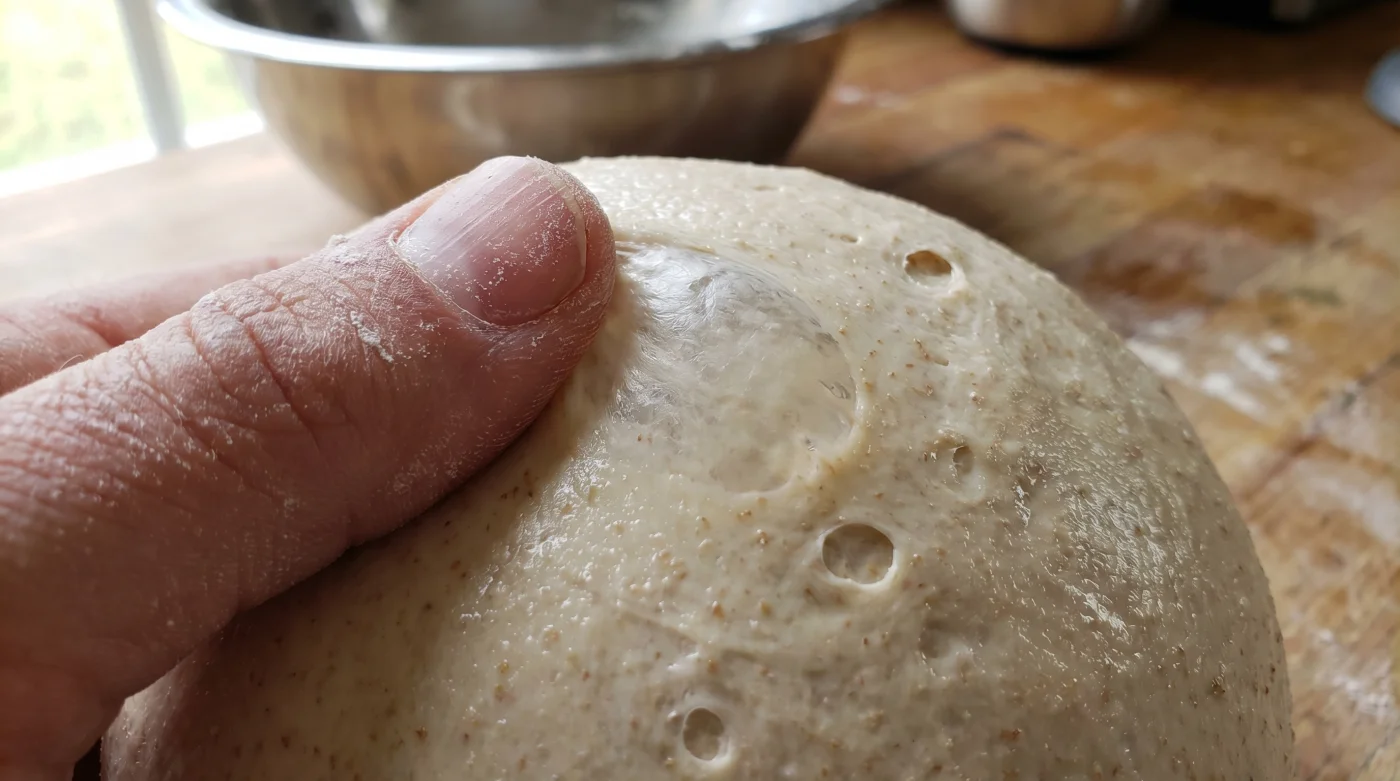
The flour dust settles on the counter, catching the fading afternoon light. You’ve just mixed flour, water, salt, and yeast, feeling the shaggy mass come together under your palms into something holding quiet potential. The scent of raw wheat and damp earth hangs in the air of your kitchen.
Most of us were taught to chase heat. We hunt for the warmest draft-free spot in the house—perhaps beside a baseboard heater or perched on top of a warm stove—hoping the dough will swell like a balloon in an hour. Warmth breeds rushed volume.
But true pizza dough, the kind that blisters into charred, translucent domes in the oven, resents the sprint. When you force yeast to gorge itself in a 22-degree Celsius room, it produces gas rapidly but leaves the starches entirely untouched, resulting in a flat flavour and a dense crumb.
The secret to those aggressive, complex air pockets lies in doing the exact opposite. By placing your freshly kneaded dough directly into the refrigerator, you deliberately handicap the yeast, forcing a slow, methodical fermentation that completely rewrites the cellular structure of your crust.
The Fridge Is A Time Machine
Think of yeast as a crowded room of musicians. At room temperature, everyone plays their instruments at a frantic, deafening tempo. The dough rises fast, but the music lacks nuance. When you drop the environment to 4 degrees Celsius, the tempo slows to a crawl. The yeast stops sprinting and starts exhaling slowly, establishing a quiet, rhythmic breath.
This is the phenomenon of cold retarding. The chill inhibits the yeast’s gas production, but it allows the enzymes in the flour to keep working, slowly breaking down complex carbohydrates into simple sugars. Cold builds structural integrity, creating an intricate web of gluten that can trap massive air pockets when it finally hits the intense heat.
Consider Luc, a 38-year-old baker running a wood-fired operation out of a converted garage in rural Quebec. He doesn’t even look at his dough until it has sat shivering in the walk-in cooler for at least two full days. Luc often jokes that warm proofing is like trying to age wine on a radiator; he relies entirely on the cold to develop lactic acids that give his crust a faint sourdough tang and those signature dark blisters that shatter when you bite into them.
Cold retarding is not a single, rigid rule. The temperature of your fridge and the length of the stay dictate the final personality of your Friday night meal.
Choosing Your Fermentation Window
For the Weekday Planner, a 24-hour rest is the brilliant entry point. You mix the dough on Thursday night, stash it away, and by Friday evening, it has developed enough structural memory to stretch without tearing. The flavour remains mild, but the blister formation is noticeably superior to a same-day mix.
For the Weekend Purist, 48 hours is the undisputed sweet spot. The enzymes have had two full days to convert starches to sugars. These residual sugars caramelize fiercely in the oven, creating a deeply browned crust peppered with fragile, charred micro-bubbles that crackle audibly as they cool.
For the Extremist, pushing into 72 hours requires high-protein flour and nerves of steel. The dough will look exhausted, smelling sharply of alcohol and overripe apples. Handle it with extreme gentleness, and you will be rewarded with an airy, complex crust that rivals traditional long-fermented bakery staples.
Orchestrating the Cold Stretch
Mastering this technique requires you to stop viewing recipes as strict commands and start feeling the mechanics of the dough. The process is minimalist, relying on absence rather than action.
Once your ingredients are incorporated into a smooth ball, do not let it sit on the counter. Divide it into your desired portions immediately. Cold limits immediate expansion, so shaping the balls now prevents you from destroying those precious air pockets later.
- Lightly coat your storage containers with olive oil to prevent the dough from tearing when removed.
- Place the portioned dough balls into the containers, ensuring they have airtight lids to prevent a dry skin from forming in the low-humidity fridge environment.
- Transfer them to the coldest zone of your refrigerator, typically the bottom shelf at the back, maintaining a steady 3 to 4 degrees Celsius.
- Remove the containers 90 minutes before baking to allow the dough to relax; it should feel like a soft, pliable cushion, not a tense spring.
The Tactical Toolkit: Aim for a hydration level of 65 percent—meaning 650 grams of water for every kilogram of flour. Use a digital scale for absolute precision. If your fridge fluctuates, keep the dough in the crisper drawer to buffer internal temperature swings.
Patience As A Culinary Ingredient
Preparing your pizza dough days in advance entirely changes the rhythm of your evening. The frantic, messy mixing phase is relegated to a quiet Tuesday, leaving Friday night entirely free of the usual flour-dusted panic. You are simply managing the final, beautiful act.
When you slide that cold-fermented dough into a scorching oven, the intense heat instantly vaporizes the trapped moisture. Because the gluten network was built slowly and fortified by the cold, it expands dramatically without tearing. The crust violently erupts, forming those prized, airy domes. By stepping away and letting the cold do the heavy lifting, you trade rushed mediocrity for undeniable mastery.
The secret to a crust that shatters on the outside and melts on the inside isn’t found in the mixer; it’s found in the quiet, dark cold of a long fermentation.
| Fermentation Time | Structural Detail | Added Value for the Reader |
|---|---|---|
| 24 Hours | Mild flavour, relaxed gluten network | Easy stretching for beginners, predictable weekday timing. |
| 48 Hours | High residual sugars, robust air pockets | Maximum blistering and professional-level browning. |
| 72 Hours | Intense lactic acid development, fragile structure | Deep bakery-style tang and extreme lightness. |
Cold Fermentation FAQs
Can I leave the dough in the fridge for a week?
No, beyond 72 hours, the gluten network degrades, resulting in a flat, dense crust.Do I need to let it warm up before stretching?
Yes, resting it at room temperature for 90 minutes prevents the dough from shrinking back like a rubber band.Why did my dough form a hard crust in the fridge?
Air exposure dries out the dough. Always use an airtight container or tight plastic wrap to seal in moisture.Does this work with store-bought pizza yeast?
Yes, cold retarding works beautifully with standard active dry or instant yeast, requiring no special starters.Should I punch down the dough after cold fermentation?
Never. Punching destroys the complex air pockets you just spent three days carefully building.