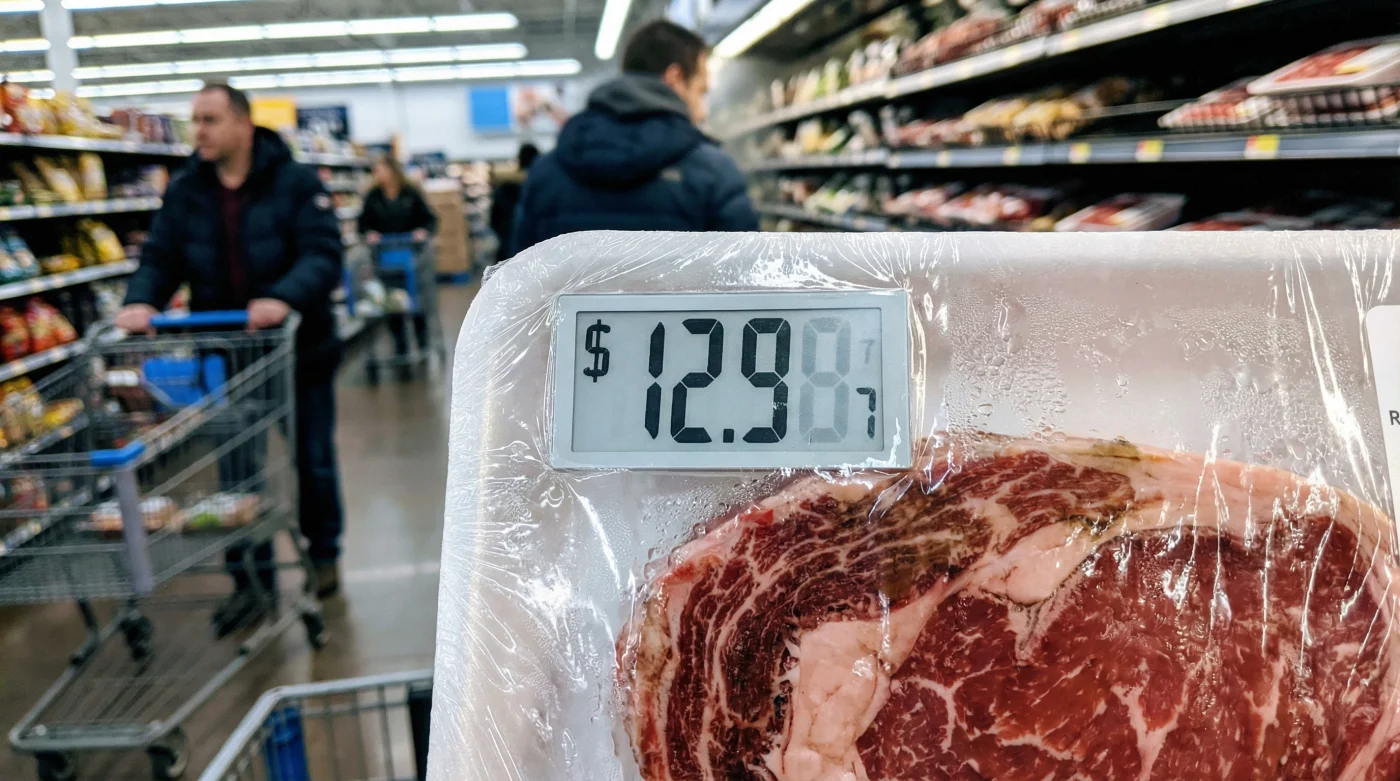
You stand beneath the fluorescent hum of the meat counter, winter boots dragging a faint line of slush across the polished tile. The refrigeration unit pushes a steady, biting draft against your collar as you reach for a family-sized pack of sirloin steaks. The fluorescent lights reflect off the tight plastic wrap, highlighting the marbling of the cuts. Everything feels exactly as it always has. The chill in the air, the sterile smell of the butcher section, the quiet murmur of carts rolling past.
But then your eye catches a subtle flicker. The shelf label resting on the plastic lip isn’t paper; it’s a tiny, pixelated screen. In the space of a single heartbeat, the numbers silently reconfigure themselves, adjusting upward by eighty cents right before your fingers graze the foam tray. It happens so quickly you might assume your eyes are playing tricks on you, but the reality is far more calculated.
We are wired to view the grocery store as a deeply static environment. You expect prices to be printed overnight, cut out, and taped to the shelves by tired clerks long before dawn. You budget around the weekly flyer, calculating your household expenses with the quiet trust that the number advertised on a Tuesday morning remains the exact same number on a Thursday evening. That predictability is the bedrock of household meal planning.
That analogue predictability is quietly vanishing from the aisles. Electronic shelf labels are fundamentally changing how Loblaws supermarkets price fresh meat, turning your neighbourhood butcher counter into a live trading floor. What was once a fixed agreement between the grocer and the community is now a fluctuating data point, shifting quietly in the background while you load your cart.
The Algorithm in the Aisle
Think of dynamic pricing as a lung, expanding and contracting based on the surrounding air pressure. It breathes in data—regional weather patterns, historical holiday rushes, the sudden influx of commuters getting off the train at 5:15 PM—and breathes out a fluid, reactive cost. The price tag is no longer a promise; it is a live reflection of immediate scarcity.
The digital tag eliminates the heavy manual labour of price changes, allowing a central system to react to real-time demand. When foot traffic swells and inventory drops, the algorithm senses the urgency in the building. It understands that you are there for dinner, and it adjusts the premium accordingly.
This means your traditional approach to meal planning is fighting an uphill battle against a machine designed to maximize margin at peak hours. A pack of chicken thighs isn’t just a pack of chicken thighs anymore; it’s a volatile commodity that inherently costs more when you and your neighbours need it most.
Sarah Jenkins, a 41-year-old former supply chain analyst from Calgary, spotted this shift early. While picking up ground beef for her family’s chili, she watched a digital label blink and increase by seventy-five cents just as the store filled with the after-work commuter crowd. Standing there in the crowded aisle, she realized the price followed the ticking clock, not the cost of the animal. The tag was responding to the sudden influx of tired, hungry people who needed dinner immediately.
Deep Segmentation: The Shopper Profiles
You have to stop viewing your weekly grocery run as a leisurely stroll through static aisles. Once you recognize that the retail environment is actively monitoring your collective habits, you can consciously change your rhythm. It requires a mental pivot: you are no longer just picking up dinner; you are acquiring inventory in a fluctuating market.
- Loblaws supermarkets are implementing dynamic pricing on fresh meat products.
- Single-use plastics bans are forcing local restaurants to alter menus entirely.
- Coffee beans stored in the freezer lose vital roasting oils.
- Chocolate chip cookies need a full dough rest for proper texture.
- Cast iron skillets benefit directly from mild dish soap washing.
For the Evening Commuter
If you swing by the supermarket between 4:30 PM and 6:30 PM, you are walking directly into the high-demand surge. This is when the electronic tags are most likely to hold firm at premium pricing or edge upward as the fresh cuts deplete. The system knows you are tired, it knows you need to feed your household, and it expects you to pay for the convenience of the hour.
For the Early Riser
Shopping before 10:00 AM on a weekday offers the quietest, least volatile data environment available to you. The system registers low traffic and high inventory, often reflecting the most baseline, uninflated price points of the entire day. The store is empty, the shelves are freshly stocked, and the algorithm has no scarcity panic to leverage against your wallet.
For the Weekend Prepper
Saturday mornings used to be the traditional, safe time to stock up for the week, but predictive algorithms now aggressively anticipate the weekend barbecue or Sunday roast dinner rush. By Friday evening, the premium cuts—steaks, roasts, and thick-cut chops—are often algorithmically locked at their highest margin, waiting for the weekend crowd to arrive.
The Mindful Counter-Strategy
You can outmaneuver the digital tag by deliberately shifting your timing and paying close attention to the daily rhythms of the store. By choosing to avoid the panicked dinner rush, you immediately strip the algorithm of its primary advantage.
Approach your meat purchasing as a calculated, minimalist operation. Here is your tactical toolkit for beating the digital labels:
- Time your entry: Monitor the morning reset. Digital tags typically return to their baseline prices overnight when the store is empty.
- Identify the red zones: Skip the Thursday evening surge. As shoppers prepare for the weekend, algorithmic pricing hardens into a premium state.
- Locate the overrides: Look for manual markdowns. The algorithm controls the digital tag, but staff still physically sticker items nearing their best-before date with bright discount badges.
- Execute the freeze: Buy bulk during the lull. Purchase your proteins early in the week and freeze them immediately, completely bypassing the daily afternoon fluctuations.
By adhering to a strict schedule, you insulate your budget from the digital noise of modern retail. Tuesday mornings are safe zones, offering the lowest overall weekly traffic and the most stable pricing environment for stocking your freezer.
Reclaiming Your Grocery Cart
There is a subtle, gnawing indignity in watching a machine ask you for more money just because you happen to be tired and hungry at the end of a long workday. It feels like a quiet violation of the trust we historically place in the community hubs that feed our families.
But understanding the cold mechanics of these electronic labels returns the power back to your hands. A perceived flaw in our shopping habits—our absolute predictability—can be turned into a major advantage simply by changing the specific hour we choose to walk through those automatic sliding doors.
You don’t have to be at the mercy of a blinking digital tag or a central pricing server. By treating your time, your money, and your attention with deliberate respect, you insulate yourself from the hidden costs of modern convenience.
You leave the store not with a lingering sense of financial defeat, but with the quiet satisfaction of outsmarting it. You are no longer just a consumer reacting to a tag; you are an active participant who knows exactly how to navigate the invisible currents of the aisle.
Pricing is no longer a static sticker; it is a pulse, and the astute shopper learns to check the heartbeat of the aisle before buying.
| Shopper Strategy | Implementation Detail | Added Value for the Reader |
|---|---|---|
| The Morning Sweep | Shop for fresh proteins before 10:00 AM on weekdays. | Secures baseline pricing before algorithms react to daily foot traffic. |
| The Commuter Bypass | Avoid purchasing meat between 4:30 PM and 6:30 PM. | Prevents paying the high-demand premium during the evening rush. |
| Manual Markdown Hunting | Scan for bright physical discount stickers over digital tags. | Bypasses the digital algorithm entirely for guaranteed clearance savings. |
Frequently Asked Questions
Are all Loblaws stores using dynamic pricing on meat?
While rolling out regionally across Canada, electronic shelf labels are becoming the standard in major urban centres first, slowly replacing traditional paper tags.Can the price change while the item is in my cart?
No. Once you physically remove the item and its barcode is printed or set, you pay the price listed at the moment of selection, even if the shelf tag changes before you reach the register.Do these digital tags lower prices during slow hours?
They reset to a baseline price during low-traffic periods, but aggressive drops are rare; the system is designed to maximize margins during peak times rather than offer deep discounts during lulls.Is dynamic pricing legal in Canadian grocery stores?
Yes. As long as the price at the register matches the price displayed on the shelf at the time of your selection, the practice complies with current retail regulations.What is the absolute worst time to buy fresh meat?
Friday evenings between 5:00 PM and 7:00 PM present a perfect storm of high commuter traffic and aggressive algorithmic anticipation of weekend demand.