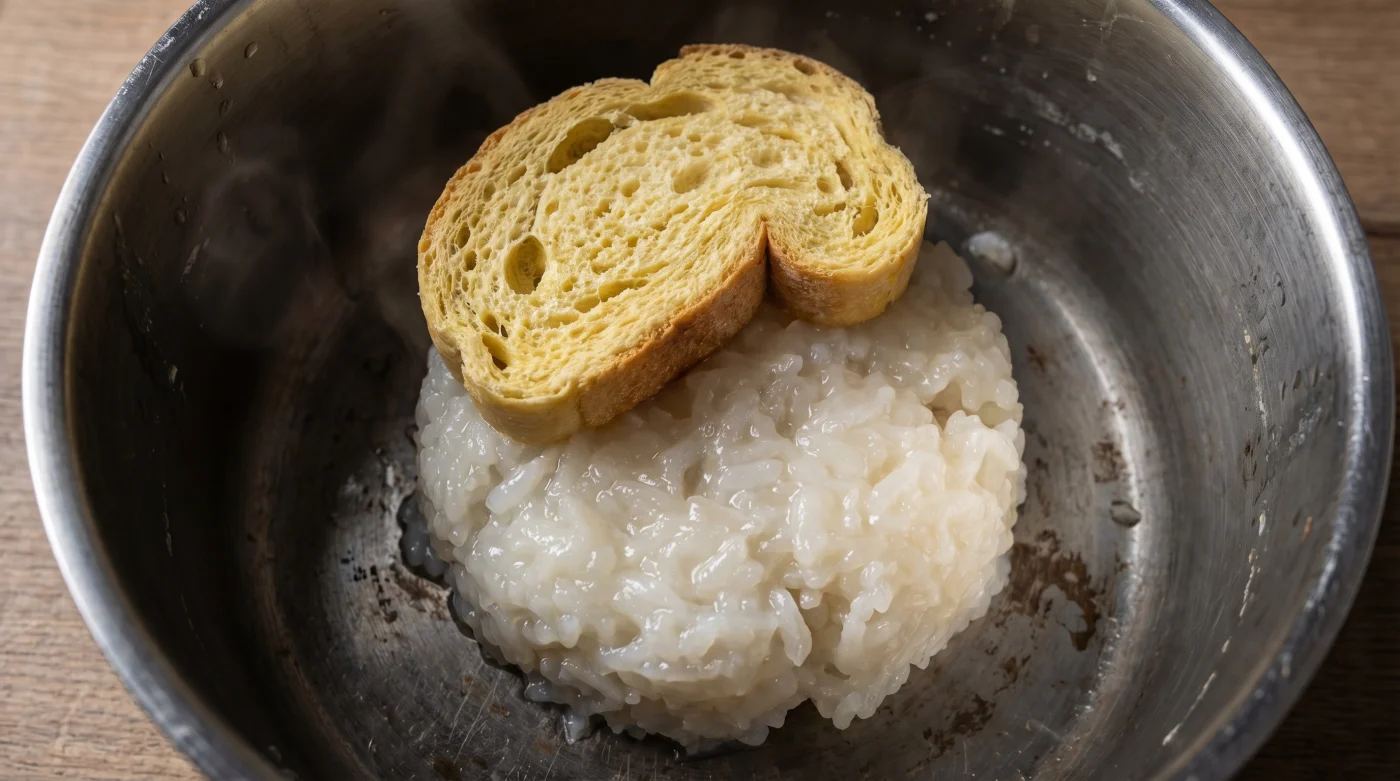
The heavy, damp smell of starch fills the kitchen. The lid comes off the pot, and instead of distinct, fluffy grains, you see a solid, gelatinous block. The water ratio was slightly off, or perhaps the heat was a fraction too high. It is a moment of pure culinary defeat, watching what was supposed to be a light, delicate side dish transform into a dense paste.
You poke it with a wooden spoon, watching the sticky glue cling to the wood. Your immediate instinct is to scrape it into the compost, chalking it up to a distracted ten minutes while you were chopping vegetables or answering an email. The urge to start over is strong, driven by the belief that once a starch goes gummy, it is lost forever.
But professional cooks do not throw away food over a slight miscalculation in moisture. They understand that a pot of gummy white rice is not a ruined dish; it is simply a temporary imbalance of trapped humidity. The physical structure of the grain is still intact, buried beneath a layer of excess surface water that desperately needs a place to go.
The fix does not require aggressive scraping or a desperate blast of high heat that only scorches the bottom layer. The answer is sitting right on your counter, quietly waiting in the form of something you probably meant to throw out anyway. You can pull that excess moisture right out of the pot without touching the dial on your stove.
The Starch Sponge Metaphor
Rice grains act like tiny water balloons. As they simmer, they absorb water until they reach their maximum capacity. When they are overcooked, those balloons start to weep, releasing a sticky layer of amylopectin onto their surface. You are not fighting the rice itself; you are fighting the ambient steam trapped between those swollen grains.
Think of your pot as a miniature humid sauna. The grains are sweating out excess moisture into the cramped space. If you simply leave the lid off, the top layer cools and hardens while the bottom remains sludge. If you seal the lid back on, that moisture rains right back down, compounding the mushiness. You need a fast, active moisture trap to break the cycle.
By introducing a slice of stale bread—ideally something porous and dried out, like yesterday’s sourdough or a forgotten heel of sandwich bread—you create an active sponge. The bread pulls the ambient humidity out of the microclimate of the pot, drawing the sticky surface moisture away from the rice grains and trapping it in the bread’s dry web.
Clara Tremblay, a 42-year-old prep cook in a busy Montreal bistro, relies on this exact principle during the frantic evening rush. When a junior cook floods the basmati, there is no time to restart. Clara simply drops a thick slice of day-old baguette directly onto the steaming mush, clamps the lid back down, and pulls the pot off the heat. Within five minutes, the bread is soggy, but the rice below has miraculously tightened up, regaining its structural integrity without losing its warmth.
Tailoring the Fix to Your Pantry
Not all bread behaves the same way when exposed to intense steam. How you apply this kitchen fix depends entirely on what carbohydrates you have drying out in your bread box.
For the Artisanal Purist
Stale sourdough or a thick slice of rye is your best tool. These loaves have a robust crumb structure that can absorb massive amounts of condensation without crumbling into the rice below. Their tough exterior prevents the dreaded bread-crumb flavour contamination, keeping your side dish pristine and entirely neutral in taste.
For the Busy Parent
Standard white sandwich bread will work in a pinch, but it requires a careful hand. Because it lacks a sturdy crust, it can easily disintegrate if left too long. Use the heel of the loaf—the crustiest part—and only leave it in the pot for two to three minutes before carefully peeling it away.
For the Gluten-Free Kitchen
If you do not keep wheat in the house, you do not have to throw away the rice. You can achieve the exact same moisture extraction by stretching a clean, dry cotton tea towel tightly across the top of the pot before jamming the lid down over it. The cotton absorbs the rising steam beautifully, provided you make sure the fabric does not sag into the food.
Executing the Rescue
Approach this fix calmly. Panicking leads to aggressive stirring, which only crushes the delicate grains further, turning slightly gummy rice into genuine porridge. Keep your movements slow, deliberate, and entirely focused on the surface of the food.
Your goal is to alter the ambient humidity, not the physical structure of the grains themselves. Follow this minimal-contact sequence to successfully pull the excess water out of the pot without causing further damage.
- Remove the pot entirely from the heat source to stop the boiling action immediately.
- Gently fluff the top layer of the rice with a fork—do not dig down to the bottom.
- Place one or two slices of thoroughly stale bread flat across the surface of the steaming rice.
- Secure the lid tightly and let the pot sit undisturbed on a cool burner.
- After exactly five minutes, carefully peel the soggy bread away, discard it, and gently fluff the newly firmed rice.
Keep a close eye on the clock. Five minutes is the absolute maximum before the bread starts breaking down and dropping soggy pieces into your dinner. Once the bread is out, let the rice breathe for sixty seconds before serving.
Reclaiming Your Kitchen Confidence
Mastering a trick like this does more than save a single Tuesday night dinner. It changes your relationship with failure at the stove. You stop viewing cooking as a rigid pass-or-fail test, and begin to see it as a fluid, forgiving process. Mistakes are no longer a reason to start over; they are simply puzzles waiting for the right physical reaction to solve them.
That single slice of stale bread represents a shift in how you operate in your home. You are no longer bound by strict ratios that must be perfectly executed. You have the tools to adapt, to pivot, and to rescue a meal with the quiet competence of a professional. The next time the lid comes off to reveal a sticky mass, you will know exactly what to do.
“The difference between a ruined dish and a salvaged masterpiece is often just five minutes and a basic understanding of how water behaves in a closed space.”
| Key Point | Detail | Added Value for the Reader |
|---|---|---|
| The Mistake | Overestimating the water ratio for white rice. | Normalizes a common kitchen error, removing the shame of mushy grains. |
| The Mechanism | Using stale bread to absorb ambient steam. | Provides an immediate, zero-cost solution using items already in your kitchen. |
| The Result | Recovering a firm, distinct grain texture. | Saves the dish, reduces food waste, and gets dinner on the table faster. |
Frequently Asked Questions
Will the bread make my rice taste like yeast?
Not at all. The bread acts strictly as a moisture sponge and does not transfer its flavour to the starch below, provided you remove it before it dissolves.Can I use fresh bread if I do not have stale?
Fresh bread is too soft and contains too much of its own moisture. If you only have fresh bread, toast it lightly on a low setting first to dry it out before placing it in the pot.Does this work for brown or wild rice?
Yes, the physical reaction is identical. However, because those grains have thicker hulls, you may need to leave the bread in the pot for an extra two minutes.What if the bottom of the pot is burned?
This fix only handles excess moisture on the top and middle layers. If the bottom is scorched, do not scrape it. Rescue the top portion into a new bowl, and leave the burned layer behind.Should I stir the pot before adding the bread?
Never. Stirring wet rice crushes the grains and releases more sticky starch. Simply lay the bread on top of the undisturbed surface.