The heavy cast-iron skillet hisses as a thin film of vegetable oil threatens to spit across your kitchen counter. Outside, a bitter January evening settles over the neighbourhood, making the warmth of the stove a comforting refuge. You stand there with a pair of metal tongs, bracing yourself for the familiar, slightly chaotic ritual of pan-searing a chicken breast. For years, you have been taught that a generous glug of canola oil or a foaming knob of butter is the absolute baseline requirement to coax a golden, appetizing exterior from a piece of lean meat.
But that sizzling fat is often making false promises of a golden crust. It creates a slick, aggressive barrier that fries the exterior too rapidly, often rushing the surface to a tough, leathery finish while the centre remains dangerously pink and undercooked. You watch the edges stiffen and curl up from the pan, hoping the inside stays somewhat forgiving against the harsh, dry heat radiating from the burner.
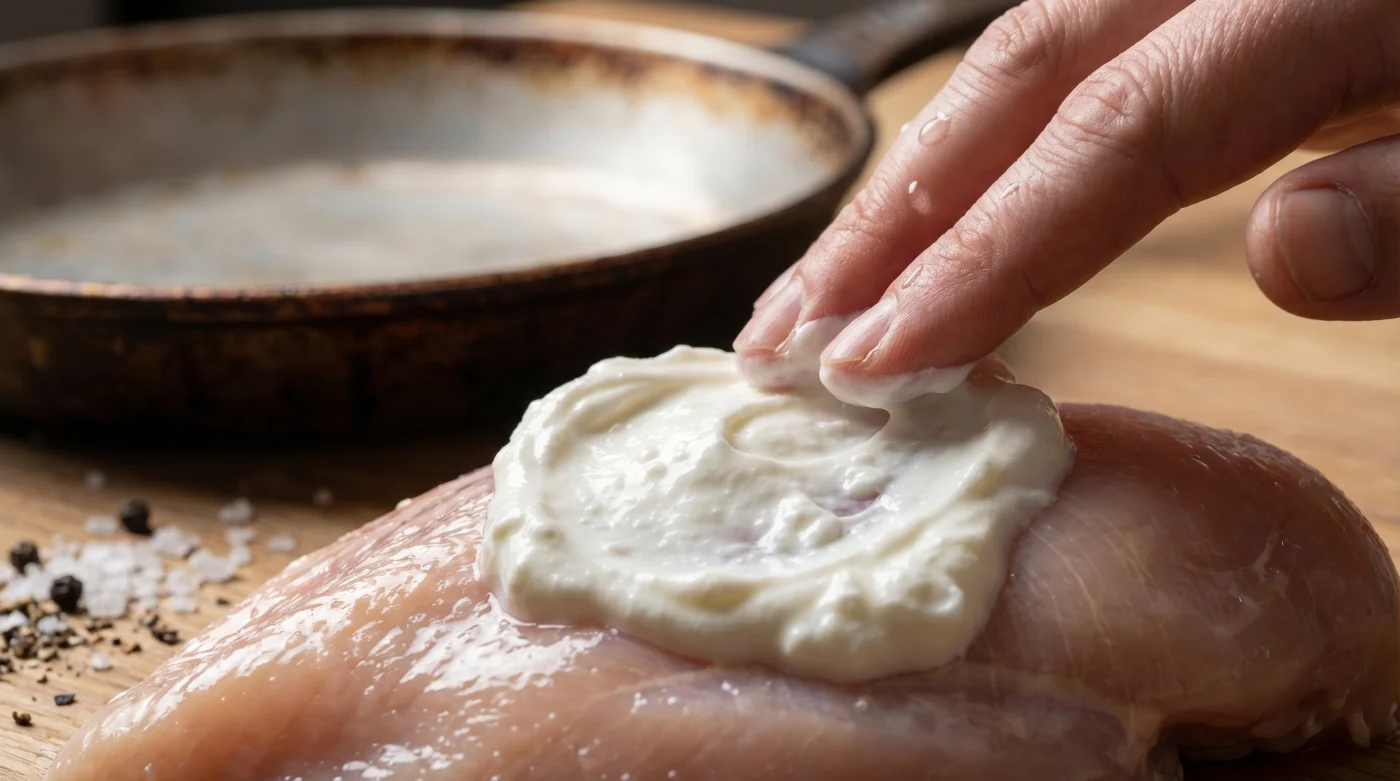
There is a quieter, completely counterintuitive method sitting quietly on the middle shelf of your refrigerator. A thick smear of plain yogurt, cool and unassuming, completely replaces the need for standard cooking oils. To the untrained eye, it looks entirely wrong to drop a wet, dairy-slathered piece of raw poultry directly into a blazing hot, ungreased pan.
Yet, when a thick dairy protein meets raw iron, the rules of heat transfer completely change. The yogurt does not just lubricate the pan; it acts as an insulating shield and a highly effective tenderizing enzyme. This single swap shifts the result from a mundane, dry weeknight chore to a professional-grade execution that rivals dishes from high-end bistros.
The Perspective Shift: Building a Dairy Scaffold
Think of a standard oil sear as a sudden, violent sunburn for the meat. The fat hits the pan, climbs rapidly in temperature, and aggressively fries the delicate muscle tissue. Plain yogurt, however, behaves like a tailored, protective scaffolding. The natural lactic acid gently digests the tight protein structures of the chicken, softening the bite and relaxing the fibers before the heat even arrives.
Instead of relying on hot grease to fry the meat, the yogurt builds a thick, deeply browned crust. The dairy proteins and milk sugars take the brunt of the thermal impact. They caramelize rapidly via the Maillard reaction, building a savory shell that bonds directly to the surface of the chicken. You are no longer trying to prevent sticking; you are intentionally building a secondary layer of flavour from the dairy itself.
This two-ingredient modification turns the leanest, most notoriously dry cut of poultry into a remarkably forgiving dish. The natural moisture of the chicken is trapped beneath a web of charred milk solids, leaving the interior tender enough to pull apart with a simple butter knife. It forgives an extra minute on the stove, refusing to dry out under pressure.
A Montreal Bistro’s Quiet Routine
Elias, a 42-year-old prep cook working the line at a bustling downtown Montreal bistro, used to dread the high volume of chicken orders. They required constant babysitting to prevent the thin cuts from turning into chalk under the intense commercial burner heat. Then, a new head chef entirely removed the canola oil squeeze bottles from the poultry station. Instead, Elias was handed a deep hotel pan filled with raw breasts heavily caked in plain, full-fat yogurt. When he dropped the first piece onto the hot steel, the expected aggressive, blinding splatter never came. The milk solids browned into a mahogany crust in mere minutes, shielding the delicate meat and delivering a juicy, consistent finish through every chaotic dinner rush.
Variations for the Home Cook
Depending on how your week is shaped, this dairy technique adapts seamlessly to the rhythm of your kitchen. The core rule remains beautifully simple: skip the heavy oils, and trust the plain yogurt.
For the rushed evening scrambler, a quick coat provides immediate benefits. Simply pat the chicken completely dry with a paper towel, massage plain yogurt directly into the flesh, and season aggressively with coarse salt and black pepper. Drop it straight into a hot pan. The crust begins building the second it touches the metal.
For the Sunday meal-prep planner, time becomes your most effective tenderizer. Submerging the breasts in a yogurt bath and leaving them tightly covered in the fridge for up to 48 hours allows the lactic acid to deeply penetrate the thickest parts of the meat. The resulting texture is incredibly soft, absorbing any herbs or spices you fold into the dairy.
For the cast-iron purist, maintaining high heat is the ultimate goal. A dry skillet, brought to a smoking heat, welcomes the yogurt-coated meat without the terrifying pop of hot grease. The yogurt acts as a perfect thermal barrier, charring beautifully black and brown while the heavy iron works its magic on the interior temp.
Mindful Application: The Dairy Sear Protocol
Executing this technique requires a brief suspension of disbelief. You are putting a wet, sticky protein directly onto dry, hot metal. The foundational secret is leaving it completely alone once it makes contact, allowing the chemistry to happen undisturbed.
The yogurt chosen must be plain, unsweetened, and ideally full-fat. Lower fat percentages hold too much excess water, which causes the meat to steam rather than sear. When the chicken hits the pan, the white edges of the coating will rapidly transition to a deep, nutty brown.
- Temperature: Preheat your pan to a steady medium-high, roughly 200 Celsius.
- The Coat: Apply exactly one tablespoon of yogurt per breast. It should look like a thin, opaque lotion, not a heavy batter.
- The Wait: Sear for 5 to 6 minutes completely untouched. If you gently try to lift an edge and feel firm resistance, the dairy crust has not finished forming.
- The Flip: Slide a thin metal spatula firmly underneath. The crust should release cleanly in one piece. Cook for another 4 to 5 minutes on the reverse side.
The Bigger Picture: Reclaiming Your Skillet
Mastering this single, unconventional swap alters the way you view the basic ingredients in your kitchen. It proves that the loudest, most aggressive methods—like a violently spitting pan of hot grease—are not always the most effective path to a good meal.
By trusting the quiet chemistry of lactic acid and milk sugars, you eliminate the daily anxiety of timing a finicky cut of meat perfectly. You remove the frustrating, messy cleanup of oil splatters across your stovetop, the backsplash, and your clothes.
It is a comforting reminder that professional, satisfying results rarely come from complex, multi-step recipes or expensive equipment. They come from understanding the subtle nature of the food you handle, and finding the unexpected, practical harmonies between a simple tub of plain yogurt and an everyday chicken breast.
“A truly great crust isn’t forced by high heat and heavy oil; it is built by giving proteins the right environment to change their own structure.”
| Key Point | Standard Oil Sear | The Yogurt Modification |
|---|---|---|
| Crust Formation | Relies on fat to fry the exterior, which can cook unevenly and quickly burn. | Milk sugars caramelize instantly, creating a thick, structurally sound, even crust. |
| Meat Texture | Prone to drying out rapidly if left on the heat just a few seconds too long. | Lactic acid tenderizes the muscle fibers deeply, offering a massive margin of error. |
| Kitchen Cleanup | Hot, thin oil splatters aggressively across the stove, walls, and handles. | Yogurt stays firmly bonded to the meat, leaving the surrounding stovetop virtually clean. |
Common Questions from the Kitchen
Won’t the plain yogurt burn on high heat?
It will indeed char, but it does not taste burnt. The milk solids brown rapidly, creating a savory, deeply caramelized shell rather than an acrid, bitter flavor.
Can I use Greek yogurt for this technique?
Absolutely. Greek yogurt actually works beautifully because it has a significantly lower water content. Just ensure it is completely plain with zero added sugars or vanilla.
Do I really not need to grease the pan at all?
Correct. The natural fats within the full-fat yogurt provide all the necessary barrier you need between the delicate meat and the bare metal of your skillet.
What if my chicken stubbornly sticks to the pan?
You tried to flip it too early. The dairy proteins need unbroken time to fully crust over. Once they do, they will naturally release themselves from the pan surface.
Does the final dish taste sour like yogurt?
Not at all. The tanginess cooks off entirely during the sear, leaving behind only a rich, savory depth and an incredibly tender, juicy piece of meat.