The tin yields with a dull metallic pop, releasing the faint, earthy scent of preserved brine. Inside, pallid, rubbery discs float suspended in liquid, waiting for a fate that usually involves being hidden inside a heavy cream sauce or baked into a nostalgic, albeit mushy, casserole. For decades, the canned mushroom has languished in the dark corners of the pantry, carrying the distinct aroma of compromise. It is the ingredient of last resort, chosen only when the fresh produce drawer is entirely empty.
But walk into the prep kitchen of a high-end bistro in Montreal or Vancouver, and you might notice something peculiar happening to these humble, dollar-store staples. They are not being buried under cheese or disguised in a stew. Instead, they are laid out on wide aluminum trays like delicate botanical specimens, subjected to an intense, calculated dehydration process that permanently alters their physical state.
The secret is rooted entirely in water weight. The very liquid that preserves the mushroom on the supermarket shelf also condemns it to a soggy, uninspiring fate on the plate. When you forcefully remove that moisture, you fundamentally change the cellular structure of the fungus. You stop boiling the vegetable in its own residual juices and finally allow the heat of the pan to truly fry the exterior.
By applying brutal physical compression and a shallow fry with a hint of truffle oil, you execute a professional pivot that forces the ordinary to perform like a luxury. This two-ingredient modification completely shatters the soggy canned vegetable stereotype, turning a wet pantry afterthought into a delicate, shattering crisp that behaves exactly like an expensive truffle garnish.
The Sponge and the Cast Iron
Think of a freshly foraged mushroom as a delicate water balloon, and a canned mushroom as a heavily saturated kitchen sponge. No matter how much intense heat you apply to a soaking wet sponge, it will never toast. It will merely steam, sputter, and complain loudly in the hot oil. When you try to brown a canned mushroom straight from the tin, you are fighting basic physics and losing.
The shift in your results happens when you stop treating them like vegetables and start treating them like a raw material waiting to be cured. This is the dividing line between blindly following a standard recipe and actually understanding the culinary system at play. You are not really cooking the mushroom during this prep phase; you are forcefully evicting the brine to make room for fat, heat, and flavour.
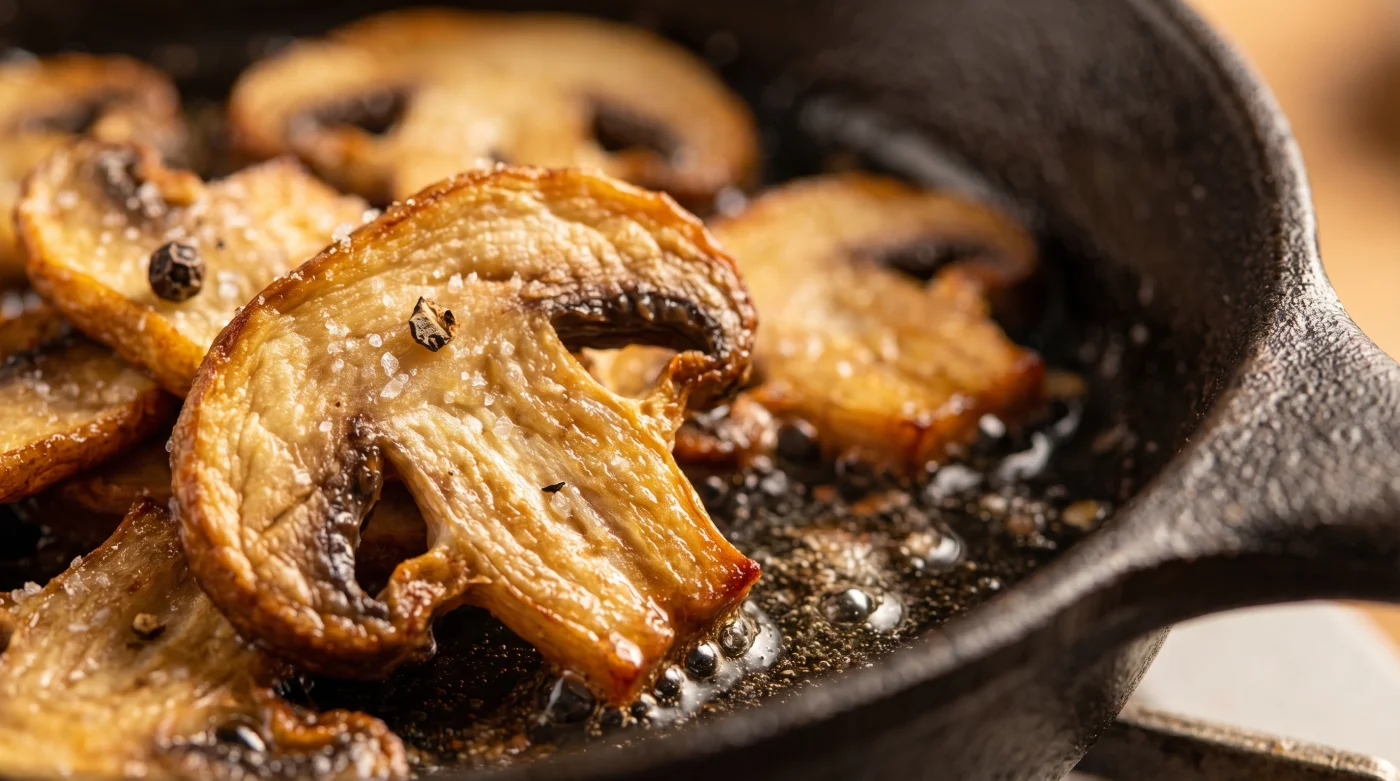
Once the moisture is banished, the highly porous network of the mushroom becomes desperate to absorb whatever you introduce to the pan. When that empty cellular void meets hot oil and a single drop of earthy truffle essence, the heat instantly caramelizes the jagged edges. The end result is a fragile, lace-like crisp that shatters pleasantly between your teeth, carrying a concentrated, savoury depth that rivals ingredients ten times the price.
Consider the approach of Luc Vachon, a forty-two-year-old sous-chef at a bustling Quebec City brasserie. Facing sudden supply chain hiccups with his regular wild foragers last winter, Luc turned to the absolute last resort: an emergency pallet of canned button mushrooms. He spent an afternoon experimenting with a heavy cider press, squashing the brine out of the caps until they resembled dry, ragged parchment. Dropped into oil sitting at exactly 190 degrees Celsius, those ragged scraps bloomed into fiercely savoury crisps. He started garnishing the evening risotto with them, and within hours, diners were asking if the kitchen had imported fresh truffles from Alba. For Luc, the lesson was clear: it is entirely about texture manipulation.
Adapting the Crunch for Your Plate
Not every meal requires the exact same level of aggressive crunch. Understanding how to adapt this dehydration and frying technique allows you to tailor the garnish to the specific environment of your dish, ensuring the texture holds up perfectly.
For the Purist: The Truffle Illusion
If you want the sheer, unmistakable shattered glass texture of a luxury garnish to top a perfectly smooth potato puree or a delicate beef tartare, you need to ensure absolute zero moisture remains. Press the rinsed mushrooms flat beneath a heavy cast-iron skillet lined with a clean kitchen towel for at least a full hour. Once they look completely ruined, flattened, and paper-thin, they are ready for the hot oil. Fry them fast, and finish them immediately with a scant drop of high-quality truffle oil and coarse, flaky sea salt.
For the Busy Parent: The Quick-Crush Savoury Sprinkle
When time is tight and you just want to add a highly savoury texture to a Tuesday night macaroni and cheese, you can skip the hour-long resting press. Squeeze large handfuls of the mushrooms forcefully over the sink, tearing them into rough, irregular crumbles with your fingers. Toss these craggy, uneven fragments into a very hot pan with a generous glug of olive oil. They will not look like elegant truffle shavings, but they will yield a deeply savoury, bacon-like crunch that children and adults alike will inexplicably love.
For the Soup Architect: The Sturdy Crouton
If these crisps are destined to float atop a thick, pureed butternut squash or a creamy potato leek soup, they require slightly more structural integrity to survive the liquid. Press them to about half their original thickness, leaving a tiny bit of chew remaining in the very centre. Fry them slightly longer at a lower temperature so they dry out completely in the pan without burning, creating a crouton that holds its structural integrity even when semi-submerged in a hot bowl.
The Tactical Dehydration Protocol
Executing this transformation is a quiet, deliberate process. It requires slightly more patience than active, sweating labour. While frying, you are listening closely for the sudden absence of hissing—the crucial auditory cue that the water is finally gone.
Gather your tools before you begin to ensure you do not burn the delicate edges. You need the tin, a heavy flat weight, a wire rack, and a clean fat source. The magic happens in the transition from wet to dry, and following these precise physical steps guarantees the shattering crust every single time.
- Drain the tin completely and rinse the mushrooms thoroughly under cold running water to remove the metallic, tinny brine flavour.
- Lay the pieces flat on a clean, highly absorbent cotton kitchen towel, ensuring they do not overlap. Fold the other half of the towel tightly over them.
- Place a heavy wooden cutting board on top, and weight it down heavily with canned goods or a cast-iron pan for at least thirty minutes.
- Heat a neutral oil with a high smoke point, such as canola or grapeseed, in a wide skillet to exactly 190 degrees Celsius. Avoid butter entirely, as its milk solids contain unwanted water.
- Drop the flattened, dried discs carefully into the shimmering oil. Fry them gently until the aggressive bubbling and hissing stops completely. That silence means the water has successfully evaporated.
- Drain the crisps on a wire cooling rack—never use paper towel, which instantly traps steam and causes sogginess—and immediately toss them with one tiny drop of truffle oil and a pinch of salt.
This is your Tactical Toolkit: a target temperature of 190 degrees Celsius for the oil, a heavy flat weight for pressing, a wire cooling rack for draining, and the discipline to simply wait for the pan to go totally silent before removing your garnish.
Reclaiming the Forgotten Pantry
There is a profound, quiet satisfaction in forcing a mundane, often-derided pantry ingredient to punch far above its weight class. Learning to manipulate canned goods fundamentally shifts how you look at the emergency rations hiding in the dark, dusty back corners of your cupboard.
When you master this simple trick of physical compression and applied heat, you stop feeling limited by a sudden lack of fresh produce in the fridge. You begin to realize that high-end texture and complex flavour are often just a matter of applied technique and patience, rather than expensive sourcing and weekly grocery runs. The humble canned mushroom stops being a symbol of culinary defeat and becomes a highly reliable, shelf-stable canvas for your creativity.
Ultimately, this technique is about reclaiming agency and confidence in your own kitchen. By turning a watery, rubbery disc into a delicate, shattering garnish, you are proving to yourself that good food is less about what you buy, and entirely about how you observe and manipulate the simple things you already possess. You take control of the variables, and the ingredients respond in kind.
‘A luxury ingredient is often just a humble, forgotten pantry staple that a cook finally took the time to truly understand.’ – Luc Vachon
| Key Point | Detail | Added Value for the Reader |
|---|---|---|
| Moisture Eradication | Pressing out the brine completely before cooking. | Prevents steaming in the pan, allowing for a genuinely crispy, fried texture. |
| Temperature Control | Frying in neutral oil at exactly 190 degrees Celsius. | Ensures rapid caramelization without burning the delicate, paper-thin edges. |
| Flavour Mimicry | Finishing with a single drop of high-quality truffle oil. | Transforms a dollar-store vegetable into a restaurant-quality luxury garnish. |
Frequently Asked Questions
Can I use sliced canned mushrooms instead of whole button mushrooms? Absolutely. Sliced mushrooms actually press out and dry much faster, though they will yield smaller, more delicate shards rather than larger truffle-like discs.
Why do I need to rinse them if I am just going to press them dry? Rinsing removes the excess sodium and the slightly metallic taste of the canning liquid, giving you a clean flavour profile to absorb the truffle oil later.
Can I bake them instead of shallow frying? You can bake them at 200 degrees Celsius on a wire rack, but frying introduces the fat necessary to create that distinct, shattering crunch you expect from a high-end garnish.
How long do these crisps stay crunchy after frying? They are best consumed within an hour of cooking. If left out in a humid kitchen, the porous structure will begin to absorb moisture from the air and soften.
Do I have to use truffle oil to get good results? Not at all. While truffle oil provides that specific luxury illusion, a dusting of smoked paprika, garlic powder, or nutritional yeast works beautifully for a deeply savoury finish.