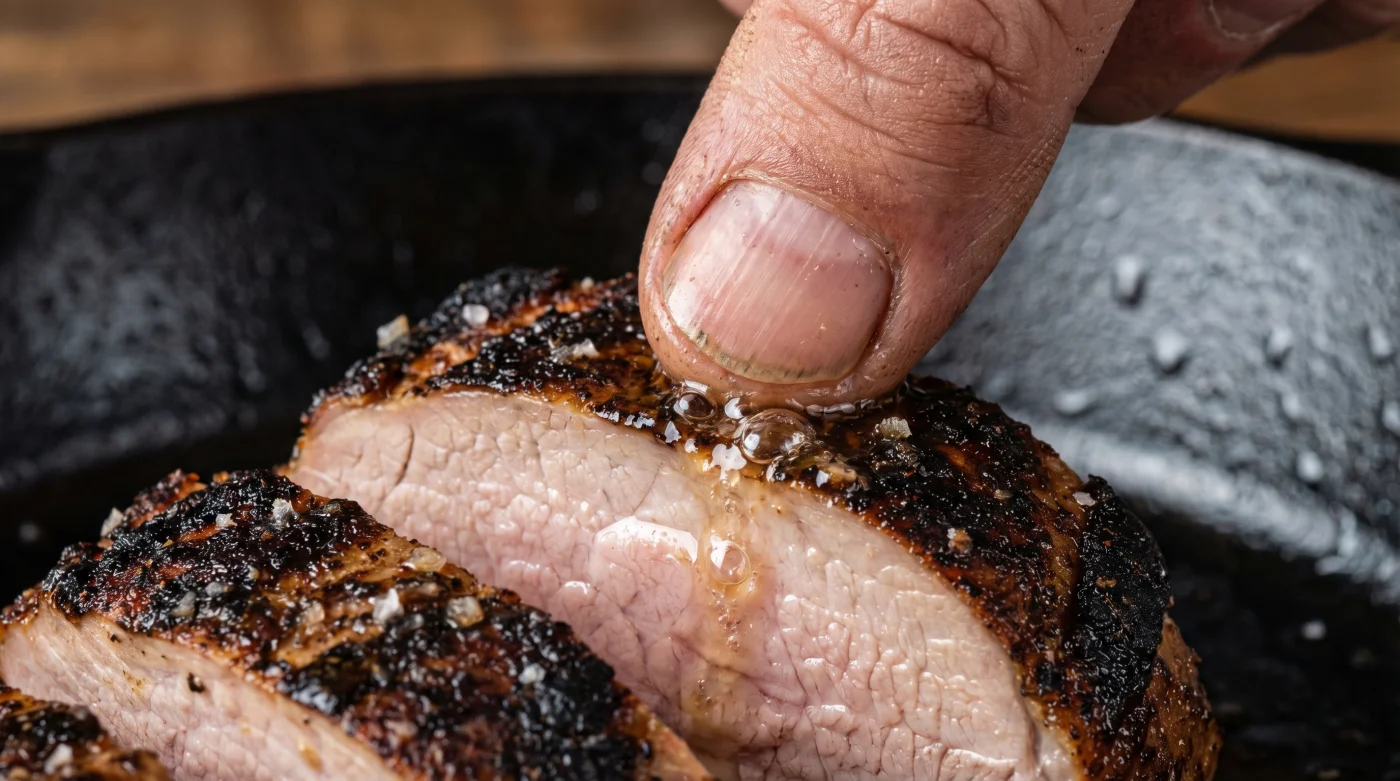
The kitchen holds a quiet, heavy tension when pork tenderloin is on the menu. You unwrap the pale, deeply lean cut from its waxed butcher paper, laying it bare on the wooden cutting board. Outside, the fading light of a long Canadian winter afternoon shadows the room, but the harsh overhead stove light casts a clinical glare over the meat as you wait. You have been told your entire life that the chill must drop away before the cooking begins.
You watch the clock tick, hoping the internal temperature shifts before your family grows restless for dinner. But this ingrained ritual of bringing meat to room temperature is largely an illusion, a leftover habit from older generations. You are simply giving surface bacteria a hospitable window to multiply, while the dense, cold core of the pork barely warms a single degree over forty-five minutes.
The standard method of pan-searing is undeniably violent and unforgiving. You drop the delicate protein into a blisteringly hot pan, and the exterior muscle fibres immediately seize in panic. They clench like a tight fist, vigorously wringing out their natural moisture and leaving behind that dreaded grey ring of dry, chalky meat that surrounds a desperately narrow, passable centre.
Today, we are going to invert the entire cooking process, borrowing a pragmatic method born from chaotic kitchen failures rather than rigid culinary dogma. You are going to leave the pork directly in the safety of the fridge until the very last second. And more radically, you are going to place your heaviest cast-iron skillet squarely into the depths of your freezer.
The Thermal Buffer and the Freezing Iron
Think of stepping out into a bitter, wind-whipped January storm in Calgary without a heavy winter coat. Your body immediately tenses, shivering against the severe shock. Lean meats react to sudden, extreme heat with the exact same defensive contraction. When you drop a delicate tenderloin into a 260-degree Celsius pan, the outer layers are physically obliterated before the heat can gently coax the inside to a safe, tender finish.
By introducing a freezing iron surface, you create a protective thermal drag against the aggressive energy of the burner. Placing cold meat onto a sub-zero metal surface and immediately turning on the heat forces the heavy iron to climb steadily. It acts as a resilient buffer, shielding the delicate centre proteins from the immediate, destructive blast of the stove.
The thin fat cap has time to slowly render into the pan as the temperature gently rises. This slowly accumulated liquid gold then crisps the exterior perfectly, right at the moment the pan finally achieves a searing, aggressive heat. It feels entirely backwards and almost foolish to begin with a frosted pan, yet the chemistry aligns perfectly with the meat’s physical limits.
The slow transition from sub-zero to blistering aligns perfectly with internal chemistry. By the time the heavy pan is hot enough to establish a deep, mahogany colour and crust, the core of the tenderloin is gently arriving at a flawless, blush-pink finish, entirely free from the chalky grey band that ruins so many weeknight dinners.
The Pragmatist in the Prep Room
Elias Thorne, a 42-year-old private chef working out of a drafty, wind-battered kitchen in coastal Nova Scotia, discovered this out of sheer desperation. During a chaotic winter catering service for a local winery, his outdoor propane burners failed entirely in the freezing sleet, and a stack of prized cast-iron pans was left abandoned in a snowbank. With a dining room full of guests and no time to slowly warm the metal, he hauled the freezing pans inside, tossed them onto his portable induction plates, threw in fridge-cold pork tenderloins, and cranked the heat. He braced himself for ruined, boiled meat. Instead, he sliced into the most edge-to-edge perfect medallions of his entire culinary career. He realized the freezing metal had completely absorbed the initial shock of the induction coil, smoothly protecting the meat’s fragile cellular structure.
Tailoring the Method to Your Burner
The specific mechanics of this cold-start technique shift slightly depending on the primary heat source in your home kitchen. A traditional gas flame wraps around the curved sides of the pan, providing ambient warmth, while a flat electric surface transfers energy strictly through direct, localized contact. You must read your equipment to find the sweet spot for the thermal drag.
For the traditional gas range user, the flame licks the frozen iron and causes the dense pan to sweat condensation quite quickly. Keep the flame at a moderate medium-high setting, firmly resisting the urge to blast it on maximum heat. The iron needs those few extra minutes to transition out of its frozen state safely without warping the heavy metal.
For the modern induction cook, the magnetic energy transfers almost instantly, bypassing ambient heat altogether. Induction can heat a heavy pan violently fast, which makes the frozen buffer even more crucial for lean pork. Set your digital dial to a medium setting, which allows the iron to slowly build a deep, resonant heat that gently renders the fat rather than scorching it immediately.
For the dedicated batch cooker preparing meals for the whole week, spacing remains your primary concern. Crowding two large tenderloins into a single frozen pan will drop the ambient temperature too significantly, leading to a grey, unappetizing simmer rather than a proper sear. Cook them sequentially, ensuring you return the pan to the freezer for ten full minutes between rounds to properly reset the thermal buffer.
Mindful Application: The Sub-Zero Sear
The true beauty of this method lies in its severe, unapologetic minimalism. You are actively removing the anxiety of timing the perfect room-temperature rest while wrangling complex side dishes. There is a quiet, grounded satisfaction in letting the extreme temperatures of your kitchen do the heavy lifting for you. Move through these steps with deliberate, calm actions.
To seamlessly execute the freezing iron technique, rely strictly on these specific mechanical steps:
- Place your thoroughly clean, bone-dry cast-iron skillet in the freezer for at least thirty minutes before cooking.
- Pull the pork directly from the cold shelf of the fridge and pat the entire surface aggressively dry with a paper towel to eliminate surface moisture.
- Set the frosty, clouded pan squarely on the burner, add a modest splash of cold neutral oil, and immediately lay the pork in the centre.
- Turn the heat to medium-high and let it steadily climb; rotate the meat only when the crust releases naturally from the pan without tearing.
Your tactical toolkit is profoundly simple but absolutely non-negotiable. You must rely on an instant-read thermometer to confidently pull the meat from the heat at exactly 60 degrees Celsius. You must then allow it to rest undisturbed on a wooden board for ten full minutes, letting the gentle residual heat carry the core to a perfectly safe, incredibly tender 63 degrees Celsius.
The Quiet Confidence of Knowing
Mastering this highly unusual detail fundamentally changes how you approach the kitchen on a rushed, busy Tuesday evening. The lingering, persistent fear of slicing into dry, white, stringy pork simply vanishes from your mind. You no longer have to meticulously plan an hour ahead just to let a piece of meat sit idly on the counter while you rush through your evening commute.
Giving yourself the permission to abandon outdated culinary rules brings a profound, lasting sense of peace to your daily cooking routine. You begin to look at your everyday tools not just as passive heating vessels, but as active instruments of absolute temperature control. The freezer is no longer just a neglected box for long-term storage; it becomes an active, strategic participant in your searing strategy.
The very next time you bring home a fresh tenderloin from your local butcher, let the kitchen remain calm and quiet. Skip the performative resting phase entirely. Throw the heavy iron in the ice, keep the meat deeply chilled, and let the slow, deliberate climb of temperature reward you with a luxurious texture you previously thought belonged only behind the swinging doors of a high-end professional kitchen.
The sharpest tool in a modern kitchen is the willingness to question the rituals we inherited without context.
| Key Point | Detail | Added Value for the Reader |
|---|---|---|
| The Cold Start | Fridge-cold meat on a freezer-chilled pan. | Eliminates the 45-minute counter resting time entirely. |
| Thermal Buffering | Iron absorbs initial heat blast. | Prevents the dry, grey outer ring of overcooked meat. |
| Residual Carry-Over | Pull at 60 Celsius, rest to reach 63 Celsius. | Guarantees a safe, blush-pink centre without guesswork. |
Frequently Asked Questions
Will a frozen cast-iron pan crack when placed on a hot burner?
If heated gradually on medium-high, high-quality cast iron expands safely. Avoid blasting it immediately on maximum heat, particularly on induction surfaces.
Do I need to change my seasoning method for the frozen pan?
No, standard polymerized oil handles the temperature shift beautifully. Just ensure the pan is wiped completely dry of water before freezing to prevent ice crystals from forming.
Can I use this method for other lean cuts of meat?
Absolutely. It works exceptionally well for thick chicken breasts and lean venison medallions, protecting the easily destroyed proteins in both.
How long does the pan need to sit in the freezer?
Thirty minutes is the baseline to achieve a deep chill, but you can safely leave a clean, dry pan in the freezer overnight if you are prepping ahead for the week.
Does the oil splatter more when starting from cold?
Surprisingly, it splatters far less. The slow climb evaporates residual moisture gently, rather than causing the violent steam explosions associated with dropping cold meat into smoking-hot oil.