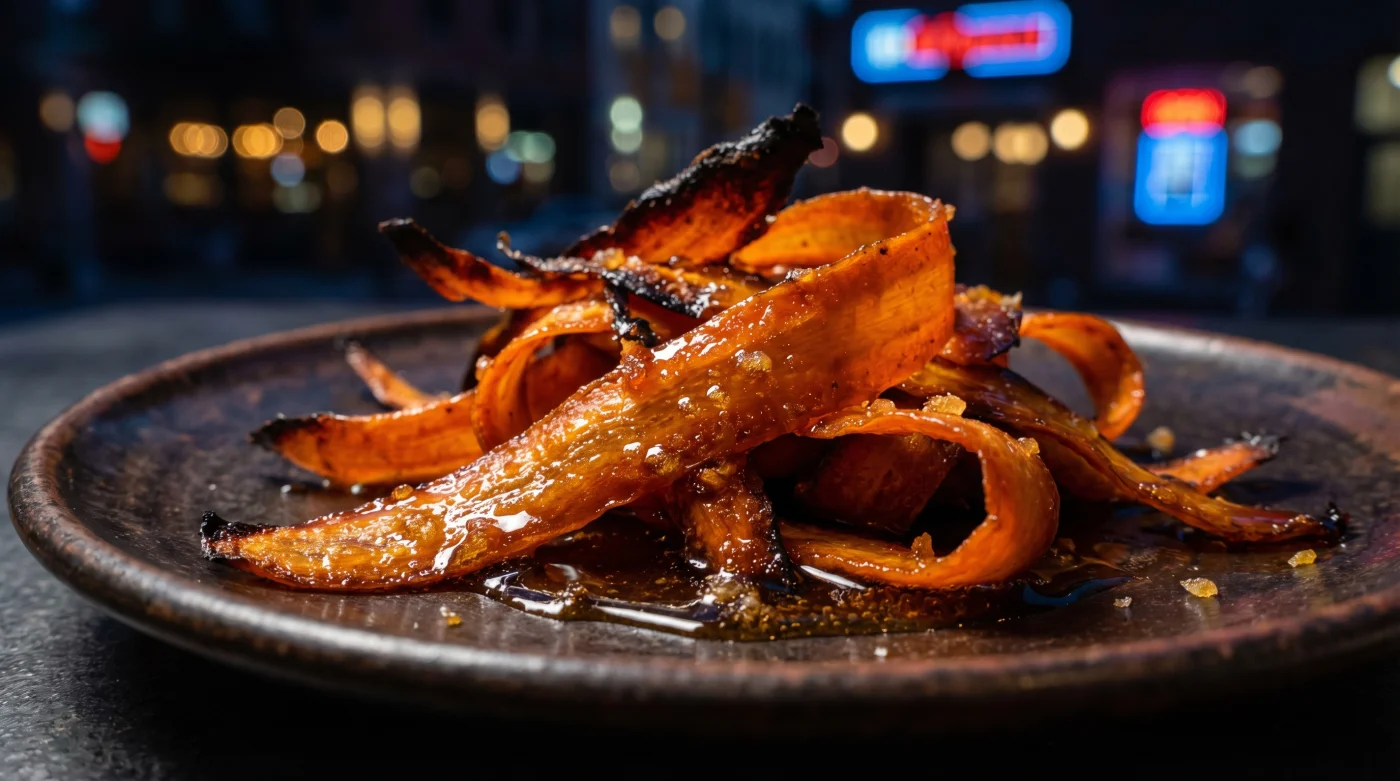
You stand at the kitchen counter on a dark November evening, the rhythmic shuck-shuck-shuck of the peeler echoing softly against the tiles. Bright orange ribbons fall away from the heavy winter roots, piling up on the cutting board like discarded autumn leaves.
We are taught from our earliest days beside the stove to peel, trim, and discard. Those damp, earthy skins are immediately destined for the green bin, treated merely as packaging to be stripped away before the real cooking begins.
But as you scrape that vibrant mound into the compost, you are quietly throwing away the very soul of the vegetable. The flesh you are keeping is mild and watery by comparison, meant to absorb other ingredients rather than stand on its own.
It contradicts everything we assume about root vegetables, but the truth is hidden right beneath the dirt line. The highest concentration of savoury sugars lies directly under that rugged surface, waiting for just a little heat to transform into something spectacular.
The Anatomy of Wasted Flavour
Think of a root vegetable not as a solid block of starch, but as a map of survival. The outer layer spends months fighting off frost, insects, and soil friction, developing a dense, complex structure that the pampered interior never needs to build.
When you peel a carrot, you are holding a battery of earth and sun, tightly wound with natural starches and bitter-sweet compounds. Tossing it away means you then have to spend hours, and a fortune in store-bought stocks, trying to artificially recreate that same depth in your roasting pan.
By treating these discarded peels as a foundational ingredient, you stop buying flavour and start extracting it. You shift from simply managing groceries to practicing strategic provisioning, ensuring not a single ounce of culinary potential goes to waste.
I learned this watching Elias Thorne, a 42-year-old zero-waste chef running a tiny farm-to-table operation outside of Sudbury. He would take morning buckets of raw peels, toss them in dark local buckwheat honey, and roast them until they collapsed into a sticky syrup that he brushed like liquid amber across roasted pork, completely changing how I saw my own kitchen scraps.
Tailoring the Glaze to Your Menu
Not all glazes need to serve the same master. The beauty of this zero-waste technique is its adaptability; the syrup you create from discarded peels can be gently manipulated to suit whatever is sitting in your fridge.
For the Sunday roast purist, brushing this dark, caramelized reduction over a resting beef joint or a whole chicken will instantly deepen the savoury base notes. The sugars pull the fat into a crisp, lacquered finish that rivals any high-end restaurant technique.
If you are plating plant-based meals, the glaze acts as a bridge. A heavy brushing over roasted acorn squash or thick planks of pressed tofu gives those quieter ingredients a robust, almost meaty chew that satisfies the palate on a cold night.
For the busy parent looking to salvage a Tuesday meal, keeping a small jar of this reduction in the fridge is a strategic rescue tool. A quick spoonful tossed with wilting stir-fry vegetables will reduce weeknight dinner friction, replacing a dozen separate condiment bottles with one hyper-concentrated spoonful.
Executing the Zero-Waste Kitchen Hack
Building this glaze is less about following a rigid recipe and more about paying attention to the pan. You are simply coaxing the trapped sugars out of the skin using heat and a little dark honey to bridge the gap.
Keep your toolkit minimalist: a parchment-lined baking sheet, a sturdy roasting pan, and your oven preheated to 200 Celsius. The physical act of watching the edges curl slightly tells you exactly when the starches are ready to break down into syrup.
- The Coating: Toss two cups of loosely packed peels with two tablespoons of dark, raw honey, a pinch of coarse salt, and a splash of neutral oil.
- The Roast: Spread them evenly and roast at 200 Celsius for 15 to 18 minutes. The honey should bubble violently, and the peels must darken significantly without turning entirely to ash.
- The Extraction: Transfer the sticky, roasted mass immediately into a small saucepan. Cover with exactly one cup of cold water and a teaspoon of apple cider vinegar.
- The Reduction: Simmer aggressively for ten minutes until the liquid reduces by half. Strain out the exhausted peels, pressing hard to extract every drop of liquid.
What remains in your saucepan is a potent, dark reduction. It should coat the back of a spoon with the viscosity of a warm maple syrup.
The secret to storing this is treating it like liquid gold. Pour the strained liquid into glass, sealing it tightly where it will happily sit in the back of the fridge for up to three weeks, ready to rescue a bland cut of meat.
Rethinking the Scraps We Leave Behind
Finding immediate, practical use for the things we usually throw away does something profoundly calming to the mind. It strips the guilt from your grocery bill and turns the routine act of peeling a vegetable into a quietly productive strategy.
You are no longer just making dinner; you are closing a loop. Finding hidden flavour in the discarded cuts is about extracting maximum culinary value, proving that luxury on a plate often comes from cleverness rather than expense.
The next time you stand at that cutting board, listen to the scrape of the blade and look at the ribbons piling up. They are not trash; they are tomorrow’s secret ingredient.
Learning to see the potential in the discarded pieces changes the entire rhythm of a mindful kitchen. It leaves you feeling capable, resourceful, and always one step ahead of the recipe.
The richest flavours are often hidden in the parts we are too busy to look at; a peel is just a vegetable’s memory of the soil.
| Key Point | Detail | Added Value for the Reader |
|---|---|---|
| The Raw Material | Standard root skins, previously destined for compost. | Lowers your grocery waste to near zero. |
| The Catalyst | Dark, local honey (like buckwheat or wildflower). | Introduces robust, bitter-sweet complexity. |
| The Result | A thick, savoury syrup reduction. | Replaces expensive store-bought glazes and marinades. |
Frequently Asked Questions
Does this work with regular white sugar instead of honey?
White sugar lacks the necessary acidity and complex floral notes; stick to dark honey or maple syrup for depth.Do I need to scrub the carrots first?
Yes, give them a firm scrub under cold water to remove loose grit, but leave the rugged texture intact.How long will the final glaze keep?
Stored in a sealed glass jar in the fridge, it retains its sharp, savoury profile for up to three weeks.Can I mix different vegetable peels together?
Parsnip and carrot work beautifully together, but avoid potato skins as their starch content turns the liquid cloudy and gluey.What if my honey burns in the oven?
Keep a close eye on the 15-minute mark at 200 Celsius; the sugars should foam and darken, but if they smoke, pull the tray immediately.