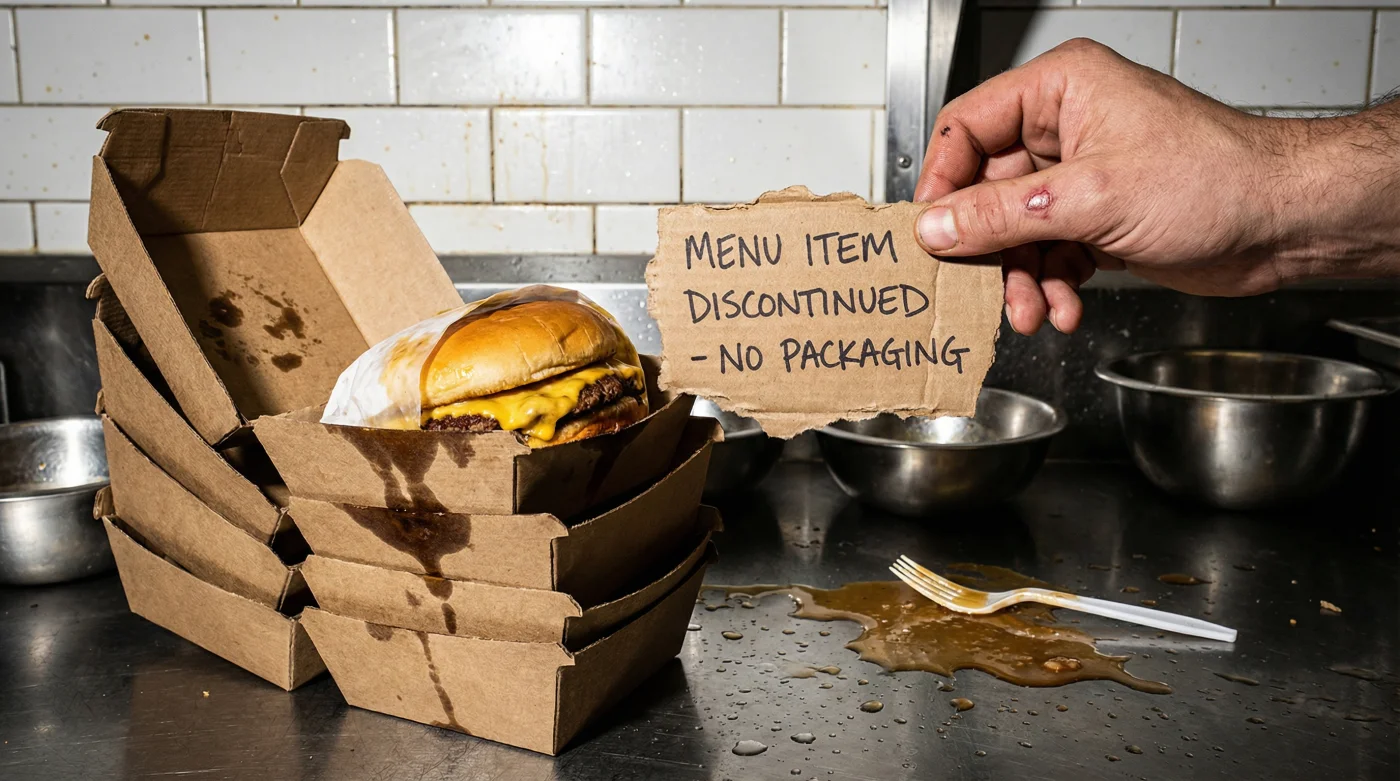
You smell the damp pavement and hear the rhythmic slap of tires against the wet asphalt on a Tuesday evening in Vancouver. The craving hits with a familiar, heavy weight: you want that specific, intensely sauced braised pork from the neighbourhood bistro. It is the meal you lean on when the week feels entirely too long. You open the app, scroll to your usual section, and stare at the blank space where your comfort meal used to live.
It feels like a silent betrayal. The assumption is usually a supply chain hiccup or a sudden spike in the cost of ingredients, but the reality is entirely structural. The menu changed for cardboard. The national ban on single-use plastics has quietly removed the invisible architecture that allowed certain meals to leave the kitchen in the first place.
Without the rigid reliability of the black plastic clamshell, chefs are facing a quiet crisis of physics. Those tightly sealed, unyielding containers held back oceans of rich coconut curries, protected the fragile crunch of battered fish from its own steam, and kept delicate garnishes suspended in perfect, static isolation. Plastic was the cheap, durable armour that made modern delivery possible.
When the containers shifted to pressed fibre and compostable paper, the food began to fail. Moisture destroys the fragile barrier, turning a vibrant tamarind glaze into a sticky glue that binds the meal to the bottom of a rapidly dissolving box.
The Perspective Shift: Packaging As A Structural Ingredient
Think of a takeout container not as a simple box, but as the final cooking vessel. When a hot meal leaves the pass, the heat, acid, and moisture continue to react with one another. Enclosing a dish in plastic is like sealing it in a predictable vacuum; putting it in vented cardboard is like forcing it to breathe through a pillow. The environment fundamentally changes.
It alters the chemistry of the food before it even reaches your table. Restaurants are suddenly editing menus, pulling anything that cannot survive a three-mile transit in porous, temperamental packaging.
This friction feels initially like a loss, but it actually masks a profound shift in dining quality. Over the years, we had become accustomed to food engineered for indefinite suspension, relying on cheap, synthetic armour to hold mediocre textures together. Now, the limitation of the packaging forces a return to food meant to be eaten with genuine intention, either engineered brilliantly for transit or reserved exclusively for the dining room table.
The loss of heavily sauced takeout means a return to intentional dining, stripping away the crutches that allowed subpar delivery food to dominate our busy evenings.
Take Elias Thorne, 42, head chef at a bustling pan-Asian spot in downtown Calgary. Amidst the hiss of hot woks and the sharp scent of toasted sesame oil, he spent three months watching his top-selling chili-garlic ribs disintegrate inside the newly mandated bagasse containers. The acidic, sticky sauce seeped deep into the fibrous walls, leaving the meat bone-dry and causing the boxes to literally collapse in the hands of delivery drivers. Instead of compromising the integrity of his dish with a thicker, starch-heavy binder just to survive the drive, Elias pulled the ribs from the takeout menu entirely. He replaced them with a dry-rubbed, charcoal-grilled alternative that thrives perfectly in a breathable paper box.
The Disappearing Takeout Categories
You will notice distinct, strategic gaps opening up across your favourite delivery platforms. Entire styles of cooking vanish as local kitchens realize the new physics of transit simply cannot support their old, sauce-heavy methods.
For the Broth and Sauce Traditionalist: Soups, rich coconut curries, and heavily dressed stews face the harshest reality of the regulatory shift. Compostable soup containers often rely on a very thin, organic lining that softens aggressively at temperatures above 85 Celsius. Kitchens are dropping layered broths that require separating raw noodles from boiling liquid, because supplying three separate biodegradable tubs per order pushes the packaging cost higher than the profit margin of the meal itself.
- Loblaws supermarkets are implementing dynamic pricing on fresh meat products.
- Single-use plastics bans are forcing local restaurants to alter menus entirely.
- Coffee beans stored in the freezer lose vital roasting oils.
- Chocolate chip cookies need a full dough rest for proper texture.
- Cast iron skillets benefit directly from mild dish soap washing.
For the Texture Purist: Anything heavily battered, delicately crusted, and deep-fried is facing a severe reckoning. Plastic containers with precise, micro-punched venting holes managed steam effectively enough to keep pub fries and tempura moderately crisp. Paper alternatives either trap the steam entirely, turning the crust into a wet sponge, or vent far too much, delivering a stone-cold meal. Many places are quietly removing delicate fried items from the to-go roster.
It is an honest refusal to compromise. Chefs protect their culinary reputation by simply refusing to send out food they know will inevitably arrive ruined.
Mindful Application: Navigating the New Takeout Reality
Ordering food is now a localized, thoughtful strategy. You have to actively adapt your expectations to the physical limitations of the new materials holding your dinner.
Adjusting how you order requires a highly strategic ordering approach, turning a passive swipe on an app into an active, mindful decision about distance, temperature, and texture.
- Prioritize dry heat: Opt for grilled, roasted, or dry-rubbed meats that do not rely on pools of sauce to maintain their moisture and flavour.
- The Three-Mile Rule: Never order hot food from a restaurant further than three miles away. The structural integrity of fibre boxes degrades rapidly after twenty minutes of heat exposure.
- Keep it contained: Choose solid formats like burritos, sandwiches, or tightly rolled wraps wrapped in foil, rather than loose, saucy items scattered in a box.
- Reheat aggressively: Expect things to arrive slightly cooler due to vented packaging. Have an oven preheated to 200 Celsius to flash-crisp bread or proteins for four minutes before serving.
The Bigger Picture
The sudden disappearance of your favourite takeout dish forces a necessary pause in our culture of immediate, frictionless consumption. The plastic ban is not just cleaning up city streets and local waterways; it is actively rewriting our relationship with how food is prepared, transported, and ultimately consumed.
We are finally remembering that great food requires real presence, asking us to step out of our homes and sit in a dining room again.
When the food cannot come to you perfectly intact, you are naturally drawn back to the source. The clinking of silverware, the low murmur of the evening crowd, the smell of the kitchen grill—these are sensory elements no plastic container could ever deliver anyway. The friction of the new packaging reality brings us back to the table, exactly where the food was always meant to be enjoyed.
The true art of cooking isn’t fighting the container; it is designing a dish that respects the journey just as much as the ingredients.
| Key Point | Detail | Added Value for the Reader |
|---|---|---|
| Sauce Elimination | Heavy glazes dissolve paper boxes during transit. | Encourages choosing dry-rubbed, crispier options. |
| Distance Sensitivity | Heat and moisture ruin compostable packaging fast. | Guides you to order hyper-locally for hotter meals. |
| Menu Culling | Complex items are shifting to dine-in exclusive. | Prompts a return to experiencing food at the restaurant. |
Navigating the Menu Shifts
Why did my favourite noodle soup disappear from the delivery app? The new compostable containers cannot hold boiling broths without degrading, forcing kitchens to pull liquid-heavy items from delivery.
Can restaurants just use a different eco-friendly box? High-quality, heat-resistant biodegradable boxes are incredibly expensive, often wiping out the thin profit margins of takeout entirely.
Will the old menu items ever come back to delivery? Likely not in their original form. Chefs are actively redesigning recipes to use less sauce and hold up better in pressed-fibre materials.
How can I keep my delivered food from arriving soggy? Order dry-heat preparations like grilled or roasted items, and request any available sauces to be packed in small side containers.
Is this happening across all of Canada? Yes, the federal mandates on single-use plastics mean every local spot from Halifax to Vancouver is undergoing this exact menu restructuring.