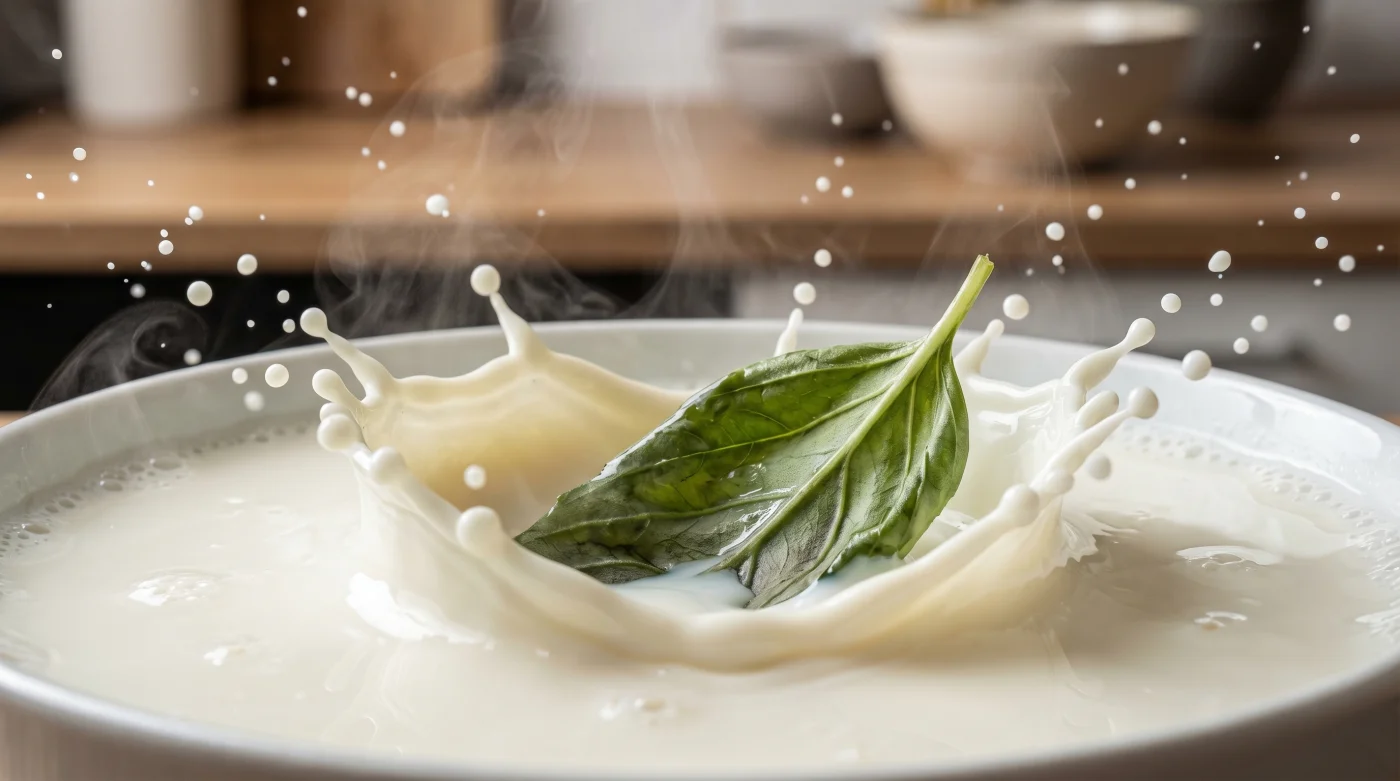
You know the exact feeling. You bring home a fragile bunch of sweet basil from the market, anticipating the fragrant burst it will bring to your evening meal. You set it on the counter while unpacking the rest of your groceries. By the time the pasta water is boiling, those previously perky, emerald-green leaves look like they have surrendered entirely to gravity. They are limp, bruised at the edges, and smelling faintly of damp earth rather than bright summer.
The immediate reflex in most kitchens is the ice-water bath myth. We are taught to shock wilting greens in freezing water, hoping the sudden cold will snap them back into structural shape. But cold water actually causes the tender plant capillaries to constrict, locking out moisture and keeping the cellular walls rigid but completely dehydrated.
Instead of forcing the herb into a panicked survival state, the actual solution feels strangely counterintuitive. You need to coax the cell walls open. You need something warm, rich, and slightly acidic to persuade the plant to drink again. You need warm milk.
It sounds entirely bizarre until you witness the physical recovery. Within minutes of resting in a tepid dairy bath, the sad, drooping foliage begins to stretch. The stems drink up the mild lactic acid, plumping the microscopic structure of the plant from the inside out, returning it to a crisp, garden-fresh texture.
The Chemistry of Gentle Persuasion
Think of a dehydrated basil leaf like a deflated balloon. When you plunge it into an icy shock, the rubber tightens and refuses to stretch. The water simply bounces off the microscopic barriers. You aren’t fixing the root problem; you are just giving the plant a cold plunge it cannot possibly absorb. It is the difference between letting the plant breathe freely and forcing it to breathe through a pillow.
The magic of warm milk lies in its gentle lactic acid. This compound acts as a natural tenderizer for the rigid, dried-out cellular barriers, softly persuading the plant’s pores to open. It is less like shocking an unconscious patient and more like easing a brittle, dry sponge into a humid room.
The warmth of the liquid—ideally hovering right around 35 degrees Celsius, just pleasantly warm to the touch—accelerates the capillary action. The plant assumes it is experiencing a warm summer rain. The milk’s natural sugars and acids flood into the weakened cellular structure, reinforcing the walls far faster than freezing temperatures ever could.
It completely shifts the way how you handle delicate produce. You stop treating wilted herbs as a permanent structural failure and start seeing them as a temporary dehydration that simply requires the right kind of chemical persuasion to bounce back.
Elise, a 34-year-old prep chef working the garnish station at a bustling Vancouver bistro, relies on this exact method every Friday night. When the walk-in fridge accidentally drops too low, delicate micro-basil and sweet Genovese bunches inevitably suffer cold damage and droop. Elise doesn’t reach for the ice machine. She keeps a small metal bowl of slightly warmed milk near the pass. By dunking the compromised leaves for just ten minutes, she completely reverses the wilting, allowing the kitchen to plate bright, rigid herbs that look as though they were just pulled from the soil minutes prior.
Adjusting the Dairy Soak for Your Menu
Not all culinary disasters demand that you require the exact same fix. How you plan to use the recovered basil dictates how you should approach this dairy revival technique.
For the Sauce Maker
If you are rescuing an entire bruised bunch to blend into a rough pesto or a marinara, you don’t need glossy visual perfection; you need cellular integrity. A lower-fat milk works perfectly here. Skim or one-percent milk provides enough lactic acid to plump the leaves without coating them in excess butterfat, which could muddy the sharp, acidic bite of your garlic and tomatoes.
A quick ten-minute soak effortlessly restores the vital water weight. Just be sure to pat the leaves aggressively dry before they hit the food processor or cutting board, ensuring your final oil emulsion doesn’t split from excess moisture.
For the Raw Garnish
When the leaf is destined to sit proudly atop a blistered Neapolitan pizza or a fresh burrata salad, aesthetics are everything. Here, whole milk is your best tool. The higher fat content leaves a microscopic, glossy sheen on the leaf surface after it has been gently rinsed off.
It acts almost entirely like a botanical polishing wax. The lactic acid does the heavy lifting to structure the interior of the leaf, while the milk fat seals in the newly absorbed moisture, keeping the garnish rigid even when exposed to the ambient heat of a hot dining room.
The Warm Milk Revival Protocol
Executing this kitchen fix requires a gentle hand. You want to avoid any aggressive handling that might further bruise the delicate essential oils resting in the foliage.
Keep the physical process strictly minimalist and carefully timed.
- The Temperature Target: Heat one cup of milk to roughly 35 degrees Celsius. If you don’t have an instant-read thermometer, dip your finger; it should feel exactly like your skin temperature. Never hot.
- The Submersion: Submerge the wilted basil leaves completely in a shallow bowl. If they try to float, lay a lightly dampened piece of paper towel over the top to keep them gently pushed under the surface.
- The Time Limit: Let them rest for exactly 10 to 12 minutes. Over-soaking will eventually drown the plant cells, leading to irreversible mushiness.
- The Rinse and Rest: Lift the leaves out carefully and rinse them instantly under cool (not freezing) running tap water to wash away the sticky milk residue.
- The Drying Phase: Lay them flat on a clean, dry tea towel. Do not rub them. Let the ambient air evaporate the remaining surface moisture.
Your tactical toolkit for this rescue mission consists simply of a shallow dish, a splash of standard milk, and a clean kitchen towel. You do not need specialized equipment or a degree in food science to pull this off.
It takes roughly five minutes of active prep time to completely reverse what looks, to the untrained eye, like a permanent culinary disaster.
The Value of Second Chances
We routinely discard ingredients the moment they stop looking perfect. A drooping stem or a curled, blackened edge feels like a personal failure of planning, a sign that we didn’t cook fast enough or manage our crisper drawer properly. But plant cell biology is remarkably forgiving if you understand what it is actually asking for.
Rescuing your expensive wilted greens builds profound kitchen confidence. It teaches you to stop relying on aggressive, panic-driven reactions like the freezing ice bath, and instead apply a thoughtful, scientifically grounded remedy that works with the ingredient rather than against it.
When you watch a fragile leaf pull itself back from the brink, swelling with hydration and regaining its bright, peppery scent, you realize that cooking isn’t just about following strict instructions. It is about learning the silent language of your ingredients. You aren’t just saving a simple garnish; you are quietly mastering the everyday art of preservation.
Stop shocking your fragile greens into submission; coax them back to life with gentle warmth and natural acidity instead of terrifying their cellular structure with freezing water.
| Method | The Science | Result for the Reader |
|---|---|---|
| Ice Water Bath | Constricts capillaries and shocks cell walls. | Leaves remain limp; water cannot penetrate the closed pores. |
| Warm Milk Soak | Lactic acid tenderizes cells; warmth speeds capillary action. | Rapid rehydration; leaves become crisp and structurally sound. |
| Room Temp Water | Neutral pH; slow absorption rate. | Partial recovery after hours, but often leads to waterlogging. |
Frequently Asked Questions
Can I use dairy-free alternatives for this soak?
Yes, but you need lactic acid. A lightly cultured plant milk or a teaspoon of lemon juice added to warm oat milk can mimic the effect, though dairy milk works most reliably.Does the basil taste like milk afterwards?
Not at all. A quick, gentle rinse under cool tap water removes any residual milk sugars or fats, leaving only the natural, peppery taste of the basil.Will this work on slimy or blackened basil?
No. This technique fixes dehydration (wilting). If the leaves are slimy, blackened, or rotting, the cellular structure has decayed and cannot be repaired.Can I use this trick on other herbs?
Absolutely. This warm milk protocol works beautifully on cilantro, parsley, and mint, all of which share similar delicate capillary structures.How long does the revived basil last?
Once revived and dried, the basil should be used immediately or stored in an airtight container in the fridge, where it will hold its crisp texture for roughly 24 hours.