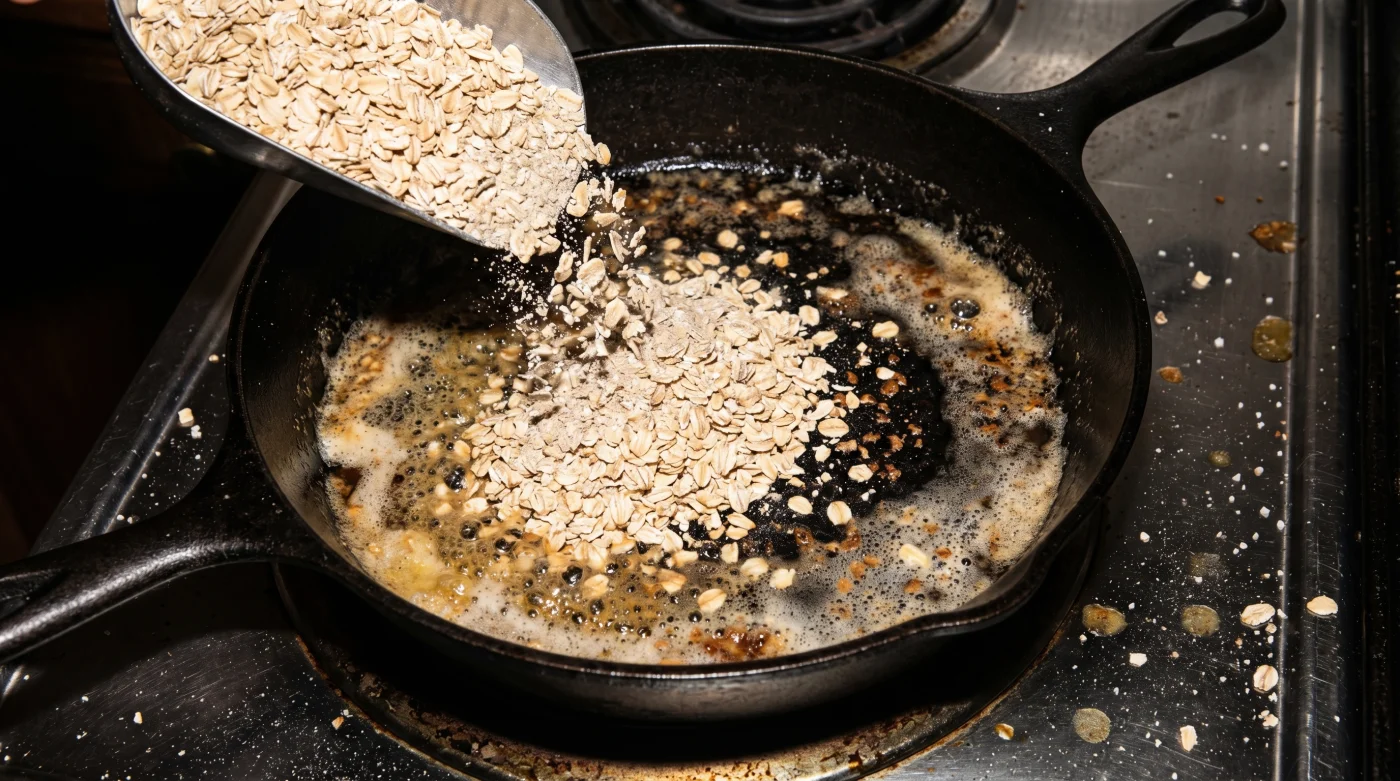
The chill in the kitchen at 6:00 a.m. is a specific kind of quiet, the sort of heavy Canadian morning where the frost clings to the windowpane. You stand over the stove, watching water come to a violent boil, preparing to dump in a cup of dry rolled oats. For decades, we have treated this morning ritual like a laundry cycle—soaking a raw, dusty material in scalding water until it surrenders into a grey, gluey paste. It is a meal we eat out of sheer utility, choking down a bowl of sludge simply because we have been told it is good for our hearts.
But listen closely to the pan beside it. If you drop a thick knob of butter into a skillet, letting it melt until the milk solids separate and turn a deep, golden hazelnut colour, you create an entirely different culinary environment. Tossing raw oats into this foaming brown butter changes the room immediately; it fills the cold morning air with a warm, toasted scent that smells more like a high-end French bakery than a rushed Tuesday breakfast. You build an incredible foundation before a single drop of liquid ever hits the pan, turning a chore into a deeply sensory ritual.
This simple pantry secret completely overturns everything we know about cooking morning porridge. Instead of suffering through gelatinous, wallpaper-paste textures, you create distinct, chewy grains that hold their shape on the spoon. The secret lies in a basic structural defense that happens when fat meets starch under intense heat, contradicting the wet-boil standard that has ruined millions of breakfasts.
The Perspective Shift: Treating Oats Like Fine Risotto
Think of your humble prairie oats not as a disposable sponge, but as a prized grain of fine Arborio rice. When making a proper, restaurant-quality risotto, you always toast the raw rice in fat before ladling in the hot broth. This forces the grain to absorb the rich oils first, creating a protective barrier. Doing the exact same thing with dry rolled oats completely changes how they react to moisture. Searing locks the cellular structure against the immediate, devastating flood of boiling water that normally causes them to disintegrate.
The standard wet-boil method guarantees a mushy collapse because the starches bleed out into the water instantly, much like dye running from an unwashed shirt. Toasting builds a microscopic armour around the grain. Beyond the vast improvement in texture, there is a distinct nutritional advantage here. Coating the raw starches in a healthy fat drastically slows down your body’s digestion process. It alters the glycemic response, turning a fast-burning carbohydrate into a slow, sustained energy source that easily carries you through a bitter winter commute without a mid-morning sugar crash.
Consider Elias, a 54-year-old baker who runs a bustling small-town café in rural Nova Scotia. For years, he dreaded the massive vats of oatmeal required for the morning rush, constantly fighting a losing battle against the inevitable, unappetizing sludge. One morning, desperately short on time and stove space, he threw a massive batch of raw oats directly onto a flat-top grill that was still slick with brown butter from the pancake rush. The heat sealed the grains, and the resulting batch kept its distinct, chewy texture for hours under a heat lamp. He realized that heat and a layer of fat are the only barriers a humble oat truly needs to survive the cooking process.
Deep Segmentation: Adapting the Toast
Once you fully understand the mechanics of this toasting phase, the morning variations become practically endless. You are no longer just making a bowl of plain porridge; you are laying down a complex flavour profile that can lean savoury, beautifully sweet, or perfectly neutral depending on what your day demands.
For the Minimalist Purist
Stick strictly to the raw basics to let the ingredient speak for itself. Two tablespoons of salted butter browned at roughly 175 degrees Celsius, followed by a generous cup of thick-cut oats. The natural nuttiness shines through, requiring nothing more than a splash of warm whole milk and a tiny pinch of flaky sea salt to finish. The oats will taste remarkably like freshly baked pie crust.
For the Canadian Sweet-Tooth
Timing is absolutely everything when sugar enters the hot pan. As the oats reach their peak toasted colour and the butter gives off a deep hazelnut aroma, stir a spoonful of dark maple syrup directly into the dry pan. The sugars will aggressively caramelize and coat the oats, creating a brittle, candied shell that slowly softens when you finally add your simmering water. It mimics the flavour of an expensive granola without the heavy processing.
For the Strategic Provisioner
You do not actually need to stand over the stove every single morning to enjoy this texture. Toast an entire kilogram of dry rolled oats in butter on a quiet Sunday afternoon, let them cool completely on a wide baking sheet, and store them in an airtight glass jar in the pantry. This zero-waste meal prep ensures you have a toasted, ready-to-boil staple sitting on the shelf, cutting your daily morning stove time strictly in half while preserving that crucial structural integrity.
The Mindful Pan-First Protocol
Executing this transformative technique requires nothing more than a heavy skillet and exactly five minutes of your undivided attention. Watch the fat bubble, listen for the telltale crackle of the grains, and wait for the shifting aroma to signal the next crucial phase of the cook.
- Melt your butter over medium heat until the milk solids separate and brown.
- Pour in the dry rolled oats and stir constantly with a heavy wooden spoon.
- Listen for the sound to shift from a soft rustle to a distinct, dry scratching against the metal.
- Wait for the scent of toasted nuts to hit your nose before adding any water or milk.
- Simmer on low until the liquid is fully absorbed, ensuring the grains remain distinct and chewy.
The tactical toolkit for this method is incredibly straightforward and forgiving. Keep your stovetop at a steady medium heat to prevent the milk solids from burning. The toasting phase should take exactly three to four minutes, no longer. Use a standard liquid ratio of one part oats to two parts water or milk, but ensure that liquid is slightly warm to prevent the hot butter from violently seizing and cooling the pan too quickly.
The Bigger Picture: Finding Comfort in the Crunch
We spend so much of our adult lives accepting subpar, uninspiring results simply because they are packaged and sold to us as the standard daily routine. A bowl of gummy, flavourless mush is often eaten in silence, not for genuine pleasure, but out of a rigid sense of nutritional obligation and a lack of morning energy.
By introducing a hot pan and a single piece of browned butter, you actively reclaim the quietest part of your morning routine. You take a mundane, pennies-per-serving pantry staple and turn it into a highly deliberate, deeply sensory experience. You control the final texture, proving that even the most stubborn, mundane ingredients can be fundamentally transformed by a simple, thoughtful shift in technique.
Fat is the architecture of texture, and a toasted oat is a grain that remembers its shape.
| Key Point | Detail | Added Value for the Reader |
|---|---|---|
| Brown Butter Sear | Coats raw starches in hot fat before boiling. | Completely prevents gummy, glue-like textures. |
| Nutritional Shift | Fat slows down the rapid digestion of carbohydrates. | Provides sustained winter energy without a sugar crash. |
| Dry Storage Prep | Pre-toast a full kilogram and store in glass jars. | Cuts morning prep time in half for the entire week. |
Frequently Asked Questions
Does this work with quick oats? Quick oats are rolled too thin and will absorb liquid too quickly, regardless of the toast. Always use thick-cut or large rolled oats.
Can I use oil instead of butter? Yes. Coconut oil or a neutral avocado oil works perfectly, though you will miss the specific hazelnut aroma of browned milk solids.
Do I still need to use the same amount of water? Keep your standard ratio of one part oats to two parts liquid, but be prepared to add a splash more if the oats absorb the moisture too rapidly.
Will the butter make the oatmeal greasy? Not at all. The grain absorbs the fat directly into its cellular walls, leaving the final bowl rich but entirely cohesive.
Can I pre-toast oats with spices? Add dry spices like cinnamon or cardamom only in the final thirty seconds of the toast to prevent the delicate oils from burning.