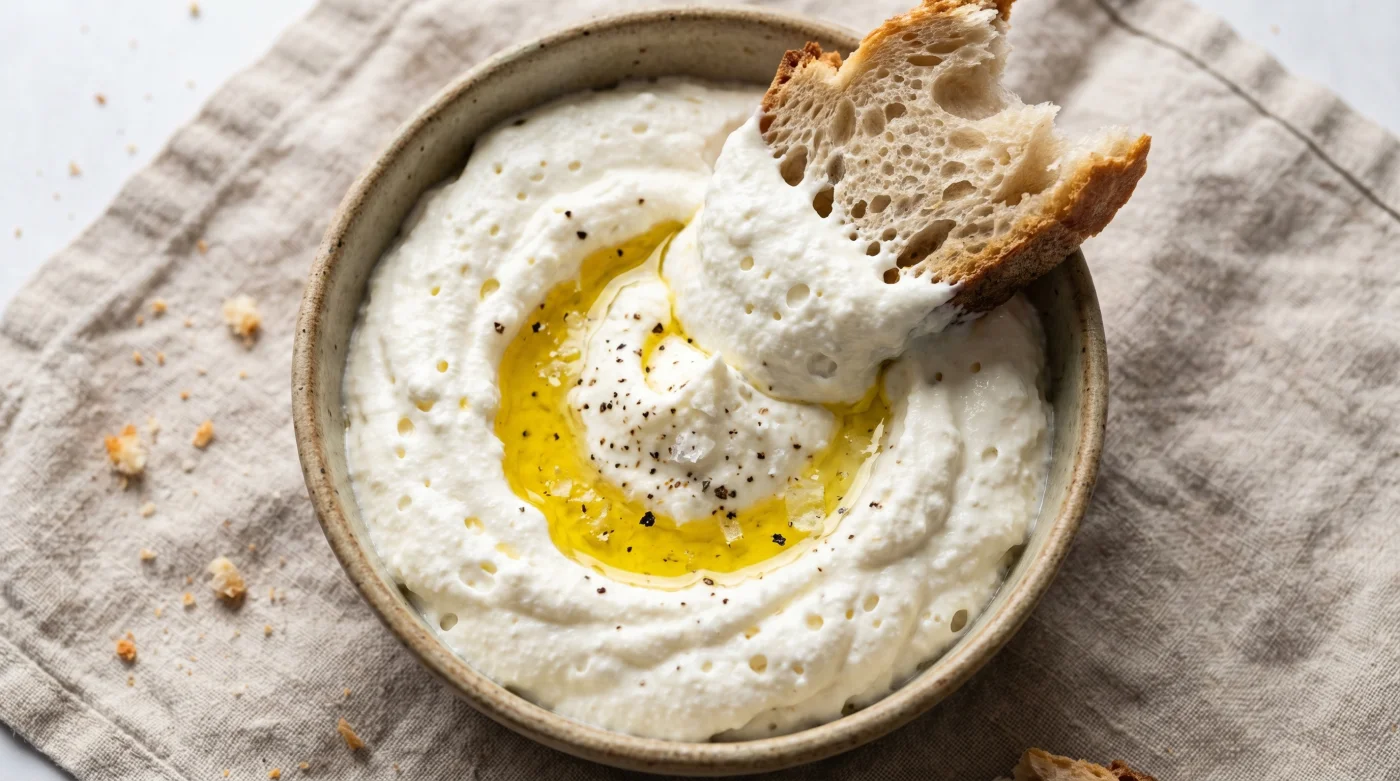
Pulling a ceramic baking dish from the oven at 200°C, the edges of the feta block are deeply golden, blistered, and aromatic with roasting thyme and olive oil. The kitchen fills with the sharp, salty scent of sheep’s milk mingling with caramelizing garlic cloves. You set the heavy dish on the counter, watching the residual heat bubble the edges of the cheese against the ceramic.
Usually, this is where you grab a fork and start mashing, hoping the heat will melt it down into a smooth spread. But standard baked feta resists, often remaining stubbornly dense, heavy, and slightly oily no matter how vigorously you stir the mixture.
The internet has conditioned you to fix this culinary resistance by pouring in a heavy glug of double cream, or perhaps a thick scoop of Greek yogurt, trying to force the cheese into submission. You reach for dairy, assuming that richness can only be achieved by adding more fat to the bowl.
Instead, you reach into the fridge for a freezing cold bottle of unflavoured sparkling water. Pouring a mere splash into the hot, softened cheese, you hit the food processor and watch it swell into an impossible cloud.
The Carbonation Reversal
There is a persistent myth in home cooking that rich, luxurious textures require equally heavy additions. We are taught that if a sauce or dip feels too thick, we must smooth it out with cream, butter, or oil.
When you add heavy cream to a block of baked sheep’s milk cheese, you are simply compounding fat with more fat. It might temporarily thin out the mixture, but as soon as the dip cools down, that added dairy solidifies, weighing down the entire dish and leaving an unpleasantly greasy coating on your palate.
Baked feta is structurally stubborn; its proteins are tightly woven and its water content is naturally low. Adding liquid cream just creates a heavy paste that sits like a brick in your stomach, masking the delicate tang of the cheese.
Carbonated water changes the physical rules of the recipe entirely by aerating a rigid protein structure. It acts like a microscopic scaffolding system, lifting the heavy solids rather than just lubricating them.
As the whirling blade of your food processor shears the hot cheese, the trapped carbon dioxide bubbles from the sparkling water are forced into the fat matrix. You are essentially teaching the dense cheese to breathe, expanding its volume without adding a single gram of fat.
Because you are not adding heavy dairy, the pure, briny flavour of the roasted feta remains sharp and beautifully completely unmuddied by heavy cream additions.
The Kitchen Epiphany of Elias
This is not just a quirky internet trick for a quick video; it solves a genuine frustration in high-volume, professional environments. Dips that look beautiful hot often fail entirely once they hit the chiller.
Consider Elias, a 34-year-old prep cook working the morning shift at a bustling Mediterranean bistro in downtown Toronto. For months, he battled with a whipped feta dip that would inevitably seize up in the walk-in fridge, turning from a creamy spread into a solid, unspreadable block right before dinner service began.
He noticed the issue was the fat solidifying as the temperature dropped, causing the kitchen to waste time reheating and re-whipping batches. One afternoon, running low on cream, he improvised using the highly pressurized soda gun from the bar.
The intense injection of fizzy water emulsified perfectly with the hot cheese, creating a stable, aerated foam that remained impossibly light and structurally perfect even after forty-eight hours chilling in the dark.
Tailoring the Cloud
Once you understand the base mechanic of replacing fat with air, you can shape the profile of your dip depending on your cravings or what you happen to have sitting in your crisper drawer. The five-minute viral prep becomes a blank canvas.
For the Garlic Purist: If your priority is letting the roasted alliums shine, stick to highly carbonated, unflavoured club soda. The clean profile of the water ensures you are merely amplifying the roasted, savoury base rather than masking the sharpness of the garlic.
For the Herb Alchemist: Consider using a lemon or cucumber-flavoured sparkling water. Toss in a handful of fresh dill, parsley, and a scrape of lemon zest just before the final pulse of the machine.
The volatile oils in the fresh herbs catch the faint citrus notes of the carbonated water, completely transforming a heavy winter staple into something you want to eat outside on a patio in late July.
The Five-Minute Aeration Protocol
Executing this viral prep takes less time than it takes to toast your pita bread in the oven, but the timing is entirely unforgiving. The temperature differential is what captures the air.
You must have your equipment ready and waiting on the counter before the cheese leaves the oven, because you need to strike while the cheese yields.
Here is the exact technical sequence you need to follow for flawless execution:
- Bake a standard 200-gram block of feta at 200°C for exactly 25 minutes until the centre is soft and the edges are browned.
- Transfer the hot cheese directly into a food processor or tall blending cup while it is still actively steaming.
- Pour in exactly two tablespoons of ice-cold, highly carbonated sparkling water (a freshly opened bottle is best).
- Pulse on high for sixty seconds, scraping down the sides of the bowl once at the halfway mark.
You are looking for a very specific visual transformation in the bowl. When you stop the motor and tap the side of the plastic, the cream should tremble slightly, indicating the bubbles are trapped and the structure is set.
Rethinking Kitchen Instincts
Adopting this small modification does more than just save you a trip to the dairy aisle or shave off a few calories from your weekend snack. It forces you to look at food differently.
It alters how you approach problem-solving at the stove, gently pushing you toward trusting physics over culinary habit.
We are so often conditioned to throw rich, expensive ingredients at a dish when it lacks mouthfeel or feels too austere. We panic and reach for the butter, the oil, or the cream.
Yet, finding out that nothing more than trapped air and water can produce a texture finer than the most expensive mascarpone is a genuinely liberating shift in perspective entirely.
The secret to professional cooking isn’t always adding more expensive ingredients; sometimes it is simply knowing how to trap thin air inside the ingredients you already have.
| Key Point | Detail | Added Value for the Reader |
|---|---|---|
| The Heavy Cream Trap | Adding dairy compounds fat, leading to a dense dip that hardens in the fridge. | Prevents your dip from turning into an unspreadable brick overnight. |
| The Carbonation Swap | Using 2 tablespoons of sparkling water aerates the proteins. | Creates a remarkably light, fluffy texture without adding extra calories or cost. |
| Temperature Dependency | The cheese must be 200°C hot, and the water must be ice-cold. | Ensures the protein matrix locks the bubbles in place for a stable foam. |
Frequently Asked Questions
Can I use tonic water or club soda instead of sparkling water?
Club soda works perfectly as it is just carbonated water with added minerals. Avoid tonic water, as the quinine will add a bitter, medicinal flavour to your cheese.Will the dip taste watery or lose its rich flavour?
Not at all. Because you are only using two tablespoons, the water evaporates or emulsifies, leaving behind pure, concentrated feta flavour without the muddling effect of heavy cream.How long will this aerated dip last in the fridge?
Stored in an airtight container, it will maintain its fluffy texture for up to four days. Unlike cream-based dips, it won’t separate or weep liquid.Can I do this by hand with a whisk if I don’t have a food processor?
Unfortunately, no. The mechanical shear of a food processor or immersion blender is required to force the carbon dioxide bubbles into the dense fat matrix of the cheese.Does this trick work with other dense cheeses like goat cheese or cream cheese?
Yes. This technique works exceptionally well with fresh goat cheese (chèvre) and can even be used to lighten up a block of standard cream cheese for bagel spreads.